
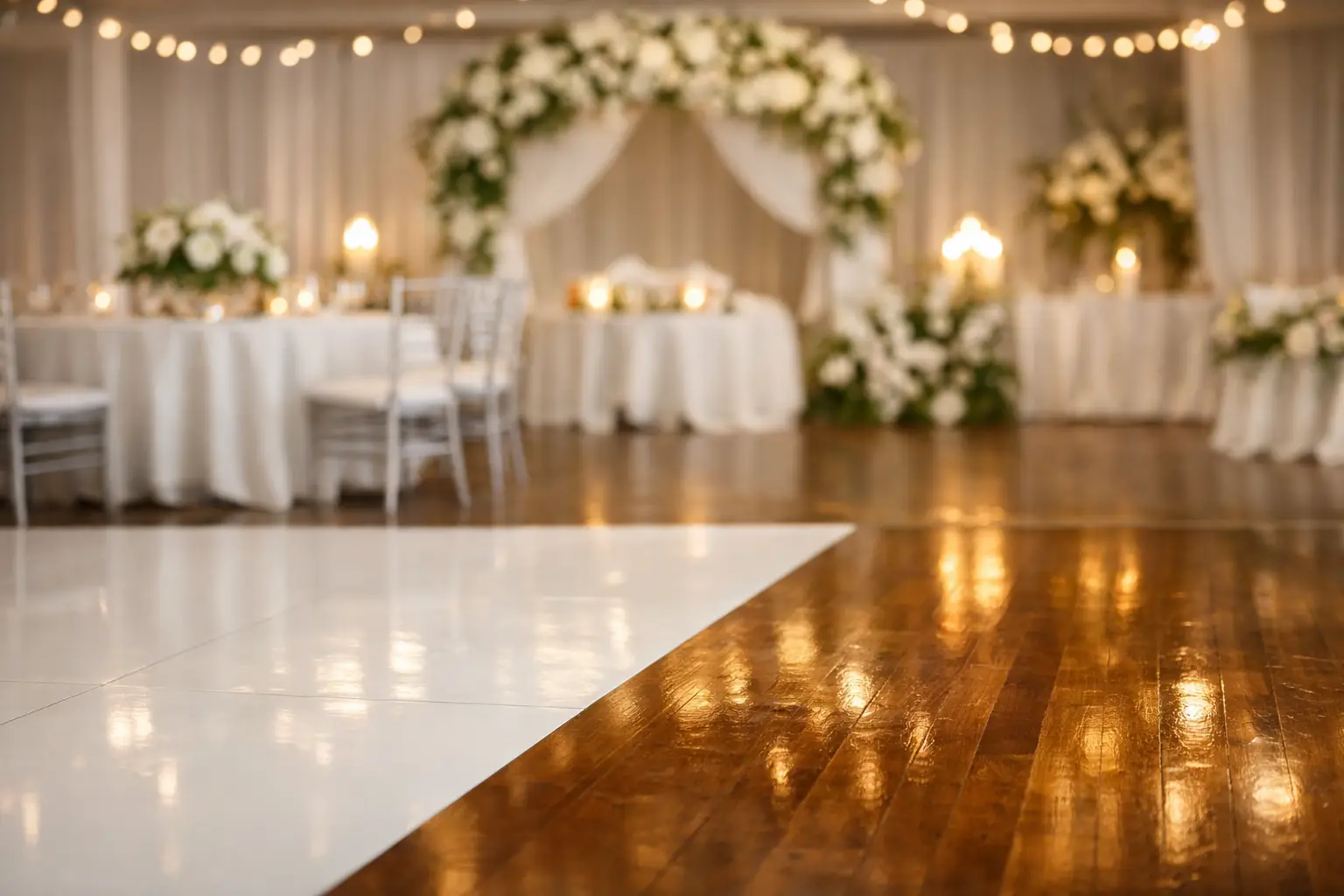
The best dance floor finishes do more than fill an empty space in a venue. They set the tone for the room, affect how photographs look, influence whether guests actually get up to dance and need to work safely with the venue flooring, tables, DJ set-up and lighting. A floor that looks superb in a showroom can feel too bright, too dark or simply too small once it is surrounded by guests.
For weddings, parties and corporate events, the right choice depends on the atmosphere you want to create and the practical realities of the room. A white LED dance floor can become the visual centrepiece of a wedding breakfast room. A black and white chequered floor may suit a lively birthday or themed event. The key is choosing a professional temporary floor that complements the event rather than competing with everything else in it.
Best Dance Floor Finishes: Start With the Event Style
There is no single finish that suits every celebration. Before choosing a dance floor, look at the venue décor, the time of day, your guest numbers and what will be happening around it. The floor should look considered in photographs from the ceremony or meal through to the evening party.
For a classic wedding, white tends to be the safest and most flexible option. It works with nearly every colour scheme, reflects decorative lighting beautifully and gives the room a clean, high-end finish. For an evening party where a more dramatic look is wanted, black or black and white flooring can bring contrast and energy, particularly alongside intelligent DJ lighting.
Corporate organisers may prefer an understated finish that leaves room for branded backdrops, stage areas or product displays. In this setting, a floor needs to look polished without pulling attention away from the purpose of the event. The best option is often one that supports the lighting plan and maintains a smart, professional appearance throughout the evening.
White LED Dance Floors for Weddings
White LED dance floors remain one of the most popular choices for Midlands weddings, and for good reason. Their bright, glossy surface creates an immediate focal point, while the built-in LEDs add a subtle sparkle that changes as the evening progresses. They are especially effective in barns, hotel suites and marquees where the room needs a little extra light and definition.
A white LED floor is highly photogenic. It sits well alongside white chair covers, blossom trees, floral styling, illuminated love letters and a matching LED backdrop. If you are using a wedding DJ, the floor also catches moving lights without becoming overwhelming. Guests can see where the dance area begins, which sounds simple but makes a real difference when the room is busy.
The trade-off is that white shows marks more readily than darker finishes. A professional hire team should install a clean, well-maintained floor shortly before the event and check it during set-up. It is also worth considering the room’s existing lighting. In a very bright suite during daylight hours, the LED effect may be less noticeable until the evening. Once the main lights are lowered, however, the floor comes into its own.
When white LED flooring works best
Choose a white LED finish when you want a romantic, contemporary look with plenty of visual impact. It is a strong choice for wedding receptions, engagement parties, anniversaries and awards evenings. It can also make a smaller room feel more open because the light surface reflects rather than absorbs available light.
For a coordinated result, keep nearby styling in the same visual family. White florals, neutral linens, gold or silver details and warm uplighting all work particularly well. Strong coloured uplighting can also look excellent, but test the balance carefully: a deep red or blue wash can alter how the white surface appears in photos.
Black and White Chequered Floors
A black and white chequered dance floor has a bolder, more traditional party feel. It creates instant contrast and suits birthday celebrations, school proms, charity balls, retro-themed evenings and wedding receptions where the couple want something less formal than an all-white look.
This finish works particularly well in venues with character. Think exposed brick, period function rooms, darker wall colours or spaces with a strong black-and-gold theme. It holds its own under colourful disco lighting and looks lively even before the first guests arrive. For hosts who want the dance area to feel unmistakably like the party zone, the chequered pattern does that job very well.
There are practical benefits too. The darker panels are more forgiving of minor scuffs during a long event, although every hired floor should still be clean and professionally maintained. The main consideration is visual busyness. If you already have patterned chair sashes, elaborate table linen, a heavily decorated backdrop and several competing colours, a chequered floor can make the room feel crowded. In those cases, a simpler finish may be the better choice.
Glossy Black Floors and Dramatic Evening Events
A glossy black dance floor delivers a sleek, evening-focused finish. It suits black-tie parties, corporate dinners, winter weddings and events using gold, silver, deep red or rich purple styling. Under pin spots and professional lighting, a black surface can look extremely smart and gives the room a more intimate feel.
Black flooring is not always the right fit for a compact or low-lit venue. Because it absorbs light, it can make a room feel smaller if there is not enough surrounding illumination. This is where thoughtful uplighting, an LED backdrop or illuminated letters can help define the space. Your DJ’s lighting should also be positioned to light the dance area safely, rather than leaving guests stepping from a bright seating area onto a dark floor.
A black finish can be excellent for photographs with formalwear and metallic décor, but it is less forgiving of dust and footprints than some clients expect. Quality installation and a venue-ready clean are essential. Ask your supplier about the condition of the panels, the edging used and how the floor will be checked before guests enter the room.
Safety, Size and Venue Compatibility Matter More Than Trend
The most attractive finish will not deliver if the floor is the wrong size or unsuitable for the venue. A dance floor should give guests enough confidence to join in without taking over the entire room. Too small, and it becomes crowded after the first few popular songs. Too large, and it can make attendance on the floor look sparse, particularly early in the evening.
Guest count is a useful starting point, but not every guest will dance at the same time. The style of event matters as well. A wedding with a large family group and a party-focused DJ set may need more space than a corporate dinner where dancing is only one part of the programme. The layout should account for tables, the DJ booth, photo booth access, fire exits and clear walkways for venue staff.
Temporary dance floors also need a suitable, level base. Most function rooms, hotel suites and marquees can accommodate them, but the supplier should understand the venue before installation. Uneven surfaces, restricted access, tight loading times and protected flooring all need planning in advance. This is not a detail to leave until the week of the event.
Use a supplier that can discuss the floor alongside the wider set-up. If your dance floor, DJ, lighting, room décor and illuminated letters are supplied separately, small issues can quickly become your problem. A coordinated package means the layout can be planned as one event design, with equipment placed sensibly and installation managed around the venue timetable.
Match the Finish to Your Lighting and Décor
Lighting changes every dance floor finish. White LED floors reflect colour and movement; black surfaces create depth and drama; chequered patterns hold their shape under stronger effects. This is why it helps to decide on flooring at the same time as your DJ and room lighting, rather than treating it as a last-minute add-on.
For example, a white LED floor paired with warm white uplighting and illuminated Mr & Mrs letters creates a soft, wedding-led look. The same floor with energetic colour-changing lighting can work brilliantly for a birthday party. A glossy black floor beside gold décor and controlled warm lighting feels more formal, while black and white chequered flooring works naturally with brighter party effects.
Be realistic about the venue’s own carpet, wall colours and ceiling height. A floor does not exist in isolation. If possible, view examples of the finish in a similar room or visit an event hire showroom to compare options in person. Photographs are helpful, but seeing the panel colour, gloss level and LED brightness makes the decision much easier.
Choose a Professional, Venue-Ready Installation
A dance floor is a guest-facing feature, so the quality of installation is part of the finish. Panels should sit securely, edges should be properly fitted and cables from DJs or lighting should never create a trip hazard near the dance area. Professional suppliers also need to work within venue access rules and provide the reassurance many venues require, including PAT-tested equipment and suitable public liability insurance.
Mobile Disco Hire Birmingham can coordinate LED dance floors with DJs, photo booths, uplighting and wedding styling, reducing the number of suppliers you need to manage. With more than 20 years of event experience, the team can help plan a floor size and finish that makes sense for the room, the schedule and the type of celebration.
The best choice is the one that looks right at the first dance, still feels inviting two hours later and fits the venue without creating extra work for you. Choose the finish early, plan it alongside your entertainment and styling, and give your guests a dance area they will be pleased to fill.
