
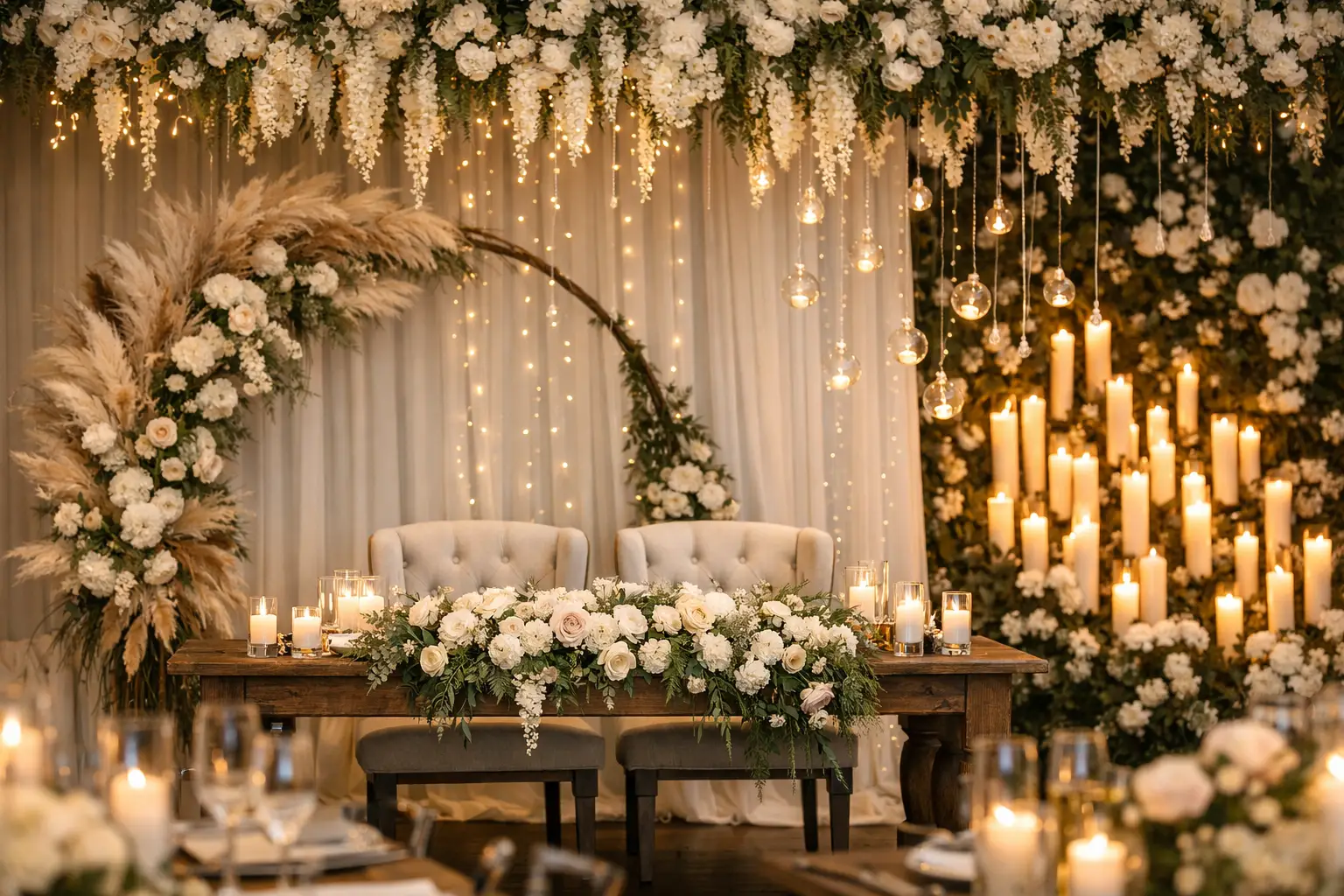
The right wedding backdrops do far more than fill an empty wall. They frame the moments your guests will photograph most – your entrance, speeches, cake cutting and first dance – while making the whole room feel considered from the moment people arrive. A backdrop is one of the most effective ways to give a hotel suite, function room or marquee a finished wedding look without having to dress every corner of the venue.
For couples planning a wedding in Birmingham or across the Midlands, the best choice usually comes down to three things: where it will sit, what it needs to do in photographs, and how it will work alongside the rest of the room styling. It should complement your day, not compete with it.
Choosing Wedding Backdrops for Your Venue
Start with the venue rather than a picture saved on social media. A white flower wall may look striking in a darker room, while an LED starlit backdrop can add warmth and depth to a plain hotel function suite. In a light-filled barn or marquee, a blossom tree display, draping or soft florals can create a more natural focal point.
The backdrop also needs to suit its location. Behind the top table, it should look elegant in guest photographs throughout the wedding breakfast. Behind the cake table, it should leave enough space for your cake, stand and any flower arrangements without looking crowded. For a photo area, it needs room in front for groups of guests to stand comfortably.
Ceiling height matters more than many couples expect. A grand backdrop can be lost against a high wall if it is too narrow, while a full-height design can overwhelm a smaller room. Measuring the intended space before booking avoids last-minute compromises. If you are unsure, photographs and venue dimensions can help an experienced styling supplier recommend a suitable size.
Match the backdrop to the key moment
A single backdrop can work beautifully all day, particularly behind a top table or sweetheart table. However, a wedding with several key areas may benefit from a more considered arrangement. For example, an LED backdrop behind the head table can set the tone for the reception, while illuminated love letters and a flower wall create a separate evening photo point.
This depends on your budget and venue layout. A smaller wedding in one room may only need one standout feature. A large reception with a separate drinks area, dining room and dance floor has more scope for different focal points.
Popular Backdrop Styles and Where They Work Best
There is no single best option, because your backdrop should reflect the atmosphere you want to create. Classic weddings often suit white draping, soft floral walls or ivory blossom. Modern celebrations can look excellent with a clean shimmer wall, neon-style sign or contemporary balloon styling. Evening receptions benefit from lighting that remains effective after daylight has gone.
LED starlit backdrops are a dependable choice for wedding breakfast rooms and evening receptions. The subtle twinkling lights add depth to photographs and work especially well alongside white LED dance floors, uplighting and illuminated Mr & Mrs letters. They are also a practical solution when a venue wall is plain, dark or visually distracting.
Flower walls offer a softer, more romantic finish. White, ivory and blush designs are popular because they coordinate with many colour schemes, while mixed floral walls can make a stronger statement. They are often used behind top tables, at ceremony signing tables or as a photo backdrop. Bear in mind that a densely detailed flower wall is already visually busy, so keep nearby signage and decorations simple.
Shimmer and sequin backdrops bring a more lively, party-ready finish. They catch light well and can look particularly effective near a photo booth or sweet cart. They may not suit every traditional venue, but they are an excellent choice for couples who want the evening reception to feel glamorous and fun.
Draping and fabric backdrops create a timeless look and can soften the hard lines of a hotel suite, village hall or marquee. Add warm uplighting for a more dramatic effect. This style works well when you want a polished finish without the stronger visual texture of flowers or sequins.
Think About Lighting Before You Book
Lighting can make an ordinary backdrop look expensive, and a poorly lit one disappear completely in photographs. This is particularly relevant for winter weddings and venues where the room lights are dimmed for the evening reception.
Uplighting placed around the room can pick up your chosen colour palette and make the backdrop feel connected to the rest of the décor. Warm white or soft amber is flattering for most wedding photographs, while blush, violet or blue can create a more dramatic evening feel. The colour choice should be subtle enough that it does not alter the look of wedding flowers, dresses or skin tones in every photograph.
If you are using an LED backdrop, check how the lights will appear on camera. Professional equipment should offer an elegant twinkle rather than an overpowering flash. It is also worth considering the DJ set-up and dance floor lighting. A coordinated package prevents a room from looking like several unrelated suppliers have dressed separate areas.
Make the Backdrop Work With Your Wedding Styling
A backdrop has the greatest impact when it is part of a wider plan. The colours and materials do not all need to match exactly, but they should feel intentional. White chair covers with a coloured sash, table florals, balloons, love letters and uplighting can all tie into the same palette.
Avoid trying to feature every decorative idea in one place. A flower wall, large neon sign, balloon garland, throne chairs, cake hoop and oversized letters may all look impressive individually, but combined in one small area they can feel cluttered. Give each statement item room to do its job.
For many couples, the most practical approach is to choose one principal backdrop and two or three supporting features. A starlit backdrop behind the top table, LED love letters near the dance floor and matching uplighters around the room is a strong, balanced combination. Alternatively, a flower wall with a photo booth nearby creates a natural guest-photo area without taking over the dining space.
Consider guest flow and access
Decor must not block fire exits, service doors, access routes or the space needed for venue staff to move around tables. This is one reason it pays to use a supplier familiar with event set-ups rather than attempting to install large items yourself.
Ask who will deliver, set up and collect the backdrop, and when this will happen. Wedding mornings are busy enough without assembling décor while suppliers, florists and venue staff are all working in the same room. A professional hire team will plan access, installation time and collection around the venue schedule.
Hiring a Backdrop as Part of a Complete Package
Booking entertainment and styling from separate companies can work, but it creates more timings, deliveries and contacts to manage. Combining services with one established supplier makes the process easier, especially where the backdrop needs to sit alongside a DJ, LED dance floor, photo booth, chair covers or illuminated letters.
Mobile Disco Hire Birmingham can coordinate wedding DJs, professional sound and lighting, LED backdrops and venue styling as part of one package. With more than 20 years of event experience, PAT-tested equipment and £5 million public liability insurance, the focus is on providing a venue-ready service that looks polished and runs properly on the day.
A showroom visit can be especially useful if you are deciding between backdrop styles or trying to match colours. Seeing lighting, letters and decorative pieces in person gives a much clearer idea of scale than viewing a small image on a phone. Appointments allow time to discuss the venue, your guest numbers and the parts of the room that matter most.
Questions to Ask Before Confirming Your Backdrop
Before making a booking, confirm the backdrop dimensions, the amount of space required in front of it and whether power is needed. Ask whether delivery, set-up and collection are included, and whether the supplier has experience working at your venue or with similar layouts.
It is also sensible to ask what happens if access is limited. Some venues have stairs, narrow entrances or strict set-up windows. A good supplier will identify this early and offer a practical alternative if required. Finally, make sure the backdrop complements your photography plans. The best designs create a flattering frame without casting harsh light, adding unwanted glare or making group shots difficult.
Choose the backdrop that makes your most important space feel special, then let the rest of your styling support it. When the room is ready before guests arrive, you can stop worrying about the details and enjoy the photographs, the music and the celebration itself.
