
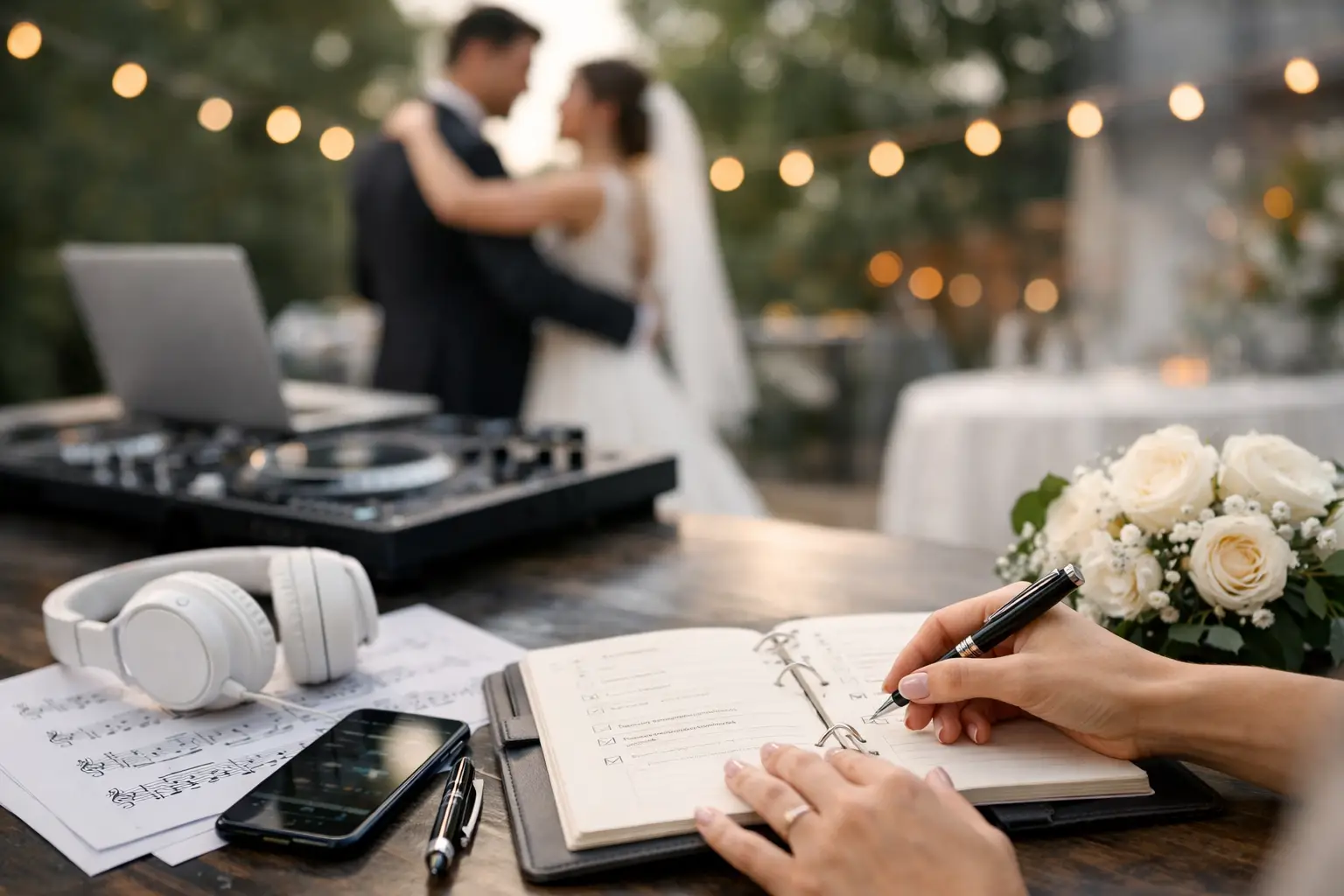
The first dance may be the song everyone remembers, but how to plan wedding music is about far more than choosing one meaningful track. From guests arriving at the ceremony to the final song of the evening, music controls the pace, energy and atmosphere of the whole day. Get it right and every transition feels natural. Leave it until the final week and you may find yourself making rushed choices between seating plans, supplier calls and venue deadlines.
The most effective approach is to plan music around the moments that matter, then give your DJ enough direction to create a packed dancefloor without turning your wedding into a rigid playlist.
How to plan wedding music around your wedding day
Start by mapping out the points where music will be heard, rather than beginning with a list of favourite songs. A wedding day usually has different moods, different age groups and different practical requirements. The song that works beautifully while guests are taking their seats will not necessarily work when you want everybody up dancing at 10pm.
For the ceremony, consider music for guest arrival, the entrance, signing the register and walking back down the aisle. These tracks do not all need to be dramatic or traditional. Instrumental versions of modern favourites, acoustic songs and classic love songs can all work well, provided they suit your venue and the tone of your day.
The wedding breakfast and drinks reception need a lighter touch. Background music should fill quiet gaps without making conversation difficult. This is the place for soul, Motown, easy-going acoustic music, jazz, classic pop or songs with personal meaning that are not suited to a late-night dancefloor.
Then comes the evening reception, where a professional wedding DJ can build the energy gradually. Your first dance starts the party, but it is only one part of it. Think about the songs that will bring your friends together, get parents and grandparents involved, and keep guests dancing once the floor has filled.
Decide what matters most to you as a couple
Before asking for recommendations, agree on your priorities. Some couples want a full dancefloor from the first dance onwards. Others care most about a relaxed ceremony, a particular cultural tradition, or hearing a handful of songs that tell their story. There is no single correct wedding playlist, but there should be a clear brief.
Choose your non-negotiable songs first. These might include the aisle entrance, exit song, first dance, parent dance and cake-cutting track if you are having one. Keep this essential list short. A DJ needs room to read the crowd, adjust to what is working and move between genres at the right time.
It also helps to make a separate list of songs or styles you do not want played. This can prevent awkward surprises, particularly if there is a song linked to an ex, a genre you both dislike or lyrics that do not suit a family celebration. Be specific, but sensible. A long list of banned songs can make it harder to keep the dancefloor moving.
Build a playlist for guests, not just yourselves
Your wedding should feel personal, but the best evening music usually has something for every generation. A room full of guests has varied tastes, and that is exactly why an experienced DJ is valuable. They know when to play a familiar singalong, when to bring in current party tracks, and when to switch direction before energy drops.
A useful way to plan is to give your DJ a mix of favourite artists, genres and eras. For example, you may love 90s R&B, indie anthems and disco, while your family will respond to Motown, soul and classic party music. That gives the DJ a genuine picture of the sound you want without requiring every song to be played in a fixed order.
Guest requests can work brilliantly, especially when they are collected in advance or managed by the DJ on the night. However, not every request should go straight on. A professional DJ will judge whether it fits the mood, whether it clears the floor, and whether it is better saved for later. This is one reason a pre-made streaming playlist is not always the best choice for a wedding reception.
Plan the key music moments carefully
Certain moments deserve extra attention because timings can change and everyone will be watching. Confirm the exact version of each song, whether it needs to start at a particular point, and who will give the signal to play it.
Your ceremony entrance and exit
Check how long the walk into the ceremony space is likely to take. A song may need to start at the beginning, at a recognisable chorus, or from a quieter instrumental section. If you have bridesmaids, page boys or more than one entrance, discuss whether one song will cover everyone or whether you want separate tracks.
For the exit, choose something upbeat enough to create a real sense of celebration. This is often one of the happiest photographs and video moments of the day, so a track with a strong opening works well.
The first dance
Do not feel pressured to choose a slow song if that is not your style. A romantic acoustic track, an upbeat classic, a choreographed routine or a short edited version can all work. If you are nervous about dancing alone, arrange for your wedding party or all guests to join you after the first minute or chorus.
Tell your DJ whether you want the full track played. Many couples find that three to four minutes feels much longer when everybody is watching. A clean fade after two minutes can be a practical option, as long as it is agreed in advance.
Cake cutting, bouquet and special dances
Not every wedding needs music for each tradition. If you are cutting the cake before the first dance, a short, cheerful song can help gather guests and make the moment feel deliberate rather than rushed. If you are having a father and daughter, mother and son, or other family dance, make sure the DJ knows the exact order and has the correct versions ready.
Give your DJ the information they need
A good DJ can only work well when they understand the running order. Send your schedule in advance and include expected timings for the wedding breakfast, speeches, room turnaround, cake cutting and first dance. Weddings rarely run to the minute, so allow flexibility, but clear communication avoids music starting while key guests are outside or photographs are still happening.
You should also confirm practical venue details. Ask whether the venue has a sound limiter, access restrictions, an early finish time or rules about where speakers and lighting can be positioned. Some venues require suppliers to provide PAT-tested equipment and public liability insurance before they can set up. Sorting this out early protects you from last-minute issues.
If you are booking a DJ alongside venue styling, lighting, an LED dance floor, love letters or a photo booth, coordination becomes even more important. One supplier managing the setup can reduce the number of arrival times, cables and handovers you need to oversee. Mobile Disco Hire Birmingham has more than 20 years of event experience and can coordinate entertainment and styling equipment as a single, venue-ready booking.
Allow time for setup and sound checks
Professional sound and lighting do not appear five minutes before the first dance. Your DJ will need access for unloading, setting up safely and checking sound levels. This is particularly relevant at venues with tight access, stairs, limited parking or a room that is being turned around between the day and evening celebrations.
Ask your venue when suppliers can arrive, where they should unload and whether there is a dedicated power supply. If your ceremony is outside, have a weather plan. Battery-powered equipment may be suitable for some locations, but it depends on the setup, guest numbers and how long music is required.
Lighting deserves the same consideration as music. Uplighting can add warmth to a wedding breakfast and transform the room for the evening, while a well-lit dancefloor encourages guests to join in. The goal is atmosphere, not a lighting rig that overwhelms the room or competes with your décor.
Avoid the common music planning mistakes
The biggest mistake is leaving decisions too late. Your DJ does not need every song months in advance, but key tracks, special announcements and venue information should be confirmed well before the day. Another common issue is trying to please every guest with an enormous request list. A stronger plan is to identify your must-plays, your do-not-plays and the overall feel you want.
Be realistic about the crowd as well. A late evening reception with mostly friends in their twenties may work differently from a family wedding with children and several generations present. The best music plan responds to the guests actually in the room, not a generic list copied from social media.
Finally, trust the professional you have booked. Give clear direction, but let them manage transitions, timing and song selection as the evening develops. A confident DJ watches the floor, takes sensible requests and keeps the celebration moving without making every decision feel scripted.
Your music plan does not need to be complicated. Choose the moments that are personal, share the atmosphere you want, check the venue requirements and leave enough space for the party to develop naturally. That gives you more time to enjoy the people around you when the songs finally start.
