
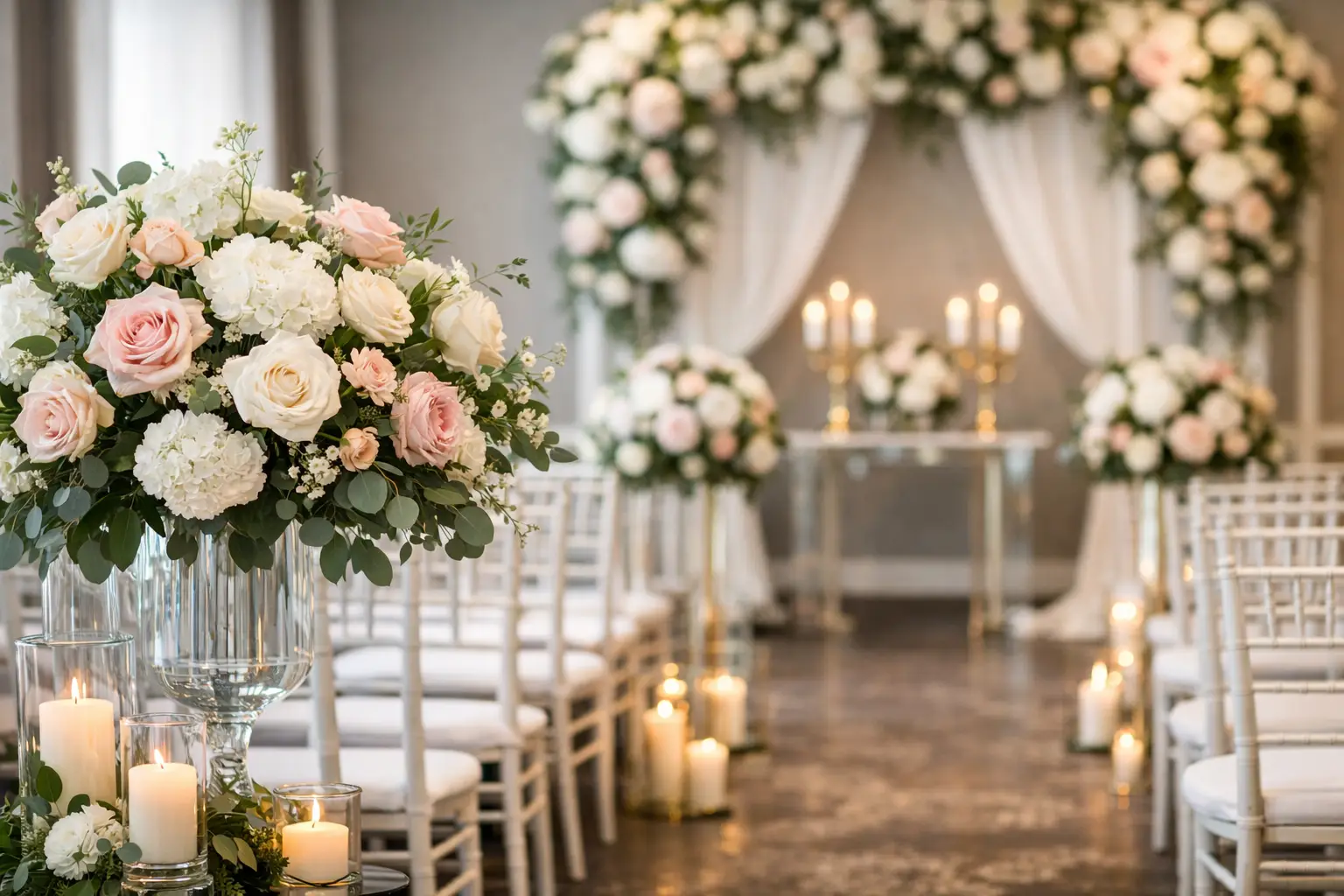
A wedding venue can look unfinished surprisingly quickly when the tables, ceremony area and top table have no focal point. This wedding flower hire guide is designed to help you choose artificial wedding flowers that look the part in photographs, suit your venue and simplify the planning process – without having to manage a separate florist, delivery slot and collection arrangement.
Hiring flowers is not about settling for less. High-quality silk and faux floral arrangements can provide full colour, consistent styling and an impressive finish from the first guest arrival to the final dance. For couples planning weddings across Birmingham and the Midlands, it can also make coordinating venue décor much more straightforward.
Why hire wedding flowers instead of buying them?
Fresh flowers are beautiful, but they are also seasonal, perishable and often one of the more variable parts of a wedding budget. Prices can rise around popular dates such as Valentine’s Day, Mother’s Day and the peak summer wedding season. Particular blooms may be unavailable, while hot weather and long venue set-ups can affect how fresh arrangements look by the evening.
Wedding flower hire gives you a fixed, pre-selected look. Your centrepieces, aisle flowers, ceremony displays and top-table arrangements can be chosen to work together before the day, then delivered and collected as part of your event set-up. There is no need to find vases, transport delicate stems or decide what to do with dozens of arrangements after the reception.
It does depend on your priorities. If you have your heart set on a specific scent, locally grown seasonal stems or individual hand-tied bouquets for every guest, fresh flowers may still be the right choice. Many couples take a mixed approach: hire larger venue arrangements and invest in fresh flowers for the bridal bouquet, buttonholes and a few personal details.
Wedding flower hire guide: start with the rooms
Before choosing colours or flower types, think about where guests will spend their time. The best styling plans are built around the venue layout, not a collection of separate items that happen to match.
Begin with the ceremony space. A pair of statement arrangements, flower stands or an aisle feature can frame the moment guests and photographers will focus on most. Then consider the wedding breakfast room, where table centrepieces and a dressed top table create continuity. Finally, look at the evening reception. A backdrop, illuminated letters, uplighting and flowers can transform the same room once the party begins.
Ask your venue for photographs of your actual suite set for a wedding, rather than only empty-room images. Ceiling height, wall colours, table shape, chair style and available floor space all affect what will work. Tall arrangements can look excellent in a grand suite with high ceilings, but may block sightlines or overwhelm a lower-ceilinged function room. Low centrepieces are usually better where guests need clear conversation across the table.
Choose a focal point first
Most wedding rooms benefit from one strong visual feature rather than floral decoration everywhere. This may be a flower wall behind the top table, a pair of blossom trees at the ceremony entrance or a substantial floral arrangement on a pedestal. Once that focal point is chosen, the rest of the styling can support it with simpler centrepieces and coordinated details.
This approach also helps protect the budget. Put the visual impact where photographs will capture it repeatedly, then use complementary items to carry the theme through the room.
Pick a colour palette that works in photographs
Start with two main colours and one neutral rather than trying to include every shade you like. White and green remains a reliable choice for elegant venues, while blush, ivory and soft foliage suit romantic styling. For a stronger look, combinations such as deep red and gold, navy and white, or black, white and gold can work particularly well in evening receptions.
Consider the existing venue colours too. If the carpet is patterned, chair covers are dark or curtains are a bold shade, a simple floral palette often gives the cleaner result. In a neutral room, you have more freedom to introduce colour through flowers, sashes, balloons or LED uplighting.
Lighting changes how flowers appear. Warm uplighters will make ivory and blush arrangements feel softer, while cool white lighting can make whites appear brighter and more contemporary. If your wedding includes a LED dance floor or illuminated love letters, check that the flowers complement these features rather than competing for attention.
Decide which arrangements earn their place
Not every table or corner needs flowers. Hire the items that add scale, guide guests through the venue or improve key photographs. Useful choices include ceremony pedestals, aisle arrangements, top-table flowers, guest-table centrepieces, welcome-sign flowers and a floral backdrop.
For round tables, a single low centrepiece is often the easiest option. It keeps the table clear for place settings, wine and conversation. Long banquet tables can take several smaller arrangements running down the centre, although this needs to be planned around shared platters, candles and table numbers.
A top table deserves slightly more attention because it will appear in speeches, cake-cutting photographs and many guest pictures. A full-length floral runner or a pair of substantial arrangements can make a standard trestle table look far more finished. If space is limited, a backdrop behind the couple can deliver the impact without crowding the tabletop.
Check what is included in the hire price
A low starting price does not always reflect the full cost of the finished display. Ask what is included before committing, particularly if you are comparing suppliers. Delivery, venue installation, collection, stands, plinths, vases, candles and damage deposits can all affect the final figure.
You should also establish who is responsible for positioning the flowers. A professional set-up team will understand how to keep fire exits clear, avoid blocking access routes and place displays safely around tables and dance floors. This matters especially at busy venues where suppliers may only have a short access window before guests arrive.
If you are booking several services, it is often more efficient to use one supplier for flowers, chair covers, backdrops, lighting and entertainment. The styling can be planned as one scheme, delivery can be coordinated and fewer people need access to the venue. Mobile Disco Hire Birmingham offers this type of joined-up event hire, alongside professional DJ entertainment and venue-ready décor products.
Make sure the flowers look realistic at close range
Quality varies widely. Good artificial flowers should have natural-looking petal shapes, layered foliage, realistic colour variation and secure construction. They need to look convincing in daylight, under venue lighting and in close-up photographs.
If possible, view the arrangements before booking. A showroom appointment lets you check the scale of centrepieces, compare colour shades and see how flower walls, blossom trees or pedestal displays look in person. It is also the ideal time to place a chair cover, table décor and backdrop together, rather than relying on separate online images.
Ask whether the flowers are cleaned and checked between hires. Well-maintained displays should arrive looking fresh, with no loose petals, crushed foliage or tired-looking bases. An established hire company should also be able to advise what is practical for your table plan and venue restrictions.
Plan the schedule around your other suppliers
Flowers are only one part of the room set-up. Your venue may have caterers dressing tables, a cake supplier arriving at a set time, a DJ setting up sound and lighting, and photographers wanting access before guests enter. A clear installation plan prevents the last hour from becoming crowded and stressful.
Confirm when the venue is available, when the hired flowers will be installed and whether anything needs moving between the ceremony and reception. Repurposing ceremony arrangements behind the top table can be a sensible way to get more from the hire, but it needs a team member with time to move them safely.
Also discuss collection. Most couples do not want to be counting centrepieces at midnight. Agree where hired items should be left after the event and who will handle the return process. This is one of the main practical advantages of hire over buying.
Keep your final choice simple and coordinated
A polished wedding does not require flowers on every available surface. It requires a clear colour scheme, a few well-placed statement pieces and a supplier who can deliver the agreed look reliably. Choose arrangements that suit your rooms, check exactly what your hire includes and plan the set-up alongside the rest of your décor.
When the flowers, lighting, furniture details and entertainment are coordinated, guests may not notice each individual item. They will notice that the whole celebration feels considered from the moment they walk in.
