
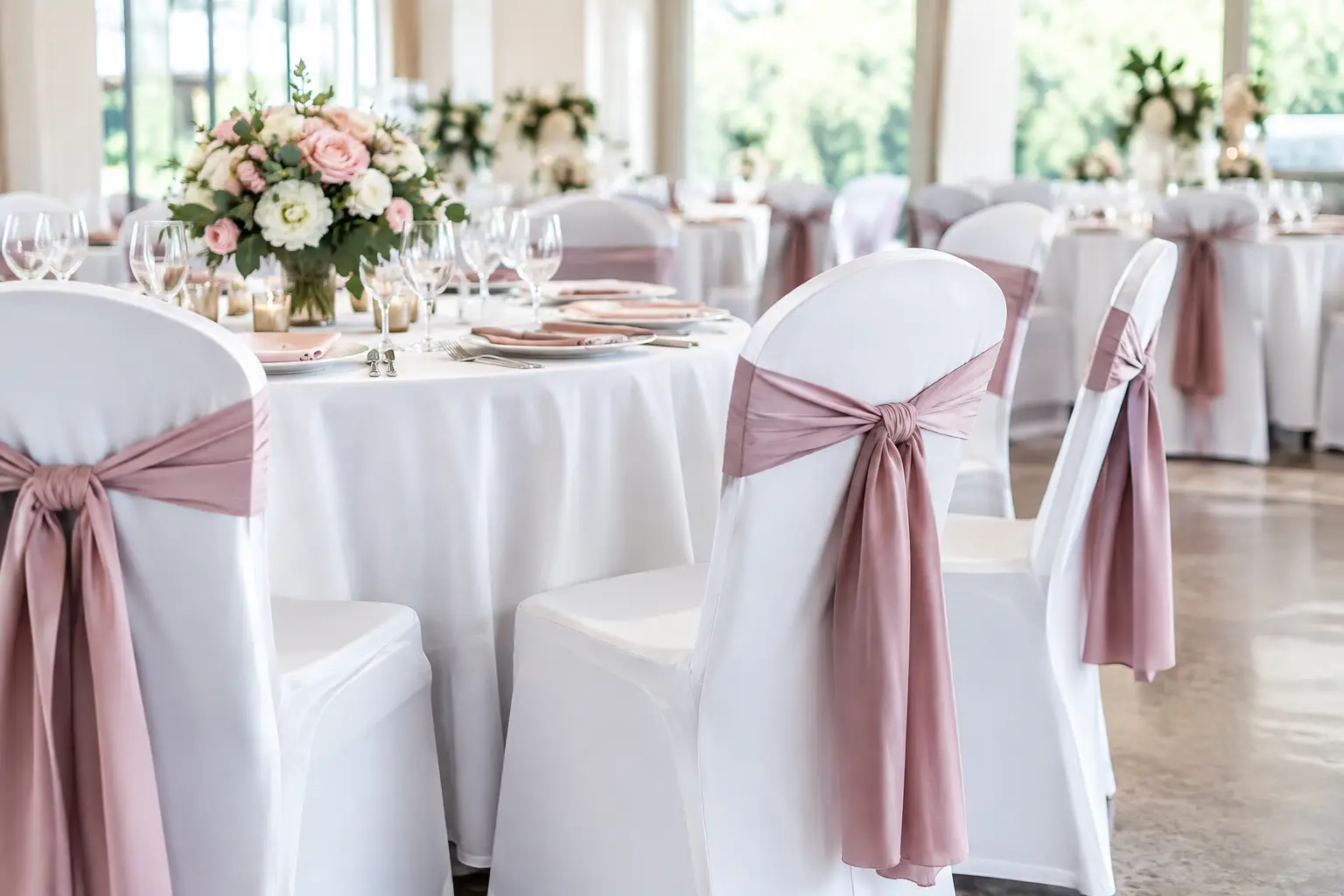
A venue can have beautiful flowers, a great DJ and a carefully planned menu, yet still look unfinished if the seating does not suit the room. This chair cover hire guide is designed to help you make the right call on chair covers, sashes and styling details without adding another difficult supplier decision to your event list.
For weddings, private parties and corporate functions, chair covers are one of the quickest ways to make standard venue seating look coordinated. They soften mixed chair styles, introduce your chosen colour scheme and help the room feel prepared for the occasion before the first guest arrives. The key is choosing covers that genuinely fit the chairs and work with the rest of your décor.
Start with the chairs, not the colour scheme
The most common mistake is choosing chair covers from a photograph before confirming what chairs the venue actually provides. Banqueting chairs, Cheltenham chairs, folding chairs and conference chairs all have different shapes. A cover that looks neat on one style can look loose, short or stretched on another.
Ask your venue for clear photographs of the chairs, their approximate dimensions and confirmation of whether the chairs will be the same in the ceremony and reception spaces. If you are using more than one room, do not assume the seating will match. This simple check prevents a last-minute styling issue and lets your hire supplier bring the correct fit.
Fitted white or ivory covers remain a popular choice because they create a clean, consistent base. They are particularly effective in hotel suites, village halls and conference venues where the existing chairs may be practical rather than decorative. For venues with attractive Chiavari or cross-back chairs, covers may not be needed at all. In that case, a sash, greenery tie or carefully chosen table linen may give a more natural result.
Choosing chair cover hire for your event style
Chair cover hire should support the wider look of the event, rather than becoming a separate decoration. Start with the atmosphere you want guests to notice when they enter the room.
For a formal wedding breakfast, crisp chair covers with matching or contrasting sashes can frame the tables and work well with centrepieces, floral arrangements and illuminated letters. White covers with sage, blush, navy, burgundy or dusky blue accents are regularly chosen because they are easy to carry through into napkins, balloons and welcome signage.
For birthday parties and celebrations, you may want a stronger colour contrast. Black chair covers with gold, silver or red sashes can suit an evening event, especially alongside uplighting and an LED dance floor. The room will look more intentional under party lighting, while the seating remains smart in photographs taken before the disco begins.
Corporate events often benefit from a more restrained approach. Neutral covers can tidy the room, while a sash in the company colour, where appropriate, adds subtle branding without making the space feel over-decorated. If the event includes speeches, awards or a product launch, consider how the chair styling will look in photographs from the front of the room.
Covers, sashes and finishing details
A chair cover on its own creates uniformity. A sash, hood or decorative tie is what adds personality. The right choice depends on the event style, the venue and how much visual detail is already in the room.
Organza sashes offer a lighter, more traditional finish and can be tied into bows. Satin sashes tend to look richer and more structured, making them a good choice for formal evening receptions. Hoods give a cleaner, draped effect and are often suited to contemporary wedding styling. There is no single best option: a simple room with plain table linen can carry a bolder sash, while a room with patterned carpets, detailed curtains or bright wall colours may need something quieter.
Be realistic about the number of colours involved. Two complementary tones, plus white or ivory, usually look more polished than trying to include every colour from a theme. If you want a feature colour, use it consistently on the top table, cake table or aisle seats rather than scattering it unevenly across the room.
You can also reserve extra styling for selected chairs. Bride and groom chairs, a top table, sweetheart table or VIP seating can be dressed differently to create a clear focal point. This is often more cost-effective than adding elaborate details to every chair in a large room.
How many chair covers do you need?
Order covers for the actual seating plan, then allow for practical changes. Your final number should include guest chairs, the top table or couple’s table, and any ceremony chairs if those are separate from the reception. Remember that highchairs, bar stools and venue lounge seating may need different products or may be best left uncovered.
Confirm when the venue requires final guest numbers. Many venues ask for this one or two weeks before the event, while your seating plan may continue changing right up to that point. A professional hire company can advise on final quantities, but it helps to avoid booking exactly to an early RSVP total if you know further guests may be added.
If your ceremony and wedding breakfast are in the same room, check whether staff will turn the room around between the two. Covers may remain in place, but chair layouts can change. Allow enough time for any alterations, particularly if you are adding aisle-end decorations or special chairs for the couple.
Delivery, fitting and collection matter
Chair cover hire is not just about the fabric. The service behind it can make a major difference on the day. Before booking, establish who will deliver, fit and collect the covers, and whether the venue permits external suppliers to access the room before guests arrive.
Self-fit hire can work for a small party with plenty of reliable help, but it creates work at the point when you should be getting ready or greeting guests. Covers must be put on evenly, sashes tied consistently and any damaged or marked items identified. For a larger wedding or corporate event, professional fitting is usually the easier option.
Check these practical points with your supplier and venue:
- the confirmed chair type and total number of chairs
- delivery and collection times, including venue access restrictions
- whether fitting and sash tying are included
- who will move or stack chairs, if required
- what happens if a cover is marked or damaged during the event
This is where using one established event supplier can reduce pressure. Mobile Disco Hire Birmingham can coordinate chair covers alongside venue décor, LED letters, uplighting, photo booth hire and entertainment, helping avoid separate delivery schedules and mixed styling decisions. With more than 20 years of event experience, PAT-tested equipment and £5 million public liability insurance, the team is equipped for venues that expect professional, compliant suppliers.
Think about the room after dark
Chair covers are often selected in daylight or from online colour samples, but many events change character once evening lighting is switched on. White and ivory covers reflect uplighting well, helping coloured light wash across the room. Dark covers can create a dramatic effect but may make a smaller venue feel less open if the lighting is limited.
Ask to see sash colours against the chosen cover, ideally in person. A showroom appointment can be useful when you are comparing shades such as blush and rose gold, or navy and royal blue, which can look very different under venue lighting. It also gives you a chance to view other décor items together rather than trying to match photographs from several suppliers.
Set a budget that protects the overall look
Chair covers are normally priced per chair, so the cost rises quickly with guest numbers. That does not mean they are poor value. In a venue with dated or mismatched seating, they can have a greater visual impact than an extra decorative item on each table.
If your budget is tight, prioritise the areas guests and photographers will see most: the ceremony aisle, wedding breakfast seating, top table and main entrance. You might choose covers for the reception only, add sashes to selected chairs, or invest in cleaner table styling instead if the venue chairs already look good.
The aim is not to cover every surface. It is to create a room that looks considered, photographs well and feels like your event from the moment guests take their seats. Confirm the chair type early, keep the colour palette focused and choose a supplier who can handle the practical details as confidently as the styling.
