
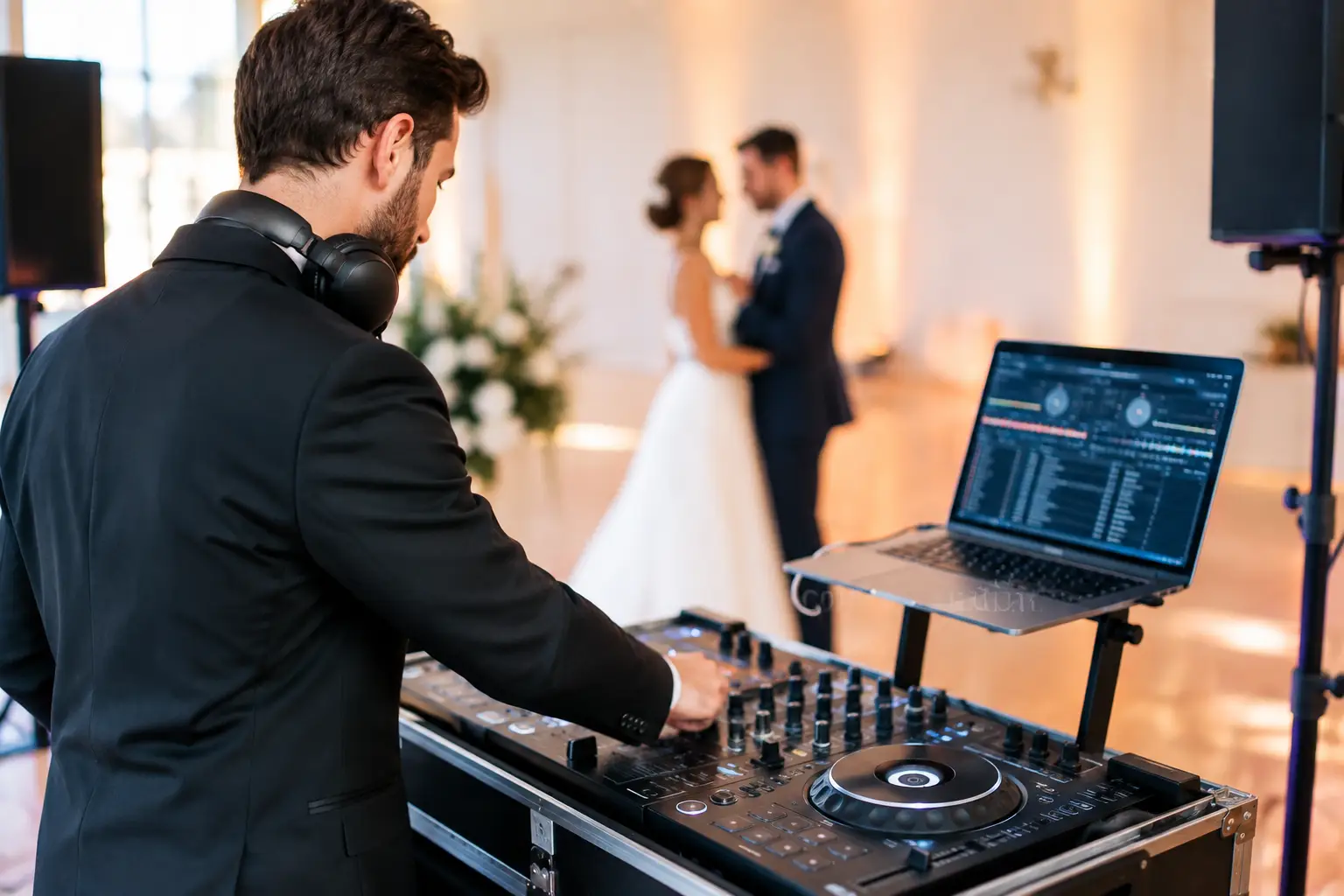
The first dance ends, the photographer is ready for evening shots, and your guests are deciding whether to stay for another drink or head home. That moment is where a good wedding DJ earns their place. Knowing how to choose a wedding DJ is not just about finding someone with speakers and a playlist. It is about booking an experienced professional who can read the room, work around your timings and keep the celebration moving.
A wedding reception brings together different ages, musical tastes and expectations. Your DJ needs to make the night feel like yours while giving every guest a reason to join the dance floor.
Start with the atmosphere you want
Before comparing quotes, decide what you want the evening to feel like. A lively party with singalongs, a polished black-tie celebration, a relaxed barn wedding or a full dance-floor-focused reception all call for a slightly different approach.
Think about the music that matters to you as a couple. You do not need to create an hour-by-hour playlist, and in many cases that can make it harder for a DJ to respond to guests on the night. Instead, share your must-play tracks, your favourite genres and a clear do-not-play list. This gives the DJ direction while leaving room for their experience.
A capable wedding DJ will use your choices as the starting point, not treat them as the whole job. They should be able to move from your first dance into music that brings friends, parents and grandparents together, then build the energy as the evening develops.
Choose a wedding DJ with real wedding experience
A DJ who is excellent at a nightclub, pub or birthday party may not automatically be the right fit for a wedding. Wedding receptions involve announcements, first dances, cake cutting, speeches that run late and venues with strict access or sound rules. Experience means knowing how to handle those changes calmly.
Ask how often they perform at weddings and how they manage key moments. Find out whether they are happy to make announcements, coordinate with the venue and photographer, and adjust the set-up time if the wedding breakfast overruns. These details are often what separate a professional wedding service from a basic disco booking.
It is also worth asking who will actually attend your wedding. If you are booking through a company, confirm whether the DJ is allocated in advance and whether there is a backup plan if illness or an unexpected problem arises. A dependable supplier should be open about this.
Check the equipment and venue requirements
The look and reliability of the set-up matter. A wedding DJ should use professional sound and lighting equipment that suits the size of your room, rather than bringing a system that is either too small to fill the space or so large that it overwhelms it.
Ask to see photos or videos of typical wedding set-ups. Look for a tidy DJ booth, cable management and lighting that complements the room. Good lighting can transform an evening reception, but it should not be distracting during your first dance or make it difficult for guests to talk at nearby tables.
Your venue may also require public liability insurance and PAT-tested electrical equipment. Do not leave this until the final week. Many venues ask for documents before allowing suppliers to set up, particularly at hotels, country houses and purpose-built wedding venues. A professional DJ should be able to provide the relevant paperwork promptly.
Consider sound limiters early
Some wedding venues use sound limiters, which can cut power if music exceeds a set volume. This does not mean you cannot have a great party, but your DJ needs to understand how to work within the limit. An experienced operator can balance speaker placement, volume and music choice to maintain energy without repeatedly triggering the system.
If your venue has a limiter, tell every entertainment supplier before booking. It is much easier to plan correctly than to discover the restriction during set-up.
Ask the questions that reveal how they work
Price is relevant, but the cheapest quote is not always the best value. A lower figure may exclude travel, early arrival, lighting, planning calls or the equipment required for your venue. Compare like for like and make sure the quote is clear.
When speaking to DJs, these questions will give you useful answers:
- How do you collect our music preferences and do-not-play requests?
- What time will you arrive, set up and be ready to start?
- Are public liability insurance and PAT testing included?
- What happens if equipment fails or you are unable to attend?
- Can you provide lighting, a DJ booth or additional wedding décor if required?
Pay attention to the speed and quality of the reply as well as the answer itself. Wedding planning involves plenty of moving parts, and a supplier who responds clearly and professionally at the enquiry stage is often easier to work with throughout.
Meet them or view a proper set-up
If possible, arrange a call, meeting or showroom visit before making your final decision. You are not auditioning someone to play every song on your list. You are checking whether they listen, understand your priorities and inspire confidence.
For couples planning a wedding in Birmingham or the wider Midlands, seeing entertainment and styling products together can be particularly useful. It helps you picture how the DJ booth, uplighting, LED dance floor, illuminated letters or photo booth will work in one room. Booking these services from one established supplier can also reduce the number of deliveries, contacts and set-up schedules to manage on the day.
Mobile Disco Hire Birmingham has more than 20 years of event experience and offers appointments at its event and entertainment showroom, allowing couples to discuss both their music and their wider reception styling in person.
Match the DJ package to your timings
Your reception timetable affects the service you need. A DJ booked from 7 pm until midnight may be perfect for one venue, while another wedding may need background music during the meal, microphones for speeches or music while the room is turned around.
Be clear about the planned first dance time, the evening guest arrival time and the venue finish time. Ask whether the DJ can set up before guests enter the room, as this avoids equipment being carried through a busy reception. If there is a room change after the wedding breakfast, make sure the venue and DJ agree on access and timing.
Also consider whether you want the DJ to provide more than music. A photo booth can give non-dancers something to enjoy, while uplighting, a LED backdrop or light-up letters can make a plain function room feel more personal. These are optional extras, not essentials, but choosing them together can create a more coordinated finish.
Read reviews for the details, not just the stars
Five-star ratings are reassuring, but the wording of reviews tells you more. Look for comments about punctuality, communication, flexibility, music selection and the dance floor staying busy. Reviews that mention a DJ adapting to mixed-age guests or dealing well with a late-running schedule are especially valuable.
Be cautious of reviews that only say “great DJ” without any detail, particularly if you are making a significant booking. It is reasonable to ask for examples of recent wedding work or testimonials from venues and couples.
Trust your judgement before paying a deposit
The right DJ should make planning easier, not create another uncertainty. You should understand what is included, when they will arrive, how they will take requests and what protection is in place if plans change. Get the agreed details in writing, including the date, hours, price, deposit, balance due date and cancellation terms.
A packed dance floor is not created by one perfect playlist. It comes from preparation, professional equipment, good timing and a DJ who understands the people in front of them. Choose someone who asks the right questions about your wedding, and you can spend the evening with your guests rather than worrying about what happens next.
