
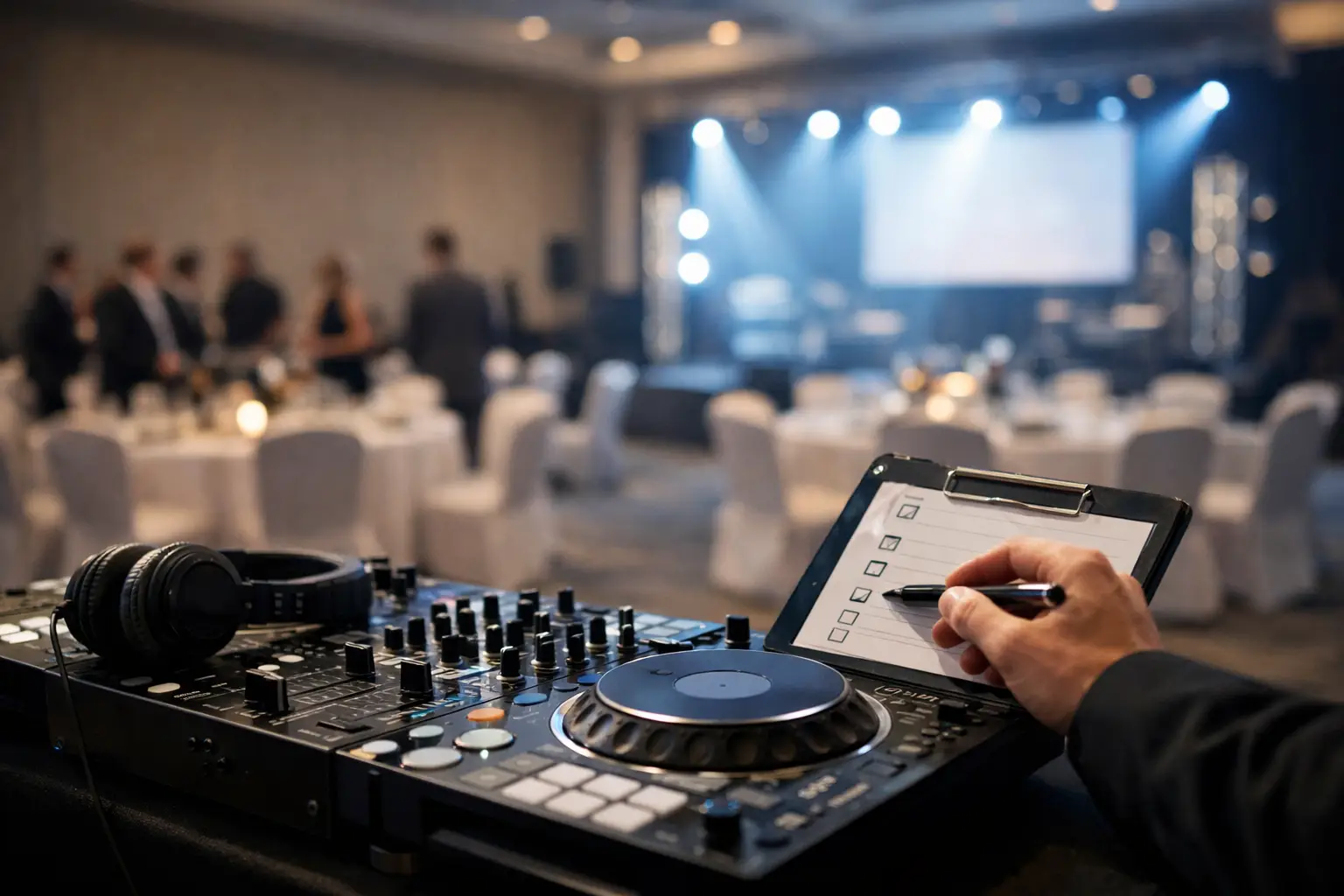
A corporate event DJ can make the room feel polished within minutes – or expose every planning gap just as quickly. When the mic feeds back during awards, the playlist misses the audience, or the setup blocks the branding wall, people notice. That is why a proper corporate event DJ checklist matters. It helps you cover the details that affect atmosphere, timings, venue compliance and the overall impression your event leaves behind.
Corporate events are different from weddings and private parties. The DJ is not only there to fill a dance floor. They may need to handle background music for arrivals, walk-up music for speakers, microphones for presentations, stings for award winners and a livelier set later in the evening. In some cases, they are also working around formal schedules, senior stakeholders and branded production elements. That means planning needs to be tighter from the start.
What a corporate event DJ checklist should cover
A useful corporate event DJ checklist is not just a gear list. It should help you think about the full job the DJ is expected to do. For some events, that will be straightforward evening entertainment. For others, it may include supporting a drinks reception, making announcements and coordinating with the venue or event manager on timings.
Start with the event format. A Christmas party, product launch, awards evening and charity dinner all need a different approach. The music style, sound level, microphone requirements and lighting setup can vary a lot. If you do not define the role clearly, you risk booking a DJ for one job and expecting them to deliver another on the day.
It also helps to be realistic about the audience. Staff parties often include a wide age range, plus guests from different departments and backgrounds. Music needs to be broad enough to keep the room engaged without feeling random. A good DJ can read a room, but they still need direction on the event brief, company culture and any no-go areas.
Venue and setup checks before you book
One of the most common issues at corporate functions is finding out too late that the venue has restrictions. Some hotels and conference venues limit access times, sound levels or where equipment can be positioned. Others require supplier documents in advance. Your checklist should include these points before anything is confirmed.
Check load-in access first. If the DJ has to carry equipment through a busy foyer during guest arrival, that is not ideal. Ask when access is available, whether there are stairs or lifts, and if parking is nearby. This sounds basic, but setup delays often begin here.
You also need to confirm power supply, setup space and finish time. A compact DJ setup may be fine for a small networking event, while a larger corporate party may need a full sound and lighting package. If you are also using extras such as LED dance floors, uplighting or backdrops, the space planning becomes more important. This is where using one experienced supplier can make life easier, because entertainment and styling can be planned together rather than separately.
Venue compliance should be on the checklist too. Ask whether the DJ has PAT-tested equipment and public liability insurance. Many professional venues expect this as standard. It is not paperwork for the sake of it – it is part of making sure suppliers are properly prepared to work on site.
Music planning for a business audience
Music can make or break a corporate event, but the right choice depends on what the event is trying to achieve. A networking evening may need smart background music that keeps energy up without overpowering conversations. An awards night usually needs a more layered plan, with walk-on tracks, stings and then party music once formalities are over.
That is why your checklist should include music direction rather than just a list of favourite songs. Think about the age profile of the guests, whether the company wants a clean and mainstream feel, and whether there are genres that should be avoided. If there are senior leaders attending, you may want the first part of the night to feel more polished and restrained before the dancefloor set begins.
If your event includes international teams or mixed age groups, a very niche playlist can be risky. Broad appeal usually works better. The goal is not to impress a handful of guests with obscure choices. It is to create an atmosphere that feels inclusive and well judged.
It is also worth deciding how much flexibility the DJ should have. A fixed playlist can work for choreographed moments, but a live room often needs live decisions. Experienced corporate DJs know when to keep things understated and when to raise the pace.
Timings, announcements and microphone needs
A DJ at a corporate function is often part entertainer and part technical support. If speeches, awards or presentations are involved, your checklist should include every timed moment that needs music or microphone use. This avoids last-minute confusion and helps the event run cleanly.
Create a running order that includes guest arrival, meal service, speeches, awards, breaks and the point where evening entertainment starts properly. If winners need walk-up music, note the exact timing. If there is a charity raffle or late announcements, include that as well. Small details make a big difference when the room is waiting for the next cue.
Microphones deserve special attention. Do you need one handheld microphone or several? Will someone be speaking from a lectern, or moving around the room? Is the audience large enough that speech clarity becomes more important than music volume? These are not difficult questions, but they are easy to overlook if you only think of the DJ as background entertainment.
For more formal events, presentation matters too. A tidy booth, professional lighting and clear sound contribute to the overall standard of the room. If the event has branding or a luxury finish, the setup should complement it rather than clash with it.
The practical corporate event DJ checklist
When you are comparing suppliers or finalising plans, these are the points worth confirming:
- Event type and guest profile
- DJ start and finish times
- Access times for setup and pack down
- Venue restrictions on sound, lighting and access
- Space available for the DJ setup
- Power supply near the setup area
- Background music requirements for arrivals or dinner
- Microphones needed for speeches, awards or announcements
- Key timings for formal moments
- Music preferences and banned genres or tracks
- Dress code for the DJ
- PAT testing and public liability insurance
- Contact details for the venue and event organiser
- Extra services required such as uplighting, dance floors, backdrops or photo booths
This list does not need to feel complicated. It is simply a way to avoid assumptions. Most event problems come from details that were never discussed.
Why one supplier can simplify the event
Corporate organisers are often balancing several moving parts at once – venue, catering, schedules, branding and guest management. If entertainment, lighting and styling are split across multiple suppliers, communication can become slower and setup can feel disjointed.
That is one reason many businesses prefer a single company that can supply the DJ and related event hire under one roof. If the same team is coordinating the disco setup, uplighting, LED dance floor or backdrop, the end result is usually more joined up. It also means fewer separate deliveries, fewer conflicting setup times and fewer people to brief.
For organisers across Birmingham and the wider Midlands, that practical side matters as much as the music. Mobile Disco Hire Birmingham has been providing corporate DJs and event hire for more than 20 years, with professional equipment, fast replies, PAT-tested systems and £5 million public liability insurance. Those details help events run more smoothly because they reduce the back-and-forth that often slows planning down.
Common mistakes this checklist helps you avoid
The biggest mistake is treating a corporate DJ booking like a simple party booking. Sometimes it is simple, but often it is not. If there are speeches, branding considerations, mixed audiences or venue restrictions, you need a clearer plan.
Another mistake is underestimating setup requirements. A DJ cannot produce a polished result if they are squeezed into a corner with limited power and no time to test microphones. Good suppliers can adapt, but they still need the basics.
Then there is the issue of timing. Corporate events often run late because meals overrun or speeches take longer than expected. A professional DJ can work around that, but only if there has been a proper discussion about flexibility, finish times and the venue rules.
Finally, many organisers leave the atmosphere until too late. Music, lighting and presentation shape how professional the event feels. If those elements are added as an afterthought, the room can feel flat even when the rest of the event is well managed.
A strong checklist does not make your event rigid. It gives you enough structure to be confident, while still leaving room for the DJ to read the room and respond properly on the night. That balance is usually what turns a decent company function into one that feels properly put together.
