
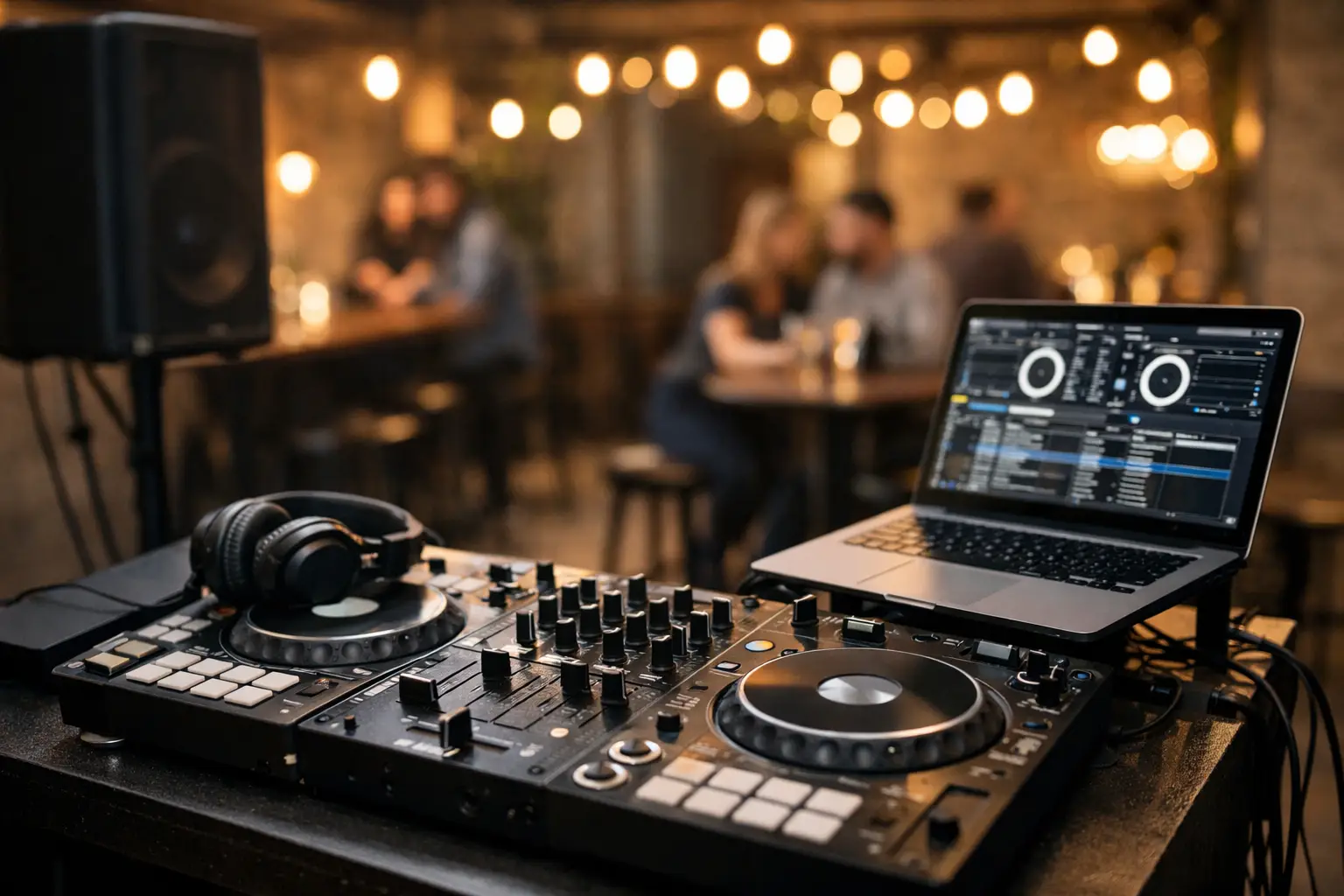
A packed function room can expose a poor DJ setup within minutes. Bass that is too heavy makes conversation difficult, lights aimed at guests become distracting, and a bulky booth can take over the space before the first dance has even started. A well-planned DJ setup for small venues does the opposite: it keeps the dance floor lively, gives guests room to move and looks right for the occasion.
For weddings, birthdays and company events, the goal is not to bring the biggest possible system. It is to supply professional sound, controlled lighting and a neat presentation that suits the room, the guest numbers and the venue rules.
Start with the room, not the equipment
Small venues vary enormously. A private dining room for 40 guests has very different requirements from a low-ceilinged social club, a compact hotel suite or a village hall with 100 people attending. Before choosing speakers or lighting, establish where the DJ will be positioned, the available floor space, ceiling height, access route and location of power sockets.
The DJ position matters more than many hosts expect. Placing the equipment in a corner can save space, but it can also create uneven sound or leave the dance floor feeling disconnected from the music. A sensible layout gives the DJ a clear view of the floor, keeps cables away from guest walkways and leaves enough room for a natural entrance, buffet service and photographers.
It is also worth asking the venue whether it has a sound limiter. These devices monitor volume and can cut the power if music goes above a fixed level. A professional DJ can work successfully with a limiter, but needs to know in advance so the system can be set up and tested properly rather than pushed too hard later in the evening.
Sound should be clear, not excessive
More power is not automatically better. In a smaller room, two quality professional speakers are often enough to deliver full, warm sound without making the room uncomfortable. The difference comes from speaker placement, careful volume control and an experienced DJ who can read the room.
Speakers should usually be raised so sound travels over the nearest guests rather than directly into them. They should face the dance floor where possible, not point at the bar, dining tables or the venue staff trying to serve drinks. This improves clarity and reduces the temptation to turn the volume up simply because people at the back cannot hear properly.
Subwoofers can add impact for party music, but they are not essential for every small venue. In a room with a wooden floor or a strict noise policy, a subwoofer may create more low-frequency vibration than the venue permits. For an intimate wedding meal followed by dancing, a balanced speaker setup can be the better choice. For a larger party room with a strong dance-floor focus, a compact subwoofer may be appropriate if the venue allows it.
A good DJ setup for small venues is designed around comfortable coverage. Guests should be able to enjoy the music on the dance floor without needing to shout across the table during a catch-up.
Why professional equipment still matters
Compact does not mean basic. Professional-grade sound equipment gives better control over volume, vocal clarity and bass response. It is more reliable than a domestic speaker arrangement and better suited to handling an evening of requests, announcements, first dances and busy dance floors.
For a wedding or corporate function, a microphone is equally important. Speeches, introductions, prize presentations and surprise announcements all need to be heard clearly. A wireless microphone provides flexibility, but it should be checked before guests arrive and kept ready for the organiser or venue coordinator when needed.
Keep lighting focused on the dance floor
Lighting creates atmosphere quickly, but in a small room it needs restraint. One or two well-positioned effects can make a compact dance floor feel energetic. Too many fixtures, fast flashes or bright beams across dining tables can make a polished event feel cluttered.
The most effective approach is usually a tidy lighting bar or stand behind the DJ, with effects directed towards the floor and ceiling. This provides movement and colour without filling the room with equipment. For weddings, softer colour washes during the meal and early evening can give way to more upbeat effects once the party begins.
Uplighting is especially useful in small venues because it adds colour without taking up valuable floor space. A run of LED uplighters around the room can highlight walls, columns or features while matching a wedding colour scheme, company branding or party theme. Unlike large light fixtures, uplighting can improve the whole room even when the dance floor is modest.
If the room has low ceilings, avoid planning a setup that relies on high-mounted effects or large overhead structures. A low-profile rig and carefully placed uplighters will look more considered and reduce the risk of lights dazzling guests.
Make the DJ area part of the event styling
The DJ booth is visible all evening, particularly at weddings. A plain table with exposed cables can distract from otherwise thoughtful décor, while an oversized structure can dominate a smaller room. A smart, compact booth creates a professional focal point without making the setup feel intrusive.
White DJ booths work particularly well for weddings and formal events, especially when paired with a white LED dance floor, illuminated love letters or Mr & Mrs letters. For birthday parties and corporate functions, a black booth or branded colour scheme may suit the room better. The aim is to make the entertainment area feel like part of the event, not an item that has been added at the last minute.
This is where using one supplier for entertainment and styling can make planning easier. The DJ setup, dance floor, uplighting, backdrops and decorative letters can be sized and positioned together, rather than relying on separate suppliers to work around one another on the day.
Allow enough time for access and setup
A compact setup still needs proper setup time. Some venues have lifts, narrow corridors, stairs, limited parking or shared access with restaurant and hotel operations. If equipment has to be brought through a busy entrance shortly before guests arrive, the risk of delay increases.
Provide the supplier with the venue name, event room, guest arrival time and any access instructions as early as possible. For wedding venues, confirm whether the DJ can set up before the meal, during room turnaround or only after guests have moved into another area. Each option affects the equipment choice and the time available for sound checks.
Cables should always be secured and routed safely. Professional suppliers use suitable cable protection where required, while keeping the setup tidy and practical. It is not a glamorous detail, but it matters when guests are wearing formal shoes, children are moving around the room and venue staff need clear routes to work.
Check the venue requirements before booking
Many established venues ask for public liability insurance and evidence that electrical equipment has been PAT tested. These are sensible checks, not unnecessary paperwork. They show that the supplier is prepared to work safely in a live event environment.
Ask about loading arrangements, finish times, sound restrictions, stage dimensions and whether the venue provides power close to the DJ position. If the event includes a band, singer or saxophonist alongside the DJ, mention this at the planning stage too. The sound system and space requirements may need adjusting so every performer has what they need.
At Mobile Disco Hire Birmingham, our equipment is PAT tested and our service is backed by £5 million public liability insurance, helping venues and organisers book with confidence. We can also arrange an appointment at our event and entertainment showroom for clients who want to see selected dance floors, décor and entertainment options before making decisions.
Choose the right package for the guest experience
A smaller venue does not have to mean a smaller occasion. The best package is based on how guests will use the room. A 50-person wedding with a late first dance may benefit from a neat DJ booth, two speakers, focused party lighting, uplighters and a compact LED dance floor. A corporate awards evening may prioritise microphones, clear background music and a clean-looking setup before the dancing begins.
For milestone birthdays, the balance often shifts towards more energetic lighting and a stronger dance-floor atmosphere. Even then, space remains the deciding factor. If adding a photo booth, sweet cart, throne chair or backdrop, plan where it will sit without squeezing guests away from the bar, tables or dance floor.
A venue visit, room plan or even a few clear photographs can prevent guesswork. It allows the setup to be matched to the space before the event day, leaving you free to focus on your guests rather than wondering whether the room will work.
The right small-venue DJ setup is not the loudest or the most crowded. It is the one that sounds excellent, looks polished and gives every guest a reason to stay for one more song.
