
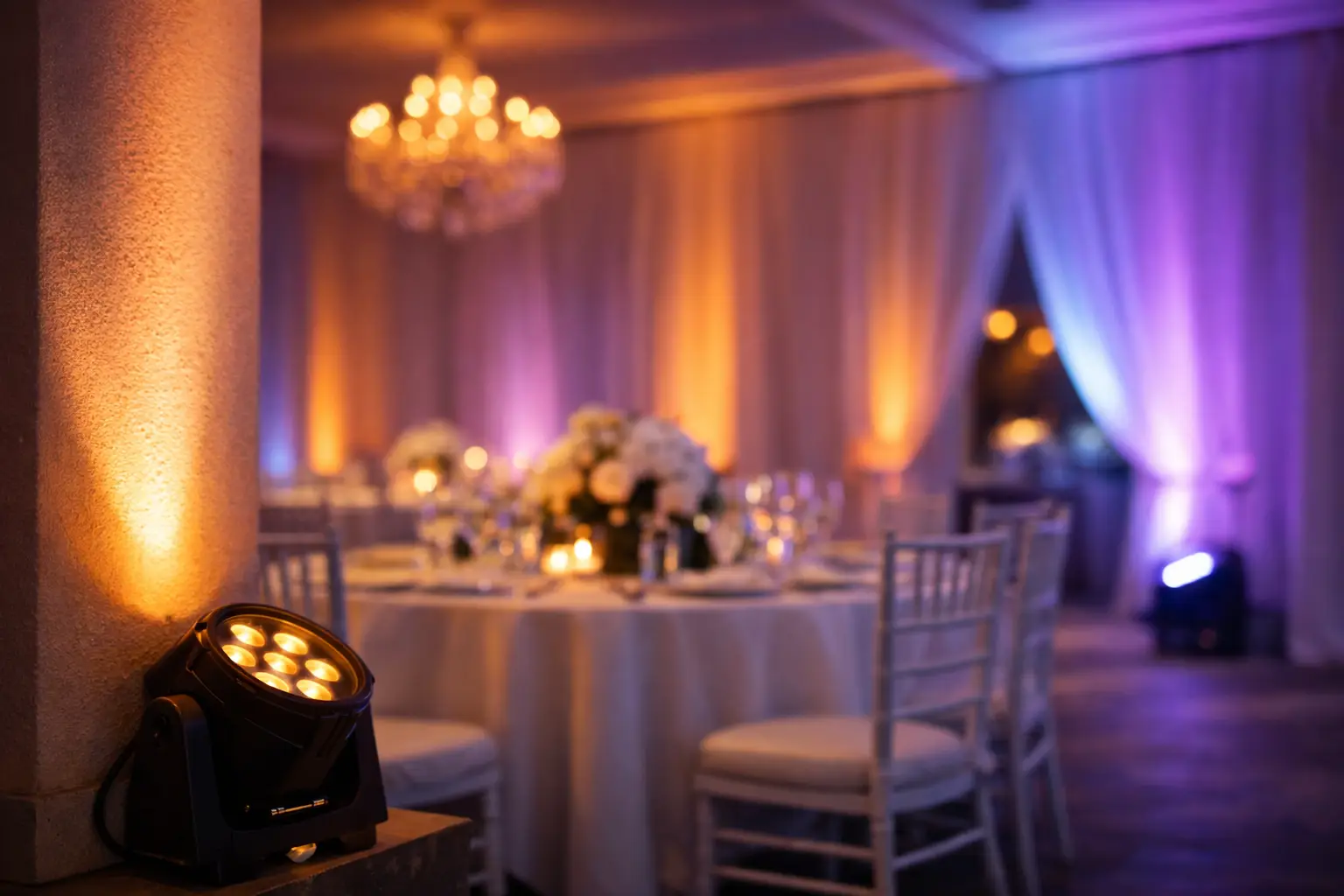
A plain function room can look completely different once the walls are lit properly. The right colour can warm up a wedding breakfast, give a birthday party real energy or bring corporate branding into the room without covering every surface in banners. This guide to venue uplighting hire explains what to book, where it should go and what to check before your event date.
Uplighting is one of the most effective ways to make a venue feel styled from the moment guests arrive. It is also more flexible than many people expect. A professional setup can be subtle and elegant, bold and colourful, or programmed to change as the evening moves from dining to dancing.
What venue uplighting hire actually includes
Venue uplighting uses compact LED lights placed around the edge of a room, pointing upwards onto walls, pillars, alcoves, drapes or architectural features. Rather than lighting faces directly, it creates a wash of colour that adds depth and atmosphere to the space.
For weddings, couples often choose warm white, soft amber, blush pink, rose gold tones or a colour that complements their flowers and chair sashes. For parties, blue, purple, red and green can give the room a livelier feel. Corporate events may use brand colours for an awards evening, product launch or staff celebration.
The biggest advantage is that uplighting works with the venue you have chosen. It can draw attention to attractive brickwork, high ceilings or columns, while making a larger room feel more intentional and less empty. In a simple hotel suite or village hall, it is often the styling detail that ties the room together.
Not every venue needs the same approach. A low-ceilinged room with pale walls may need fewer fixtures than a large barn with dark wood and exposed beams. This is why a supplier should ask about the room, guest numbers, layout and the look you want before recommending a package.
Choosing the right amount of uplighting
There is no useful one-size-fits-all number. Booking too few lights can leave long dark gaps around the room, while too many can make a smaller space feel overly busy. The aim is even coverage with deliberate focal points, not simply placing a light every few feet.
As a general starting point, a small party suite may suit six to eight uplighters. A medium wedding or corporate function room may need 10 to 16, and a larger room, barn or venue with several feature walls may require more. Pillars, top tables, cake displays, entrance areas and alcoves can all affect the final quantity.
It is worth considering what guests will see when they enter. The wall behind the top table or head table, the area around the dance floor and the entrance are usually high-impact positions. If the budget is limited, prioritise these areas rather than spreading a small number of lights too thinly across the entire room.
Think about wall colour and surface texture
White or cream walls reflect light strongly, so softer settings often look best. Dark walls absorb more colour and can need brighter fixtures or closer spacing. Stone, brick and wood create attractive texture, but the colour may not appear exactly as it does on a plain painted wall.
Large mirrors and shiny surfaces need a little care too. They can bounce light around the room, which may be useful, but they can also create glare if fixtures are placed at the wrong angle. An experienced event lighting team will position units to make the room look polished rather than cluttered.
Pick colours that work throughout the event
The best uplighting colour is not always the brightest one. For a wedding meal, warm white or amber makes the room feel welcoming and photographs well. A gentle blush, pale blue or lavender can work beautifully if it fits the wider colour scheme. Strong red or deep green may suit an evening party, but can be less flattering during dinner and speeches.
A popular option is to use one elegant colour while guests are arriving and dining, then change the lighting once the disco begins. This gives the evening a clear transition without needing to restyle the room. It is particularly effective when uplighting is hired alongside a DJ, LED dance floor, illuminated letters or a photo booth.
For corporate events, confirm brand colours early. Some logo colours do not translate perfectly into lighting, particularly very pale shades or highly specific printed tones. A close, attractive match normally works better than chasing an exact shade that looks weak on the wall.
Avoid choosing colours purely from a phone screen. Screens display colour differently, and the venue’s own walls, curtains and ambient lighting will change the result. Discussing the colour plan with your supplier is the sensible route, especially if the event has a formal theme or photography is a priority.
Venue checks to make before booking
Before confirming venue uplighting hire, check the venue’s access times and its policy on external suppliers. Some venues have preferred suppliers, while others simply need names, insurance details and setup information in advance. Leaving this until the week of the event can create unnecessary stress.
Ask whether the room will be available for installation before guests arrive. Uplighting is quick to set up in most cases, but a room turnaround between events, a late-access venue or furniture still being moved can affect the plan. Your supplier also needs to know whether there are stairs, long walks from loading areas or restricted parking.
Modern LED uplighters are efficient and can often be positioned neatly around a room, but power arrangements still matter. Cables should never create a trip hazard across guest walkways. In some situations, battery-powered fixtures are a better choice because they keep the floor clear and give more freedom over placement.
The practical questions to cover are:
- What time can the supplier access the room?
- Which walls, pillars or features can be lit?
- Are there venue restrictions on cables, fixtures or colour changes?
- Will tables, drapes or staging block the intended lighting positions?
- Who is the venue contact on the day if access needs confirming?
These details may sound minor, but they are what separate a good-looking lighting plan from a last-minute compromise.
Why professional setup matters
Hiring the lights alone may sound straightforward, yet setup, placement and collection are where much of the value sits. Equipment needs to be clean, reliable and suitable for event use. It should be placed safely and adjusted for the room rather than simply dropped at the perimeter.
A professional supplier should be ready to work around your timetable and venue requirements. For a wedding, that may mean installing before decorators, florists or caterers complete the room. For a corporate function, it may mean working around staging, AV equipment and branded displays. Coordination avoids one supplier blocking another’s work.
Mobile Disco Hire Birmingham has more than 20 years of event experience and can provide uplighting alongside DJs, LED dance floors, photo booths, backdrops and venue styling. Using one established supplier for several elements means fewer separate deliveries, fewer people to brief and a more coordinated finish. Equipment is PAT tested, and the business holds £5 million public liability insurance for venue confidence.
That does not mean every event needs every add-on. Uplighting on its own can make a strong difference in the right room. But if you are already booking entertainment and decorative features, combining services can make planning simpler and help ensure the colours, timings and layout work together.
Get the look right without overcomplicating it
Start with the room, then choose colours and coverage that support the occasion. Send your supplier a few venue photographs, explain where key features will sit and say whether you want relaxed elegance, a party atmosphere or a branded event space. If you are unsure, arrange an appointment to visit a showroom and see lighting and styling options in person.
The most successful uplighting is rarely the loudest. It is the lighting that makes guests walk in, notice how good the room feels and assume every detail was planned that way.
