
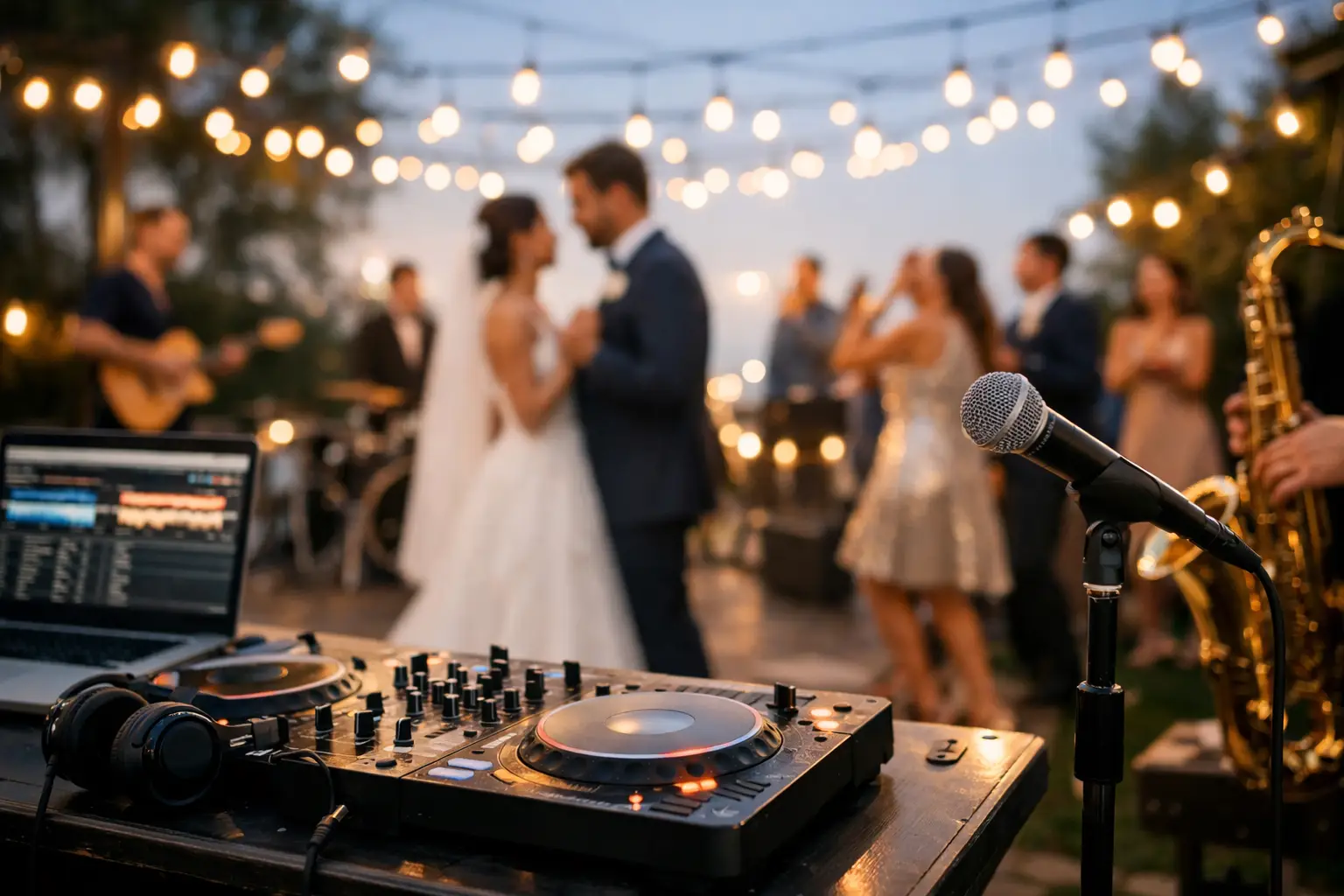
The moment the evening buffet closes is still the real test of a wedding playlist. If guests of different ages are singing along, the dance floor is busy and the newlyweds are not worrying about the next song, the entertainment is doing its job. The strongest wedding music trends for 2026 are not about following a rigid list of new releases. They are about creating a celebration that feels personal, energetic and well paced from the ceremony through to the final dance.
For couples across Birmingham and the Midlands, that often means combining the songs they genuinely love with proven floor-fillers their guests know. A good wedding DJ reads the room, handles requests sensibly and builds the night around the people actually there – not a playlist that only looked good on paper.
Wedding music trends that feel personal
The move away from a single music genre is continuing. Couples are choosing a wider mix: acoustic versions for the ceremony, soul and Motown during the wedding breakfast, party classics after the first dance, then a late burst of garage, R&B, indie, dance or Afrobeat for the guests who want to stay up.
This works particularly well for weddings where families and friendship groups have very different musical tastes. The key is not trying to play every genre equally. Think about where each sound fits. Background music should support conversation, while the evening set needs familiar choruses, recognisable openings and enough momentum to keep people dancing.
Personal choices are becoming more specific too. Rather than simply giving the DJ a huge playlist, couples are providing a short list of must-play songs, a clear do-not-play list and a few musical clues about their crowd. For example, “80s singalongs early, 90s dance later” gives a DJ far more useful direction than 100 tracks in no particular order.
There is a trade-off. A playlist made entirely of personal favourites can miss the songs that bring the whole room together. Equally, an evening built only on predictable hits can feel like any other party. The best approach leaves room for both: your defining songs, plus professional judgement when the dance floor responds to something unexpected.
Shorter mixes, bigger moments
Guests are increasingly used to music changing quickly, and wedding dance floors often respond well to tighter mixing. This does not mean every song should be cut after 30 seconds. A big anthem deserves time for the chorus, the hands-in-the-air moment and a proper singalong. But moving on before energy drops can keep the evening feeling fresh.
Expect more mini-sets that build a mood: disco into funk, noughties pop into R&B, or dance classics into current club-inspired tracks. A skilled DJ can use these changes to bring different groups onto the floor without making the night feel disjointed.
Live touches without a full live band
A live band remains a fantastic option for many weddings, but it is not the only way to add a live feel. One of the most practical wedding music trends is combining a DJ with a live element, such as a singer for the ceremony, a saxophonist during a dance set or an acoustic musician for drinks reception music.
This can create a standout moment without asking one act to cover every part of a long wedding day. It also gives more musical flexibility after the evening starts. A DJ can adapt to requests, change the pace quickly and continue for longer than many live performances.
The practical details matter. Check whether the venue has sound restrictions, a noise limiter or a set finish time. Ask how the live performer and DJ will share equipment, who provides microphones, and whether there is enough space for both. A plan that sounds great can become awkward if it is arranged too late for the venue layout.
Ceremony and daytime music deserve more attention
The music before the party is no longer an afterthought. Couples are choosing entrance songs that immediately set the tone, whether that is elegant strings, a stripped-back modern track or something joyful that gets a reaction from the room. Signing-register music and the exit song are also being used to give the ceremony a more considered flow.
For the drinks reception and meal, the current preference is for atmosphere rather than silence. Soul, jazz, acoustic covers, laid-back house and familiar classics at a sensible volume all work well. The right level is important: guests should be able to speak comfortably across the table without competing with the speakers.
If speeches are planned, make sure the entertainment supplier knows the running order. Professional sound equipment and a suitable microphone can make a major difference, especially in larger suites or venues with high ceilings. Music cues for entrances, awards, surprise performances or the cake cut should be agreed in advance so they land cleanly rather than feeling improvised.
The first dance is becoming less formal
A traditional slow first dance still has its place, but couples are more willing to make it their own. Some choose a shortened version of a meaningful song before inviting guests onto the floor. Others start with a slow track and switch into an upbeat favourite, or choose a song that is simply fun rather than conventionally romantic.
There is no right answer here. A choreographed routine can be brilliant if you enjoy rehearsing and want a showpiece moment. It can also add pressure during an already busy day. A relaxed first dance, supported by a song you both connect with, is often more memorable because it feels natural.
Think about the transition afterwards. If the aim is to fill the dance floor, tell the DJ whether you want guests called up straight away or whether you would prefer a few moments together first. That small decision shapes the start of the evening.
Requests are welcome, but boundaries help
Guest requests remain part of a lively wedding, particularly later in the night. They can bring a group of friends together or uncover a song that means something to the couple. However, unrestricted requests can pull the music in too many directions and interrupt a carefully built set.
A sensible middle ground is to let guests request songs while giving the DJ permission to judge the timing. Not every request suits the room at that exact moment, and some will work better later. A concise do-not-play list is equally useful, especially where a song has an awkward personal association or simply does not match the atmosphere you want.
Avoid making the list overly restrictive. If every song choice must be approved in advance, it becomes harder for the DJ to respond to the crowd. Your DJ should be guided by your preferences, but trusted to use experience when the evening is in full flow.
Make the sound and styling work together
Music creates energy, but lighting is what makes a dance floor look and feel like an evening celebration. Uplighting can add colour around the room, an LED dance floor can define the party area, and illuminated love letters create a strong focal point for photographs. These details are particularly effective when a venue has a neutral function suite that needs more personality after daylight fades.
Coordination is more valuable than it sounds. Booking entertainment and styling through one experienced supplier can reduce delivery clashes, duplicated setup times and last-minute questions over power, access or layout. At Mobile Disco Hire Birmingham, couples can combine DJ entertainment with lighting, dance floors, photo booths and wedding décor, while dealing with one coordinated team.
Whatever package you choose, ask about setup time, venue requirements and insurance. PAT-tested equipment and public liability cover are practical checks that help venues approve suppliers and give couples confidence that the evening is properly prepared.
Choose the trends that suit your guests
The most successful weddings do not try to copy every trend. A daytime acoustic singer may be perfect for an intimate country-house celebration, while a city-centre venue with a large evening crowd may benefit more from a DJ-led party, statement lighting and a photo booth. Guest numbers, age mix, venue restrictions and your own personalities should guide the decision.
Start with the moments you want people to remember: the ceremony entrance, the first dance, the songs that will get your closest friends together, and the final track that sends everyone home smiling. Build the rest around those moments, give your entertainment team clear direction, and leave enough room for the party to develop naturally.
