
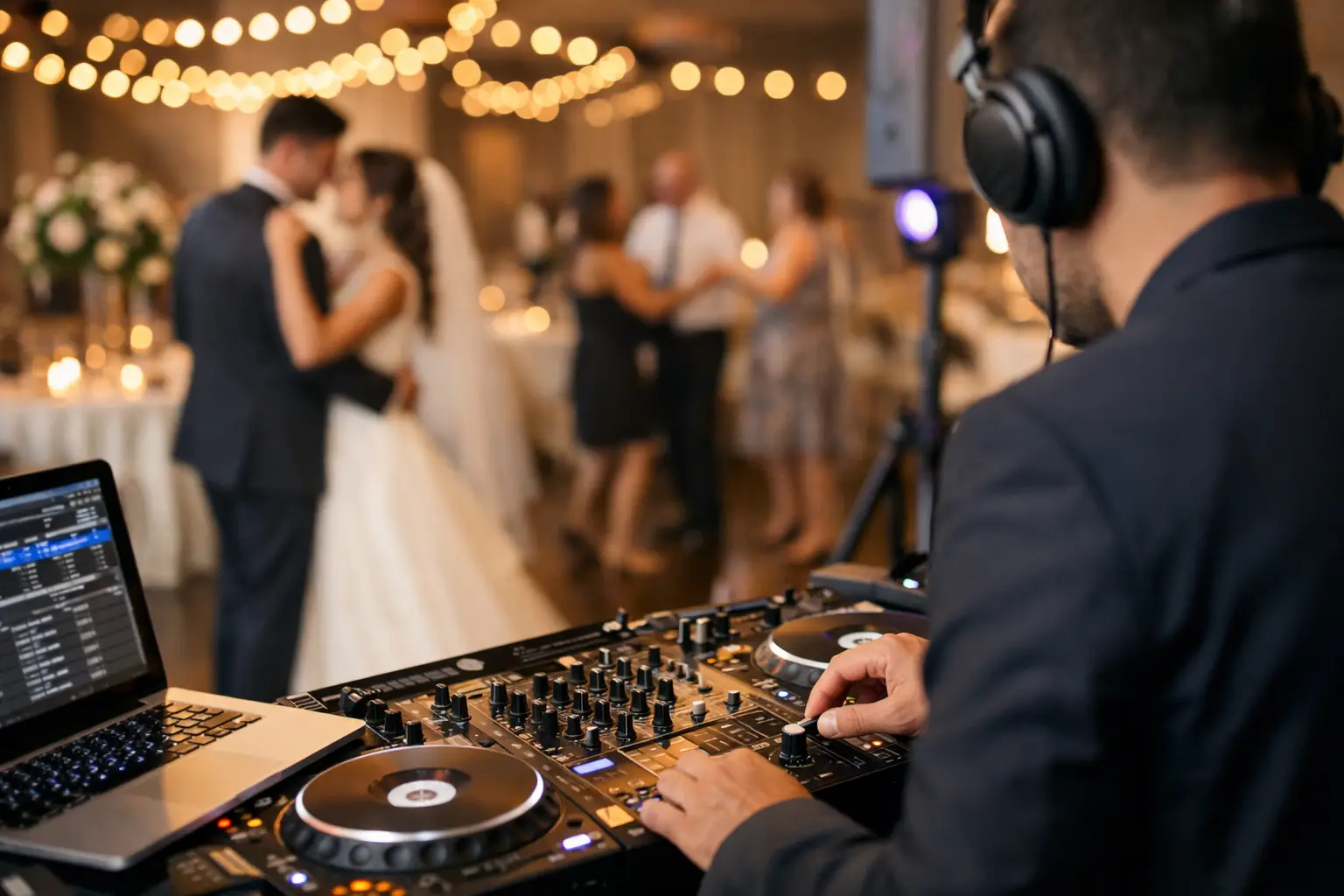
The evening reception is the point where your wedding stops being a timetable and becomes a party. Guests who have spent the day talking, eating and posing for photographs need a reason to stay, celebrate and fill the dance floor. This Birmingham wedding DJ guide explains what to look for, what to ask and how to make sure the music suits your guests rather than just a playlist.
A good wedding DJ does far more than arrive with speakers and press play. They read the room, manage the pace of the night, make clear announcements when needed and adjust the music to the people actually in front of them. Choosing well gives you a confident, properly run reception and takes one major job off your planning list.
Start with the atmosphere you want
Before comparing DJs, decide what you want the evening to feel like. Some couples want a full-on party from the first dance onwards, with floor-fillers across several decades. Others prefer a smart, relaxed reception that builds steadily after the meal. Neither approach is wrong, but your DJ needs to understand the brief.
Think about the mix of guests, not only your own musical taste. A wedding may bring together grandparents, colleagues, university friends and young children. The strongest sets move between recognisable classics, current favourites and music that means something to the couple. A DJ can play your preferred genres without making the room feel narrow or excluding half the guest list.
It also helps to consider the venue and the time available. A four-hour evening reception allows more room for requests and musical variety than a shorter function. If your first dance is late, or the bar closes early, tell your DJ from the outset so they can structure the night properly.
What a professional wedding DJ should provide
Price matters, but it should not be the only comparison. A low quote can sometimes mean limited equipment, little preparation or a supplier who is not ready for venue requirements. Ask exactly what is included and check that the service feels appropriate for a wedding rather than a basic party booking.
A professional setup should include quality sound equipment suitable for your guest numbers and room size, along with lighting that creates atmosphere without overwhelming the venue. Equipment should be PAT-tested, and the supplier should hold public liability insurance. Many Birmingham venues ask for these documents before allowing entertainment equipment on site, so confirming this early can prevent an awkward last-minute problem.
Experience is equally useful. Wedding timings can move, speeches can run over and the room can be slow to fill after the buffet. An experienced DJ remains calm, adapts the schedule and keeps the entertainment moving without making the couple feel rushed. They should also understand microphone use, first-dance timing and how to make announcements clearly when requested.
Ask the questions that prevent surprises
Your initial conversation should be straightforward. Explain your date, venue, guest numbers and approximate entertainment times, then ask how the DJ would approach your reception. Their answers should be clear and specific, not vague promises that they can play anything.
Confirm whether they take requests, how they handle a do-not-play list and whether you can submit key songs in advance. Most couples do not need to programme every track, but giving guidance is sensible. Mention genres you love, artists you would rather avoid and any tracks with personal importance. If there are cultural traditions, specialist music or a family dance you want included, raise this before booking rather than hoping it can be sourced on the night.
Also ask about setup and access. Your venue may have a loading route, stairs, a lift, a restricted setup window or a sound limiter. A DJ who knows these details beforehand can arrive prepared. Check whether early setup is available, especially if the room is being turned around between the wedding breakfast and evening reception.
Plan music without over-controlling the night
A carefully chosen first dance sets the tone, but it does not need to dictate the whole evening. Pick a song you both genuinely like and feel comfortable dancing to. It can be slow, upbeat, traditional or unexpected. The important part is that it feels right for you.
After that, give your DJ direction rather than a rigid song-by-song running order. A short list of must-plays, a few preferred styles and a clear do-not-play list usually works best. It allows the DJ to respond to the dance floor while protecting the songs and artists you do not want at your wedding.
Be realistic about requests from guests. They can add energy and help different generations feel included, but not every request belongs in the set. Your DJ should use judgement, taking suitable requests while keeping the musical flow intact. A sudden change from a packed dance floor to a niche track can empty the room quickly.
Build momentum around the first dance
Tell your DJ whether you want guests invited onto the floor during the first dance or whether you would prefer a short moment together first. This small decision changes the start of the party. Inviting guests in after the first minute can create an immediate crowd; keeping the moment private creates a more intimate photograph and a natural pause before the pace increases.
If you are having a father-and-daughter dance, a cultural dance or a surprise routine, make sure it is included in the evening plan. Your DJ can have the track ready, make the right announcement and avoid playing it too early.
Match the production to your venue
The right DJ setup should look as good as it sounds. In a modern hotel suite, clean booth styling, coordinated uplighting and an LED dance floor can make the room feel more finished. In a rustic barn, softer lighting may suit the setting better. A large lighting rig is not automatically better if it clashes with your styling or takes up valuable floor space.
This is where booking entertainment and venue dressing from one supplier can save real time. Your DJ, dance floor, uplighting, illuminated love letters, photo booth and backdrop can be planned as one coordinated package rather than several separate deliveries. It reduces the number of people you need to brief, helps the room look consistent and makes setup simpler for the venue team.
There are trade-offs. A photo booth gives guests something to do away from the dance floor and creates keepsakes, but it needs a suitable position and enough space for a queue. An LED dance floor adds instant visual impact, but it is worth checking the venue layout so it does not restrict access or squeeze the DJ into a corner. Good planning is about choosing the features that will genuinely be used.
Do not leave venue compliance until the last week
Venues often have rules around sound levels, smoke effects, access, electrical testing and finish times. Some use sound limiters, particularly in city-centre locations or venues close to residential areas. A professional DJ will work within these conditions, but they need to know about them before the event.
Ask your venue for its entertainment policy when you book. Then pass the information on to your DJ, including contact details for the events manager if appropriate. Confirm load-in times, parking arrangements and whether the DJ can set up before guests enter the room. This is especially valuable at busy Birmingham wedding venues where suppliers may be working around several functions on the same day.
At Mobile Disco Hire Birmingham, clients can combine experienced wedding DJs with professional lighting, dance floors, photo booths and wedding décor through one established supplier. With more than 20 years of experience, PAT-tested equipment and £5 million public liability insurance, the focus is on giving couples a polished, venue-ready service. If you would like to see styling and entertainment options before deciding, appointments can also be arranged at the event and entertainment showroom.
Set a clear running order for the evening
Your DJ does not need a minute-by-minute script, but they do need the key moments. Share the time of the first dance, buffet, cake cut, evening guest arrival and planned finish. Let them know who is authorised to make changes on the night, as couples should not be pulled away from enjoying their own reception to answer operational questions.
A useful approach is to nominate one trusted person, such as a best man, maid of honour or venue coordinator, as the point of contact. They can help gather family for a planned dance, confirm when food is ready or flag a genuine schedule change. Your DJ can then keep the celebration running while you stay present with your guests.
The best wedding DJ is not necessarily the one with the longest song list or the biggest light show. It is the supplier who listens to your plans, arrives prepared, meets your venue’s requirements and knows how to turn a mixed group of guests into a proper party. Book early, share your brief clearly and leave enough room for professional judgement on the night.
