
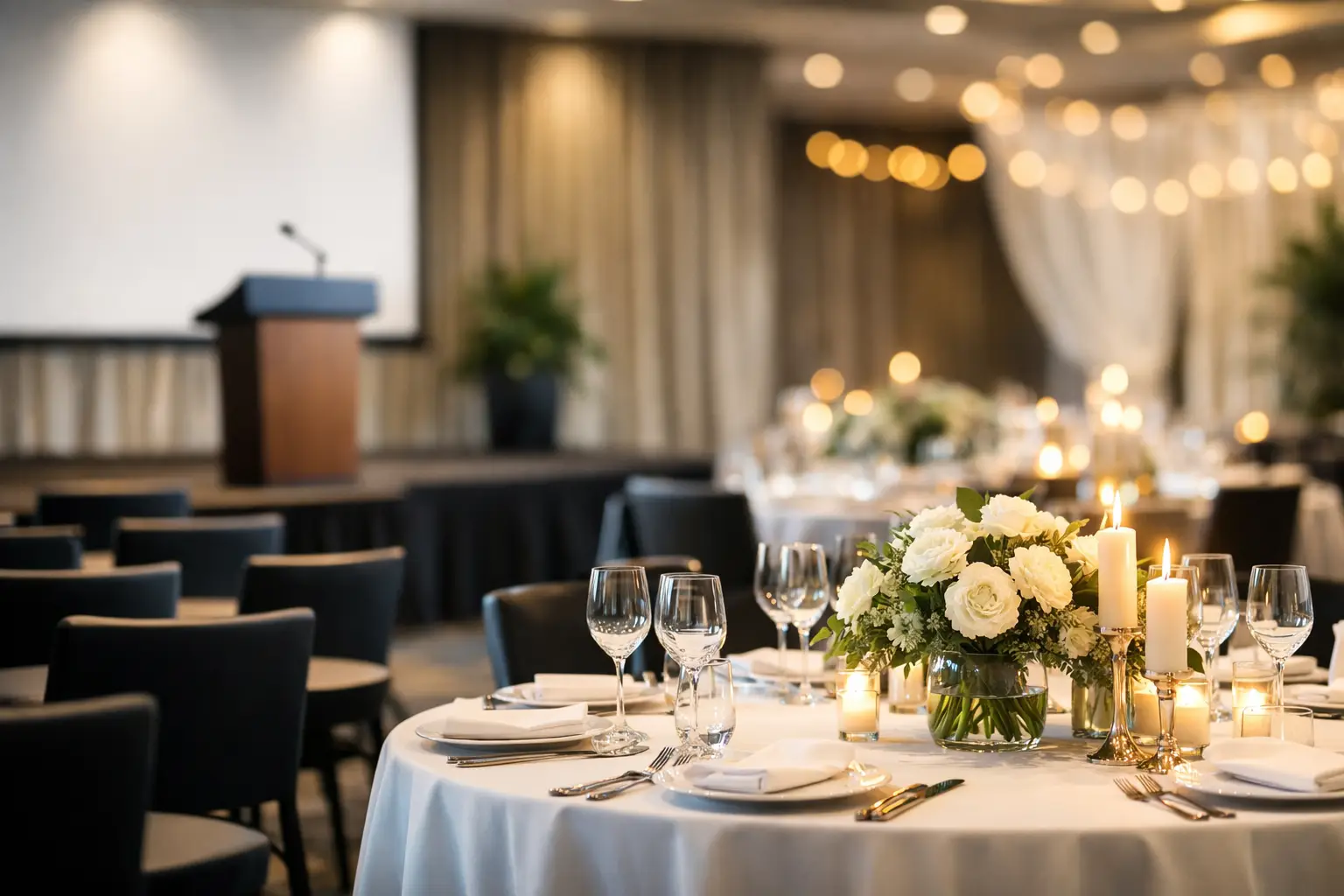
A corporate venue can look very different once the tables are laid, the lighting is set and the branded details are in place. Knowing how to dress corporate venues is not about filling every empty corner with décor. It is about creating a professional setting that supports the purpose of the event, whether that is a staff awards night, conference, product launch, Christmas party or client reception.
The best results come from starting with the room itself. A hotel suite, conference centre, warehouse space and office atrium all have different practical limits, sightlines and strengths. Good venue styling should make the space feel intentional while keeping guests comfortable, keeping key areas clear and meeting the venue’s requirements.
Start with the event objective
Before choosing colours, centrepieces or lighting, establish what the event needs to achieve. A formal awards evening calls for a different atmosphere to a daytime training session or a relaxed company celebration. The décor should help guests understand the tone as soon as they enter the room.
For a conference or presentation, clarity is usually the priority. Keep the stage, screen and speaker area clean, visible and well lit. Use understated uplighting in brand colours, neat chair covers if suitable, and simple table styling that does not obstruct notebooks, laptops or catering.
For an awards dinner, gala or Christmas party, you can be more dramatic. LED dance floors, illuminated letters, feature backdrops, table décor and colour-changing uplighters can turn a standard function suite into an event space with a genuine evening feel. The key is to concentrate the impact in the places guests will photograph and remember: the entrance, stage, dance floor and photo area.
Visit the venue before finalising the design
A site visit prevents many avoidable problems. Photographs from a venue brochure rarely show plug socket locations, ceiling height, restricted access, existing lighting or the distance between the entrance and main room. They also do not reveal whether a room feels dark, echoey or much smaller once tables are in place.
Walk through the guest journey from arrival to departure. Consider where guests will register, leave coats, collect drinks, sit down, watch presentations and dance. This will show you where styling has the most value and where it may simply get in the way.
Ask the venue about load-in times, lift access, parking, fire exits, ceiling fixtures, wall fixings and electrical rules. Some venues will not allow candles, tape on painted surfaces or anything attached to walls. Others require suppliers to provide PAT-tested equipment and public liability insurance. These details should be confirmed before products are booked, not on the morning of the event.
Build a clear visual scheme
Corporate styling works best when there is one consistent idea rather than several competing ones. Start with two or three colours, then decide where each will appear. Brand colours can be effective, but using too much of a bright corporate shade can make a room feel harsh. Often, a neutral base of black, white, ivory, silver or gold works well, with the company colours added through lighting, balloons, signage or table details.
Uplighting is one of the most efficient ways to transform a corporate room. It adds colour around the perimeter, highlights architectural features and makes a plain space feel more considered without taking up valuable floor space. For speeches and dining, use a warm, controlled setting. Later, colours can be changed to suit the entertainment and encourage guests onto the dance floor.
A backdrop can provide a strong focal point behind a stage, top table, awards area or photo opportunity. Choose a clean LED backdrop for evening glamour, or a branded display for a launch or networking event. If logos are used, make sure they are readable from a distance and do not compete with the presenter or award winner in photographs.
Dress the key zones, not every inch
Trying to decorate the entire room can waste budget and make a corporate event look crowded. Focus attention on the zones that shape the guest experience.
The entrance sets expectations. A welcome sign, branded balloon display, illuminated letters or carefully placed uplighters can make guests feel they have arrived somewhere special before they reach the main room. Keep the route clear for arrivals, wheelchair users and staff carrying trays.
The stage or presentation area needs a professional finish because it will be seen throughout the event and feature in photographs. Consider a smart backdrop, controlled lighting and a tidy cable plan. Avoid placing tall props where they block sightlines from tables or interfere with screens.
The dining area benefits from consistency. Chair covers and sashes can quickly make mixed venue furniture look coordinated, while simple centrepieces create a polished finish without stopping conversation across the table. If a meal is being served, leave enough space for crockery, menus and service staff. Tall arrangements may look impressive but can be impractical in a room where people need to network.
The entertainment area should feel distinct from the formal part of the room. A professional DJ setup, dance floor and lighting design give guests a clear invitation to stay after dinner. This is especially valuable for company parties, where the transition from speeches to celebration needs to feel natural rather than awkward.
Match lighting to the running order
Lighting should not be treated as a last-minute decorative extra. It affects how guests feel, how photographs look and whether people can comfortably eat, talk and move around.
During registration and networking, aim for a welcoming level of light. Guests need to see name badges, find colleagues and approach the bar without feeling as though they have entered a nightclub. For presentations, dim the room enough for screens to be visible while keeping speakers properly lit. A presenter standing in shadow immediately makes an event look less professional.
For dinner, warm lighting is usually more flattering and relaxed. Once formal proceedings are over, a DJ can move into a livelier lighting programme for the party. This change in atmosphere is simple but effective: the same venue can shift from corporate dinner to proper celebration without guests needing to move rooms.
Keep branding confident but restrained
A corporate event should reflect the business, but guests do not need to see the logo on every available surface. Strong branding is placed where it earns attention: the welcome point, presentation stage, photo backdrop, screens and selected printed materials.
If the event is client-facing, consider the impression each element gives. Worn chair covers, mismatched table décor, exposed extension leads and poor sound quality can undermine an otherwise well-planned occasion. In contrast, clean styling, reliable entertainment equipment and a properly managed setup quietly show that the business values detail.
For internal events, there may be more room for personality. A themed photo booth, fun illuminated props or a sweet cart can encourage staff interaction, particularly at awards nights and Christmas parties. The best choice depends on company culture. A legal firm entertaining clients may prefer an elegant photo backdrop, while a larger team celebration can carry a more playful setup.
Plan around safety, access and venue operations
Practical planning is what separates attractive décor from venue-ready décor. Every item needs a place that does not create a trip hazard, block a fire exit or prevent catering staff from doing their job. Cables should be secured and kept away from guest routes. Heavy items must be stable, and dance floor edges should be fitted correctly.
Allow enough setup time. Corporate venues often have tight turnaround periods, especially when a daytime meeting changes into an evening event. A supplier handling entertainment, lighting and styling together can coordinate the order of installation, reducing clashes between separate teams and making the final setup neater.
It is also worth checking sound limits. Some city-centre hotels and multi-use venues have strict restrictions, particularly on bass levels or finish times. An experienced DJ will work within those requirements while still creating the right atmosphere for guests.
Make the budget work harder
If the budget is limited, spend on elements with the highest visible impact. Uplighting, a smart focal backdrop, coordinated chair styling and a well-presented dance floor generally change the feel of a room more than lots of small decorative items.
Avoid paying for décor that will be hidden once the room fills with guests. Instead, invest in the areas that appear in photographs and remain visible all evening. If the event includes entertainment, plan the décor and DJ setup together so lighting, staging and the dance floor look like one organised production rather than separate additions.
For organisers across Birmingham and the Midlands, Mobile Disco Hire Birmingham can provide entertainment and venue styling from one experienced team, including DJs, uplighting, LED dance floors, backdrops, chair covers, balloons and photo booths. Equipment is professionally prepared, PAT tested and supported by £5 million public liability insurance, helping organisers meet common venue requirements with confidence.
A well-dressed corporate venue does not need to be overdone. Choose a clear purpose, focus on the guest journey and use lighting and décor where they will make the biggest difference. When the room looks professional, works practically and changes pace at the right moments, guests can focus on the people, message and celebration that brought them there.
