
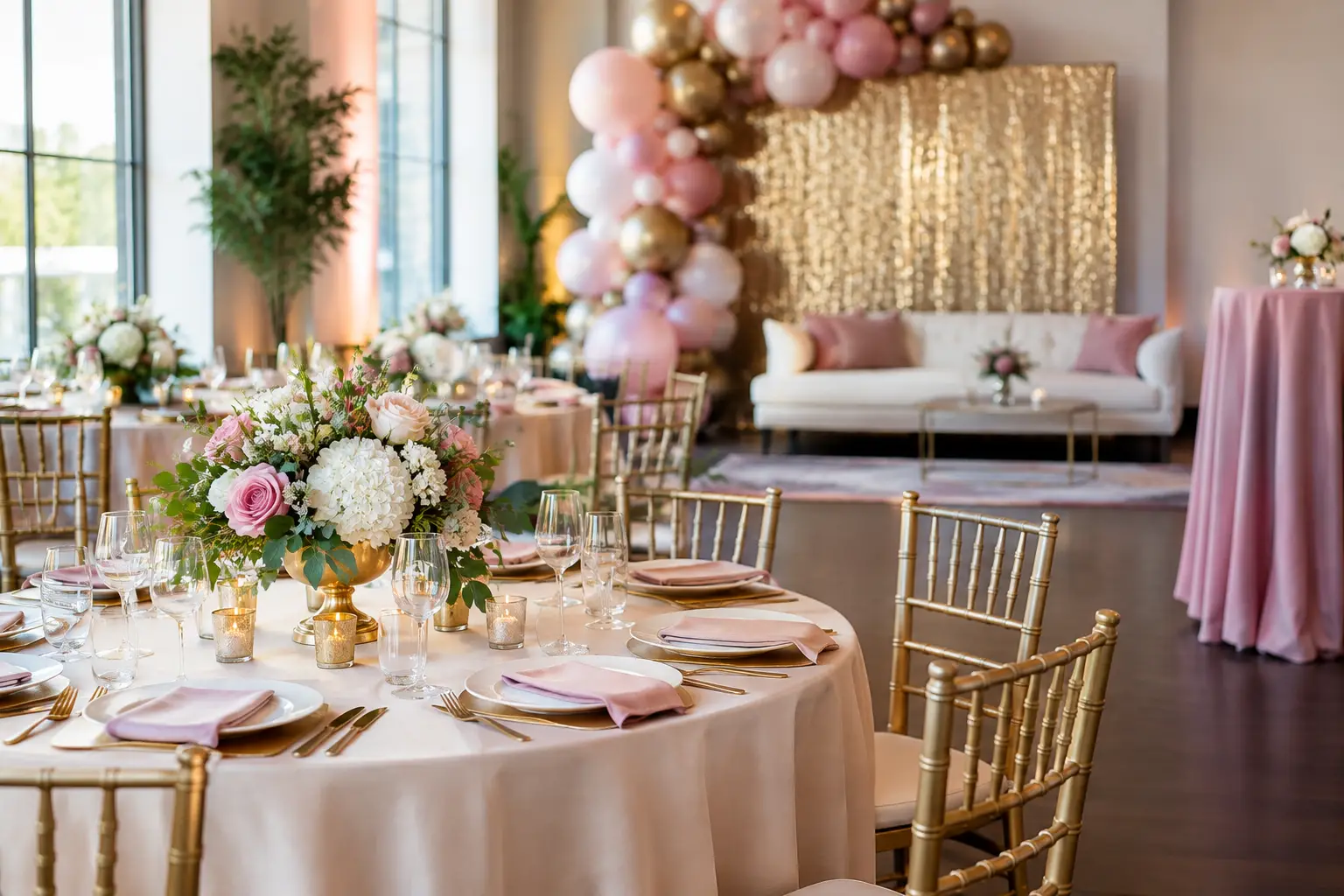
A plain function room can look very different once the right elements are in place. Knowing how to dress party venues is not about filling every corner with decorations. It is about creating a clear look, making guests feel welcomed and ensuring the room works properly for dining, photographs, dancing and celebration.
Whether you are planning a Birmingham wedding reception, a landmark birthday or a corporate evening, start with the venue itself. Its size, ceiling height, existing décor, lighting and layout will determine which products will make the greatest difference. A well-dressed venue feels considered from the moment guests arrive, but it should never get in the way of the event.
Start With the Venue Layout
Before choosing chair covers, balloons or backdrops, ask the venue for a floor plan and arrange a visit where possible. Look at the entrance, bar area, top table or stage position, guest seating, cake table and dance floor space. These are the areas guests will notice most and the areas that often appear in photographs.
A large hotel suite may need more visual impact than a smaller private room. In a spacious room, an LED dance floor, uplighting around the perimeter and a backdrop behind the main table can prevent the space from feeling empty. In a compact venue, a few well-placed features usually work better than trying to include everything.
Keep access routes clear for guests, waiting staff and suppliers. This is particularly important around fire exits, doors, buffet tables and the DJ set-up. Decorations must enhance the room without creating trip hazards or restricting the venue’s normal operation.
Build the Room Around One Focal Point
Every party venue benefits from a focal point. For a wedding, this is often the top table, sweetheart table, cake display or illuminated LOVE letters. At a birthday party, it could be a balloon display, throne chair or personalised photo area. For a corporate event, a branded backdrop, awards area or stage may take priority.
Once you have selected this feature, let it guide the rest of the styling. For example, warm white flowers, neutral chair covers and soft uplighting can support a romantic wedding look. A black-and-gold balloon display, LED numbers and a photo booth can create a more energetic birthday setting. Matching every item exactly is not essential, but the colours and finishes should look intentional together.
How to Dress Party Venues With Lighting
Lighting is one of the fastest ways to change a venue, particularly when the room has plain walls, patterned carpet or fixed décor that does not suit your event colours. Uplighting can wash walls, pillars and alcoves in a chosen shade, adding depth without taking up valuable floor space.
For weddings, soft white, amber, blush, lavender or subtle blue lighting tends to photograph well and keeps the room elegant. For evening parties, stronger colours can build anticipation for the disco and dancing. Corporate organisers may prefer brand colours, although it is wise to test them in the room first. Very intense red or green can affect photographs and skin tones.
Think about how the lighting should change during the event. A dining area may need a softer, warmer feel, while the dance floor needs movement and energy later on. A professional DJ set-up can combine quality sound with coordinated party lighting, avoiding the disconnected look that can happen when entertainment and venue styling are arranged separately.
Do not rely only on a venue’s standard lighting. Many function rooms are designed to be practical for meetings, lunches and conferences, not necessarily for a celebration. Uplighting and an LED backdrop can add atmosphere without requiring major changes to the room.
Give Guests a Reason to Look, Sit and Dance
The best venue dressing supports the way people use the room. Chair covers and coloured sashes can transform mismatched banqueting chairs, while flowers or simple table styling make dining tables feel part of the overall scheme. These details are especially worthwhile when guests will be seated for a formal meal.
The dance floor deserves equal attention. It becomes the centre of the room once the music starts and features in many of the photographs taken later in the evening. An LED dance floor creates a clear space for dancing and adds a premium finish, especially against darker flooring or in venues with limited natural character.
A photo booth is another practical addition because it gives guests something to do during quieter moments, such as while the room is turned around after dining or when people are waiting for evening guests to arrive. It also creates photographs that are more relaxed than formal group shots. Position it near the main action but not where it blocks access to the dance floor, bar or toilets.
Sweet carts, illuminated letters and balloon décor can also bring personality to an otherwise neutral room. The key is scale. One statement item can look polished. Several statement items competing for attention can make even an expensive venue feel cluttered.
Choose Colours That Work in the Actual Room
Colour choices should be made with the venue’s existing features in mind. Check the carpet, curtains, wall colour, furniture and ceiling. A scheme that looks excellent on a mood board may not work against burgundy curtains or a strong patterned carpet.
Neutral palettes are flexible and work well in many wedding venues. White, ivory, gold, silver, black and soft pastels can be adapted with lighting and flowers. Brighter colours suit birthdays, cultural celebrations and themed events, but use a base colour to keep the look organised. For instance, navy and gold, pink and silver, or black with a single bright accent are easier to coordinate than five unrelated shades.
If your venue has low ceilings, avoid tall centrepieces and oversized installations that make the room feel enclosed. If it has high ceilings, vertical features such as draping, backdrops and balloon installations may help it feel more inviting. Always consider sightlines too. Guests should be able to see across tables and towards speeches without decorations blocking the view.
Make the Entrance Do Some Work
The entrance sets expectations before guests see the main room. A pair of illuminated letters, a welcome sign, balloons or subtle uplighting can make an ordinary doorway feel like part of the event rather than an afterthought.
This is also a sensible place for practical information, particularly at weddings and corporate functions. A simple welcome display can direct guests towards the bar, cloakroom or seating plan without adding unnecessary signage around the room. Keep it tidy and leave enough room for arrivals, umbrellas and guests using wheelchairs or pushchairs.
Plan Around Venue Rules and Timings
Venue dressing is not only about appearance. Ask about access times, loading areas, lift access, parking, ceiling attachments, candles, confetti and collection times before committing to a design. Some venues do not permit naked flames, taped fixtures on walls or items placed in certain corridors. Others have strict sound limits or require suppliers to provide insurance and electrical safety documentation.
Choosing experienced suppliers reduces last-minute problems. DJs and event hire teams should use PAT-tested equipment where required and carry suitable public liability insurance. It also helps when one team can coordinate the DJ, dance floor, lighting, photo booth and décor, as timings, power requirements and room layout can be planned together rather than negotiated between several separate companies.
Allow enough time for installation. A few chair covers may be quick to fit, but a full room transformation involving flowers, uplighting, LED flooring, backdrops and entertainment equipment requires a proper set-up window. It depends on the venue and package, but rushing the final hour before guests arrive is rarely a good plan.
Spend Budget Where It Will Be Seen
If budget is limited, focus first on the areas guests will use and photograph: the entrance, top table or focal point, guest tables and dance floor. Lighting often provides better overall value than lots of small decorative items because it affects the whole room.
For a daytime event, prioritise table styling, chair covers and a strong focal point, then use lighting to take the room into the evening. For an evening-only celebration, the dance floor, DJ lighting, photo booth and statement décor may have more impact than elaborate table details. There is no single correct package – the best choice depends on guest numbers, timings, venue character and the atmosphere you want to create.
Mobile Disco Hire Birmingham can combine entertainment and venue styling from one established team, helping organisers across the Midlands coordinate the details without chasing multiple suppliers. A showroom appointment can also make colour, lighting and product choices much easier than deciding from photographs alone.
A well-dressed venue should feel like your event, not a catalogue display. Choose a few features that suit the room, support the schedule and give guests memorable places to gather, celebrate and take photographs. That is what turns a hired function space into a party people talk about afterwards.
