
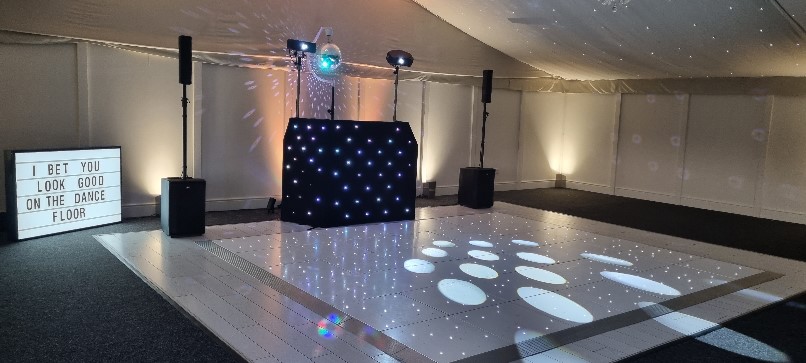
A dance floor that is too small feels cramped within minutes. Too large, and even a busy event can look half empty. That is why an LED dance floor sizes guide matters so much when you are planning a wedding, birthday party or corporate function – the floor needs to suit your guest numbers, room layout and the way you want the event to feel.
For most clients, size is not really about measurements alone. It is about getting the right balance between visual impact and practical use of the room. The dance floor sits at the centre of the evening, so choosing well affects the atmosphere, the photographs, the flow around tables and the overall finish of the venue.
Why dance floor size changes the whole event
An LED dance floor is not just a surface to stand on. It is a focal point. At weddings, it often frames the first dance and becomes one of the most photographed features in the room. At parties, it helps create energy and gives guests a clear place to gather. At corporate events, it can lift the look of a venue quickly and give the evening a more polished feel.
The wrong size causes practical issues. If the floor takes up too much space, your room can feel tight and service routes may become awkward for staff and guests. If it is undersized, people can end up spilling into walkways, around tables or in front of the DJ setup. Neither option looks especially tidy, and both can affect how comfortably people use the venue.
That is why experienced suppliers will usually ask more than one question before recommending a floor. Guest numbers matter, but so do table plans, room dimensions, entertainment setup and whether the event is formal, relaxed or heavily dance-focused.
LED dance floor sizes guide – what size do you actually need?
The most suitable size depends on how many people are likely to dance at the same time, not simply your total guest count. At many weddings, for example, not all 100 guests will be on the floor together. You may only have 30 to 50 people dancing at peak times. A children’s party, by contrast, can use the floor very differently, with more guests trying to join in at once.
As a general rule, smaller LED dance floors suit intimate events and venues where space is at a premium. Medium sizes are often the safest choice for average wedding receptions and private parties. Larger floors work best where the room can carry them properly and the event style calls for a stronger visual statement.
A 12ft x 12ft floor is a common starting point for smaller to medium-sized functions. It can work well for intimate weddings, birthday parties and venues where you want a defined dance area without dominating the whole room. If your guest list is modest and dancing is part of the night rather than the entire focus, this size is often enough.
A 14ft x 14ft or 16ft x 16ft floor tends to suit busier receptions more comfortably. These sizes are popular because they give guests room to dance without making the floor look oversized early in the evening. For many wedding and party bookings, this is the range that offers the best balance between usability and appearance.
For larger guest numbers or corporate events in bigger suites, an 18ft x 18ft floor can create real impact. That said, bigger is not always better. A large floor in the wrong room can reduce flexibility for seating, décor and entertainment equipment.
Start with the venue, not the guest list
One of the most common mistakes is choosing a dance floor size before checking the venue layout properly. A room may sound large on paper but still have awkward pillars, low staging, fixed bars or restricted access points. Equally, a venue with a good open plan can often take a better-sized floor than expected.
You also need to think about what shares the room with the floor. DJ booth, speakers, photo booth, sweet cart, love letters, top table, cake table and guest seating all compete for space. If you are hiring several finishing touches, they need to work together rather than squeeze each other out.
This is one reason many clients prefer booking entertainment and styling from one experienced supplier. It makes planning easier when the disco setup, décor items and dance floor are being looked at as part of one overall layout rather than separate pieces from different companies.
Weddings need a different approach from parties
Wedding dance floors often need to look good before they need to feel busy. The first dance happens when the room is still relatively organised, guests are watching, and the photographer is usually taking key images. In that setting, proportions matter. The floor should frame the couple nicely without making them look lost in the middle of an oversized square.
Later in the evening, the same floor needs enough space for guests to join in comfortably. That is why medium sizes are so often the best fit for wedding receptions. They photograph well, feel substantial and still cope once the party gets going.
For birthdays and family celebrations, the emphasis can shift more towards capacity and movement. If the event is informal and dance-heavy, it may make sense to size up, particularly when a lot of guests are likely to be on the floor together. Children’s parties and mixed-age family events can be especially lively, so room around the edges becomes more important.
Corporate events are a slightly different case again. Sometimes the dance floor is mainly there to complete the look of the room and support the evening entertainment. Other times, especially at Christmas parties or awards nights, it needs to handle a strong turnout after dinner. The right choice depends on the running order and the company culture as much as the headcount.
LED dance floor sizes guide for common event types
If you are planning a smaller wedding breakfast and evening reception, a 12ft x 12ft floor may be enough, particularly in venues where space is limited. For the average wedding guest list, a 14ft x 14ft or 16ft x 16ft floor is usually more comfortable and tends to look right in most Midlands hotel suites and function rooms.
For larger wedding receptions, busy birthday parties and stronger corporate attendance, a bigger option may be worth considering, but only if the room still allows sensible spacing around tables and entertainment. A dance floor should invite people onto it, not force everything else in the room too close together.
The practical question is simple: how many people do you expect dancing at once, and what else needs to fit around it? Once those two points are clear, the best size usually becomes obvious.
Don’t ignore access, setup and venue rules
Even the right floor size on paper can become a poor choice if access is difficult. Some venues have tight corridors, stairs, loading restrictions or fixed room turnaround times. This matters because setup needs to be efficient, safe and venue-compliant.
Professional event suppliers should already be used to working with venue requirements, PAT-tested equipment and insured setups. That removes a lot of hassle for clients and venue teams alike. It also helps when the supplier understands how the dance floor will sit with the disco equipment and other hired items, because timings and spacing can be planned properly from the start.
With more than 20 years in business, Mobile Disco Hire Birmingham regularly helps clients choose a floor size that works in the real room, not just in theory. That practical side of event hire often matters more than people realise until the day arrives.
When it makes sense to go bigger – and when it does not
A larger LED dance floor gives stronger visual impact. It can elevate the room, add a premium feel and make the whole setup look more substantial. If you have a spacious venue and a busy evening planned, going up a size can be the right call.
But there is a trade-off. Bigger floors cost more, take more room and can expose empty space early in the evening if your event builds slowly. For some weddings, a floor that is slightly smaller but proportioned well to the room creates a warmer, fuller atmosphere.
This is where straightforward advice matters. A good supplier should not push the largest option by default. They should recommend the size that fits the room, the guest profile and the style of the occasion.
Choosing with confidence
The best LED dance floor size is the one that looks right, works smoothly and gives guests enough space without overwhelming the venue. If you are unsure, the safest approach is to look at your room layout, expected dancing numbers and the other items sharing the space, then get advice from a supplier used to planning full event setups.
A well-sized dance floor does more than fill a room – it helps the whole event feel better organised, more polished and easier for everyone to enjoy.
recommended sizes
12 x 12 ft parties for upto 90 guests with 30 dancing 14 x 14 ft parties for upto 150 guests with 50 dancing 16 x 16 ft parties for upto 200 guests with 60 dancing 18 x 18 ft parties for upto 250 guests with 80 dancing 20 x 20 ft parties for upto 300 guests with 100 dancing 22 x 22 ft parties for upto 400 guests with 140 dancing
Please note this is just a guide. please contact us for more details
