
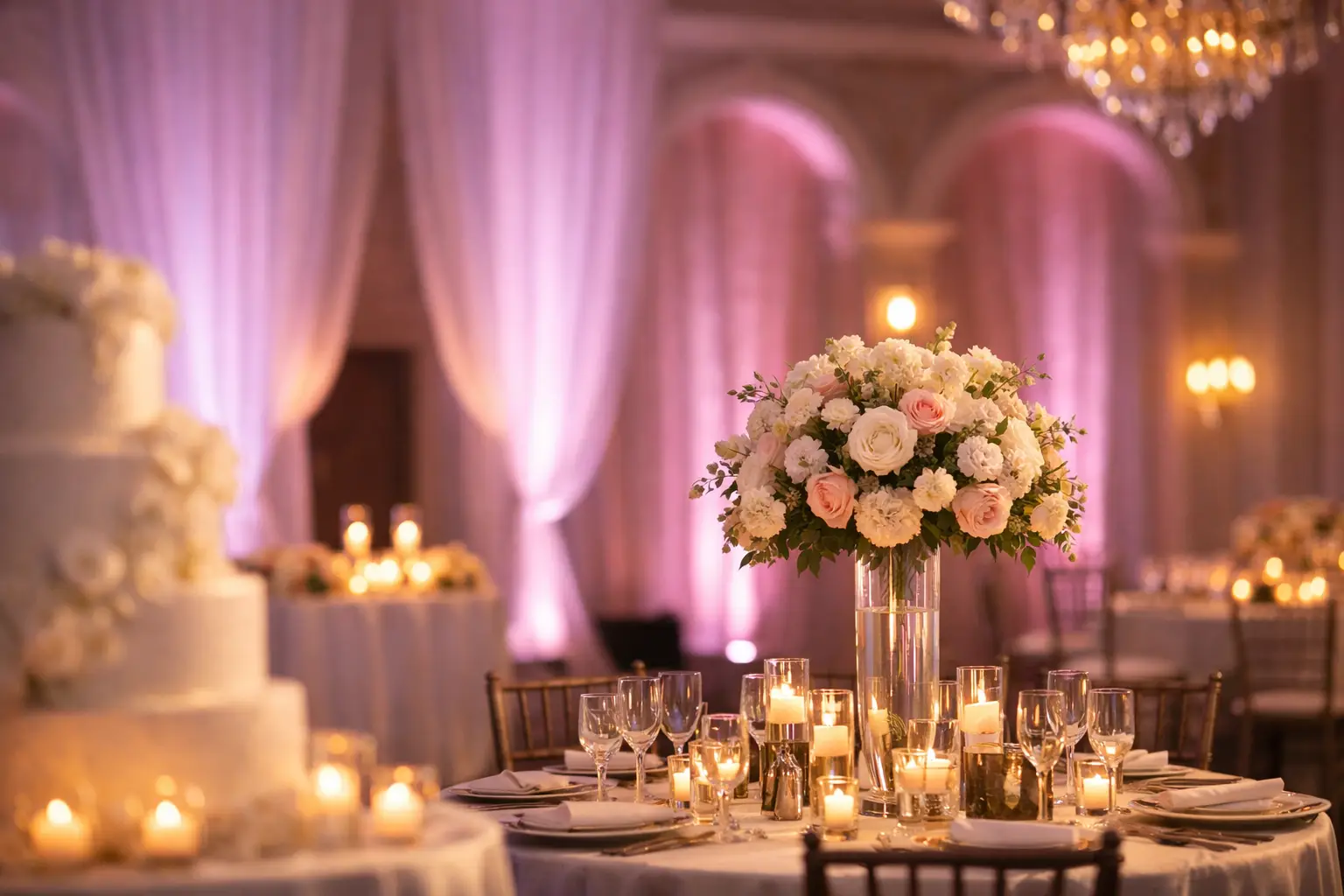
A beautiful room can still feel flat once the daylight disappears. Uplighting for wedding venues changes that quickly, adding depth to plain walls, drawing attention to key features and helping the whole room feel connected to your chosen colour scheme. It is one of the most effective ways to make a hired venue look more personal without filling every corner with extra décor.
For couples planning a wedding in Birmingham or across the Midlands, the best results come from treating uplighting as part of the wider room plan. It should work with your flowers, chair covers, LED dance floor, backdrop and evening entertainment, rather than being an afterthought added on the week before.
Why wedding venue uplighting makes such a difference
Uplighters are compact LED lights placed around the edge of a room, usually against walls, pillars, alcoves or architectural features. They project light upwards, creating a soft wash of colour that changes the mood of the space far more effectively than standard ceiling lighting alone.
During a wedding breakfast, warm white, soft amber, blush or gentle pastel tones can make a room feel welcoming and elegant. Later, when the music starts, the same fittings can shift to richer colours or work alongside the DJ lighting to give the evening reception more energy. That day-to-night flexibility is a major reason uplighting offers such good value.
It also helps venues with neutral décor. Function suites, hotel ballrooms and village halls are often designed to suit many different events. That is practical for the venue, but it can leave couples wondering how to make the room feel like theirs. A carefully selected lighting colour can tie together navy stationery, sage-green flowers, burgundy bridesmaid dresses or a classic ivory-and-gold theme without permanently changing anything.
Planning uplighting for wedding venues
The first decision is not the colour. It is deciding what deserves attention. A row of uplighters placed evenly around every wall can look smart in a simple rectangular suite, but it is not always the right approach. In a room with dramatic pillars, a fireplace, a staircase or exposed brickwork, concentrating the lights on those features often creates a better result with fewer units.
Walk through the venue with the room layout in mind. Consider where guests will enter, where the top table sits, where photographs will be taken and where the dance floor will be positioned. Uplighting around a feature backdrop or behind illuminated love letters can give the head table a more finished appearance. Lights around the perimeter can then carry that colour through the rest of the room.
Match the lighting to the room, not just the colour chart
A pale shade can look very different on cream painted walls, dark wood panelling and exposed stone. Deep blue may look luxurious in a modern hotel suite but can appear almost black in a low-ceilinged room. Likewise, vivid pink or purple may suit an evening party but feel too strong for a formal wedding breakfast.
Warm white is a dependable option for classic weddings, particularly where the venue already has attractive walls and details worth showing off. Amber works well with gold, rustic and autumnal styling. Blues, purples and pinks bring more personality, while green can complement botanical themes when used carefully. If your palette includes several colours, choose one main uplighting shade rather than trying to reproduce every detail of the stationery.
Your photographer matters here too. The room needs atmosphere, but very intense colour directly behind the top table can affect skin tones in photographs. A professional supplier can advise on placement and brightness so the room looks impressive in person without making formal photographs harder to light.
Consider natural light and timing
Uplighting is most noticeable after dusk, yet it still has a role earlier in the day. In a bright, window-filled venue, it may provide a subtle background glow during the meal and become more visible as the afternoon turns into evening. In a darker suite, the same lights may need gentler settings from the start.
Ask to see the room at a similar time of year to your wedding if possible. A summer celebration with late daylight and a December wedding at 3pm are very different lighting jobs. This is also why a supplier should understand whether the room is being turned around between ceremony and reception, or whether all styling needs to be in place before guests arrive.
How many uplighters do you need?
There is no useful one-size-fits-all number. The correct quantity depends on wall length, ceiling height, room shape, existing décor and how dramatic you want the result to be. A small function room may look excellent with a modest, evenly spaced run of lights. A large ballroom, barn or marquee may need more coverage to avoid dark gaps.
As a guide, uplighters tend to work best when positioned consistently around the visible perimeter rather than clustered in one area with empty walls elsewhere. However, the priority should always be the key sightlines: the entrance, the top table, the cake area, the dance floor and any backdrop or feature display.
Do not assume more is automatically better. Too many lights, especially in strong colours, can overwhelm a refined scheme. The aim is to enhance the room and create depth, not turn every wall into a nightclub before the first dance. For a wedding with a DJ and dance floor, it is often sensible to keep the room wash elegant while allowing the party lighting to provide movement and excitement later on.
Venue rules, power and safety
Before booking, check what your venue allows. Some venues have preferred suppliers, fixed lighting, restrictions on access times or rules about placing equipment near fire exits and walkways. Historic buildings may also have limitations on attaching anything to walls or using particular areas.
Modern LED uplighters are usually low-heat and energy-efficient, but professional standards still matter. Cables must be safely managed, equipment should be PAT-tested where required, and the supplier should hold suitable public liability insurance. Battery-powered uplighters can be particularly useful where there are limited sockets, awkward room layouts or a need to keep floors clear, although the right option depends on the venue and running time.
Give your supplier an accurate floor plan, photographs of the room and your access schedule. If the venue has a coordinator, it helps for practical questions to be resolved in advance rather than during a busy set-up window. This is especially valuable when lighting is being installed alongside a DJ set-up, LED dance floor, photo booth or wedding styling package.
Coordinate lighting with your wider wedding styling
Uplighting is at its best when it is part of one organised look. The colour behind your top table can complement the flowers, while lighting around a white LED dance floor can make it stand out as the evening focal point. A neutral backdrop may look completely different when framed by warm white uplighters, and illuminated Mr & Mrs letters often gain more impact when the surrounding area is not left in darkness.
Booking entertainment and décor through one experienced supplier can make this much easier. There is one team considering access, power, positioning, set-up times and the transition from wedding breakfast to party. Mobile Disco Hire Birmingham can coordinate professional DJ entertainment, venue uplighting and a wide range of wedding styling items, helping reduce the number of separate suppliers you need to manage.
If you are unsure how a colour or product will look together, ask to visit a showroom by appointment. Seeing lighting, dance floors, backdrops and letters in person is often more useful than making a final decision from small online images.
Common uplighting mistakes to avoid
The biggest mistake is choosing a colour in isolation. A shade that looks perfect on a sample card may clash with the venue carpet, wall covering or existing chandeliers. Consider the room as a whole and, where possible, ask for recommendations based on your actual venue.
Another common issue is leaving the decision too late. Lighting availability can be limited on popular wedding dates, and the best plan may require a venue visit or discussion with the coordinator. Early planning also gives you time to decide whether you want a static elegant wash all evening or a colour change after the meal.
Finally, avoid blocking the effect with furniture. Tall centrepieces, large signs and draped fabrics can interrupt light placement, while uplighters positioned too close to tables may be hidden from view. A knowledgeable set-up team will adjust the layout around the final room plan rather than simply placing units at fixed intervals.
The right uplighting does not need to shout for attention. It gives your venue warmth, colour and a sense of occasion, then lets the people, music and celebrations take centre stage.
