
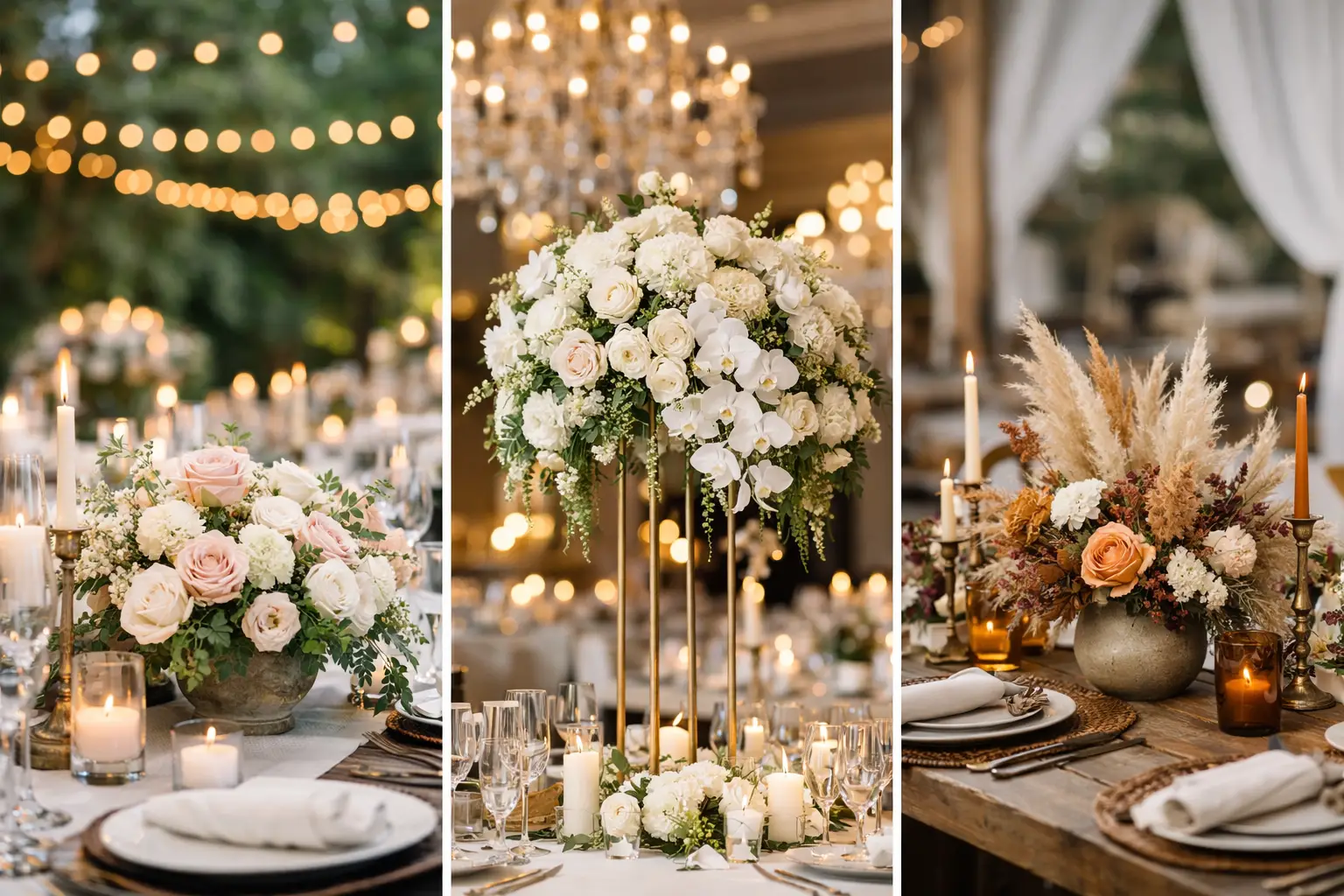
The right flowers do more than fill a vase. They set the tone as guests enter the ceremony, frame the photographs, dress the wedding breakfast and make the room feel connected from day into evening. These wedding floral examples are designed to help couples choose arrangements that look considered in their venue, suit their budget and work alongside the rest of their wedding styling.
Wedding floral examples for different styles
Start with the feeling you want guests to have when they arrive. A flower choice can look completely different in a grand hotel ballroom, a converted barn or a modern function suite, so it is better to match the arrangements to the room rather than copy a photograph without considering scale.
Classic white and green weddings
For a timeless wedding, white roses, hydrangeas, lisianthus and gypsophila with eucalyptus or ruscus remain a strong choice. A compact white bouquet, low vase arrangements on tables and a simple foliage-lined ceremony display give a clean, formal finish without competing with the venue.
This style works particularly well with chair covers, white linen and illuminated love letters. If your reception includes an LED dance floor, keep the floral tablescape elegant rather than overly busy so the room still has a clear focal point once the evening entertainment begins.
Romantic blush and champagne florals
Blush roses, pale pink peonies when in season, cream blooms and soft champagne tones create a warmer, more romantic look. These flowers suit country houses, marquees and venues with neutral décor, especially when paired with gold or clear glass details.
A useful approach is to keep the bridal flowers fuller and softer, then use smaller matching centrepieces for guest tables. This gives the wedding party the statement florals for photographs while keeping the overall spend under control. Peonies are beautiful but seasonal and often more expensive, so garden roses or ranunculus can provide a similar soft texture at other times of year.
Rustic and boho arrangements
For a relaxed barn, tipi or woodland-inspired reception, choose mixed greenery, spray roses, dried grasses, daisies and seasonal wildflower-style stems. Bud vases, wooden crates and loose table runners can make the setting feel informal without looking unfinished.
The trade-off is that a deliberately loose arrangement still needs professional structure. Flowers should not block place settings, shed heavily onto food or leave empty-looking areas around the room. Repeating the same colours in the ceremony, table flowers and backdrop keeps rustic styling intentional rather than mismatched.
Modern florals with a clean finish
Modern wedding flowers rely on shape, negative space and a smaller colour palette. Think single-variety roses, orchids, anthuriums or sculptural foliage arranged in sleek vessels. White, green, black, gold and one accent colour can look striking in contemporary venues.
This is a good route for couples who want impact without every surface being covered in flowers. Tall arrangements can draw the eye upwards in a large room, while low clusters of bud vases work better where guests are seated close together. Always check that centrepieces leave clear sightlines across the table.
Flowers for the ceremony space
The ceremony is where floral styling earns its place in the photographs. Guests may only sit there for a short time, but the backdrop appears in the entrance, vows, signing photographs and family portraits.
An asymmetric floral arch gives a strong focal point and suits both modern and rustic themes. A full arch is more dramatic, but it needs a suitable frame, secure installation and enough room around it for the registrar, photographer and wedding party. For smaller ceremony rooms, two pedestal arrangements or floral plinths can have more impact than an arch that makes the space feel crowded.
Meadow-style flowers along the aisle are another popular option. These can soften a plain room and create lovely walking-in photographs, but they should be positioned well away from the aisle edge to avoid trip hazards. Where possible, ceremony flowers can be moved to the top table, cake display or entrance after the vows. Reusing arrangements is one of the simplest ways to get more value from the floral budget.
Reception table flower ideas that work
Guest tables need practical consideration as well as visual appeal. The centrepiece should look good from every seat, leave space for food and drinks, and allow guests to talk without a wall of flowers between them.
Low arrangements are dependable for wedding breakfasts. They suit round tables, allow clear conversation and can be built around candles or small decorative details. A cluster of three different-height vases often looks more generous than one small arrangement, particularly if you are styling a larger function room.
Tall centrepieces work well in high-ceilinged venues and help fill open space. Choose clear stands or narrow bases so guests can see through them. They need to be stable, safely positioned and compatible with the venue’s table size. A tall display on a small table can quickly feel top-heavy.
For long banquet tables, foliage runners, bud vases and grouped candles create a more continuous look. This approach is flexible because you can adjust the density to suit the table length and budget. Fresh greenery gives a softer finish, while silk or artificial flowers can be a sensible option for displays that need to stay perfect all day, particularly near warm lighting.
Match florals to your wider wedding styling
Flowers should not be treated as a separate decision. They need to work with your chair covers, table linen, balloons, backdrop, signage and lighting. A pale flower scheme may disappear against a bright white backdrop unless greenery or a stronger accent tone gives it definition. Deep burgundy and red flowers can look dramatic under warm uplighting, while pastel arrangements are often best with softer, neutral lighting.
The top table deserves particular attention because it is visible throughout speeches and often sits behind the first dance photographs. A floral runner, paired pedestal arrangements or a display in front of Mr & Mrs letters can give it a finished appearance. Keep the design low enough that it does not hide the couple or interfere with microphones during speeches.
When your venue changes from wedding breakfast to party, lighting changes the room again. Flowers placed near the dance floor should be secure and outside guest routes. A coordinated supplier can plan the placement of décor, disco equipment, photo booth and floral features together, preventing last-minute moves once the room is set.
Choosing flowers by season and budget
A florist can source flowers throughout the year, but seasonal choices usually offer better value and a more natural result. Spring is ideal for tulips, narcissi, ranunculus and blossom. Summer brings garden roses, delphiniums and abundant greenery. Autumn works beautifully with dahlias, berries and richer foliage, while winter weddings can use roses, amaryllis, evergreen foliage and textured dried elements.
If a particular flower matters to you, discuss alternatives early. Imported varieties, out-of-season peonies and large quantities of premium blooms can change the price quickly. You do not need to give up the look you like. Often, using the premium flower in the bridal bouquet and top-table display, then choosing complementary blooms for guest tables, achieves the same overall effect.
Be honest about what you want flowers to do. If photography is the priority, put more of the budget into the ceremony feature, bridal flowers and top table. If you are hosting a large evening reception, entrance arrangements, backdrops and room-wide styling may make more sense. There is no single right split – it depends on the venue, guest numbers and which moments matter most to you.
Planning floral hire without added stress
Before confirming your florals, measure key areas or ask the venue for room photographs and table plans. Confirm setup access, whether real candles are permitted, and when suppliers must remove items at the end of the night. These details affect the design more than most couples expect.
At Mobile Disco Hire Birmingham, couples can combine wedding flowers with venue décor, LED dance floors, backdrops, love letters and experienced DJ entertainment through one established event supplier. This makes it easier to keep colours, timings and room layout coordinated, while reducing the number of separate suppliers to manage.
The best floral choice is the one that still looks right once your guests, table settings, lighting and music are all in place. Bring a few venue images, your colour ideas and a realistic budget to an appointment, then choose arrangements that support the whole celebration rather than simply following the latest trend.
