
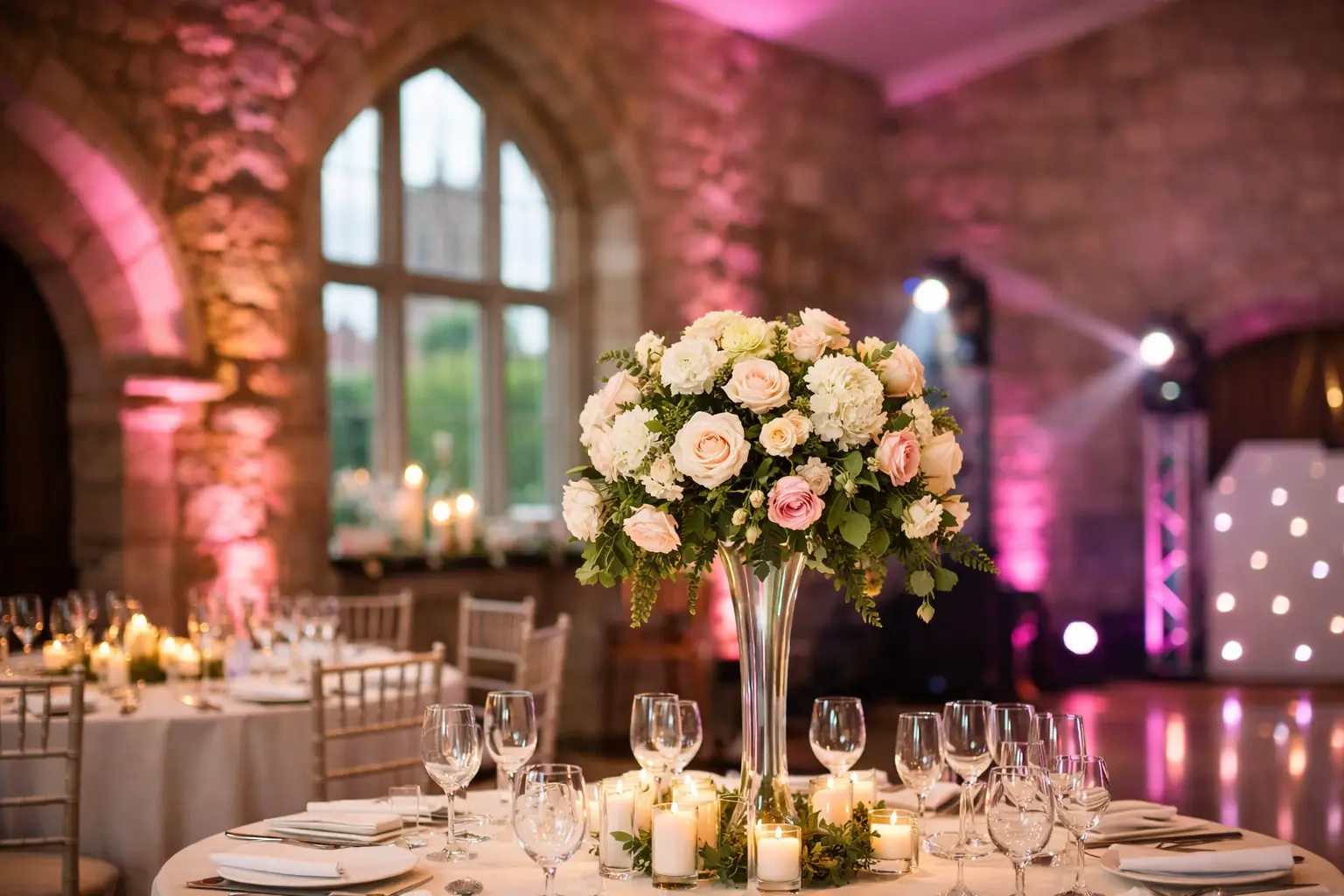
A Shrewsbury wedding venue can look completely different once daylight fades. The characterful brickwork, timber beams, stone walls or clean modern function suite that looked lovely during the ceremony may feel flat once evening guests arrive. That is why searches for wedding uplighting Shrewsbury venues are not simply about hiring a few coloured lights. They are about creating a warmer room, better photographs and a reception that feels deliberately styled from the first dance onwards.
Uplighting is one of the most effective ways to change a venue without covering it in décor. Small professional LED fixtures are placed around the room and directed upwards, washing walls, pillars, alcoves and architectural details in colour. Done well, it enhances the venue rather than competing with your flowers, table styling or wedding breakfast.
Why wedding uplighting works so well in Shrewsbury venues
Many local wedding spaces have plenty of built-in character. Historic buildings can have uneven stone, exposed beams, fireplaces and recessed areas. Country hotels and barns often have high ceilings, wooden features and larger perimeter walls. Modern suites can offer a flexible blank canvas, but sometimes need more atmosphere after dark.
Uplighting gives each of these spaces definition. A soft warm white can make a traditional room feel welcoming and expensive without changing its original style. Blush pinks, champagne tones and pale amber work particularly well with romantic styling. For couples using navy, emerald, burgundy or black-tie details, deeper colours can create a more dramatic evening look.
The main advantage is flexibility. Flowers and chair dressing generally stay the same throughout the day, whereas professional LED uplighting can be adjusted as the celebration changes. A calm, elegant colour can suit the wedding breakfast, followed by richer shades for the party. It is a straightforward way to make one room work harder without booking a separate space for every part of the day.
Start with the venue, not just the colour scheme
It is tempting to choose uplighting solely from a swatch or Pinterest image. In practice, the room should lead the decision. The same purple can appear deep and luxurious against stone but much brighter against a white wall. Warm white lighting may look golden on cream paint, while appearing cleaner on grey or silver décor.
Before settling on a colour, consider the room’s wall finish, ceiling height, existing lighting and window positions. A venue with large windows may not show coloured uplighting strongly until dusk, especially during a summer wedding. In that case, the lighting has greater impact for the evening reception than for daytime photographs. A darker barn or windowless suite can take colour earlier and more evenly.
The layout matters as much as the shade. Uplighters should normally be spaced around visible walls, behind the top table, near the cake display, around the dance floor area or beside key architectural features. A few fixtures scattered randomly can look patchy. A properly planned run gives the room a consistent glow and avoids leaving obvious dark corners.
Warm white is not the same as venue lighting
Couples often assume a venue’s ceiling lights will provide the same effect. They do not. Standard overhead lighting is designed to make a room functional, while uplighting is designed to add depth and atmosphere. It draws attention upwards and outwards, giving a larger room a more finished appearance.
Warm white is a safe choice for couples who do not want noticeable colour. It suits ivory, sage, eucalyptus, neutral florals and traditional wedding styling particularly well. It also tends to photograph beautifully because it adds warmth without tinting skin tones or competing with the table décor.
Colour can work brilliantly, but keep it controlled
Strong colour is not a mistake, provided it is used with purpose. Deep blue looks sharp at black-tie receptions, while soft pink can flatter a pale floral palette. Emerald and amber can work well in autumn and winter, especially in venues with timber features.
The trade-off is that bold lighting changes the appearance of everything nearby. White chair covers, table linen and pale flowers can pick up the colour. This may be exactly the effect you want for the evening, but it is worth considering before choosing intense red, green or purple around the dining area. Many couples keep the meal setting in warm white or a subtle pastel, then move to stronger colour once the dancing starts.
Where uplighting makes the greatest difference
Not every wall needs a fixture. The best installations focus on the areas guests will notice most in person and in photographs. The top table backdrop is a natural priority, particularly if it sits against a plain wall. Uplighting can frame the couple without requiring a large backdrop installation.
The dance floor area is another high-value position. Once the room lights are lowered, coloured uplighting helps create separation between the dining space and the party space. It gives the DJ setup, LED dance floor or illuminated letters a more cohesive setting, rather than making each item feel like a separate hire.
Entranceways, feature walls and fireplaces can also be worthwhile. These are the areas guests see when they first enter and where informal photographs often happen. However, there is no benefit in lighting a wall hidden by a bar, bulky furniture or a curtain. A site visit, venue plan or clear photographs of the room make it easier to allocate the equipment where it will actually be seen.
Choosing a venue-ready uplighting supplier
Wedding lighting should look simple on the night because the planning has been handled beforehand. Ask whether the equipment is LED, whether it can be colour-matched, how it is positioned safely and whether the supplier is insured for venue work. Venues may also have rules on access times, cable management, loading arrangements and where equipment can be placed.
Battery-powered LED uplighters are often useful where sockets are limited or cables would cross guest walkways. They keep the room looking tidy and reduce trip hazards. In larger venues, mains-powered fixtures may be appropriate, but cables must be routed and secured properly. The right option depends on the layout, guest numbers and venue restrictions.
It also helps to use a supplier who understands the wider setup. Uplighting should sit comfortably alongside your DJ equipment, photo booth, dance floor, illuminated love letters, flowers and other styling. Booking these elements through different suppliers can work, but it creates more delivery times, setup requirements and communication on the day.
Mobile Disco Hire Birmingham provides wedding entertainment and styling across the Midlands, including Shrewsbury, so couples can coordinate uplighting with a professional DJ, LED dance floor, photo booth, illuminated letters and other venue décor through one experienced team. With more than 20 years in the events industry, PAT-tested equipment and £5 million public liability insurance, the focus is on a polished setup that meets practical venue requirements as well as looking the part.
Match the uplighting to the pace of your wedding day
The most successful lighting plans are not static. They recognise that a wedding reception has different moments. Guests arriving for the wedding breakfast need a room that feels comfortable, flattering and easy to talk in. Later, the first dance and evening party benefit from a livelier atmosphere.
A simple approach is to begin with warm white, pale pink or a soft shade that complements the flowers. After the meal, shift to the colour used in your evening styling or the shades that work best with the DJ lighting. This makes the transition feel intentional. It also gives guests the impression that the room has changed for the party, even when they have remained in the same place all day.
If you prefer one colour throughout, choose a tone that will still be comfortable during dinner. Soft amber, pink, blue or lavender are often easier to live with than saturated colours. Your supplier can advise on what the fixtures can achieve, but venue photos and an honest conversation about your theme will produce a better result than choosing a shade by name alone.
Avoid the common uplighting mistakes
The most common issue is under-lighting a large room. A small number of fixtures can be effective in an intimate space, but they may disappear in a grand function suite. Conversely, a compact room can become overpowering if every wall is hit with intense colour. The answer is not always more equipment. It is the right number, correctly spaced.
Another mistake is forgetting the existing room lighting. If bright ceiling lights remain fully on, even the best uplighting will lose much of its impact. Check whether the venue can dim its lights during the wedding breakfast and evening reception. You should also ask whether any emergency lighting, wall lights or fixed colour-changing features will remain active.
Finally, do not treat uplighting as an afterthought. It affects the whole room, so it should be considered alongside your table décor, backdrop, dance floor and entertainment. A quick venue photo, colour scheme and basic floor plan are usually enough to start building a lighting plan that feels considered rather than added at the last minute.
The right uplighting does not need to shout for attention. It simply makes your Shrewsbury venue feel warmer, more personal and ready for the moment the party begins.
