
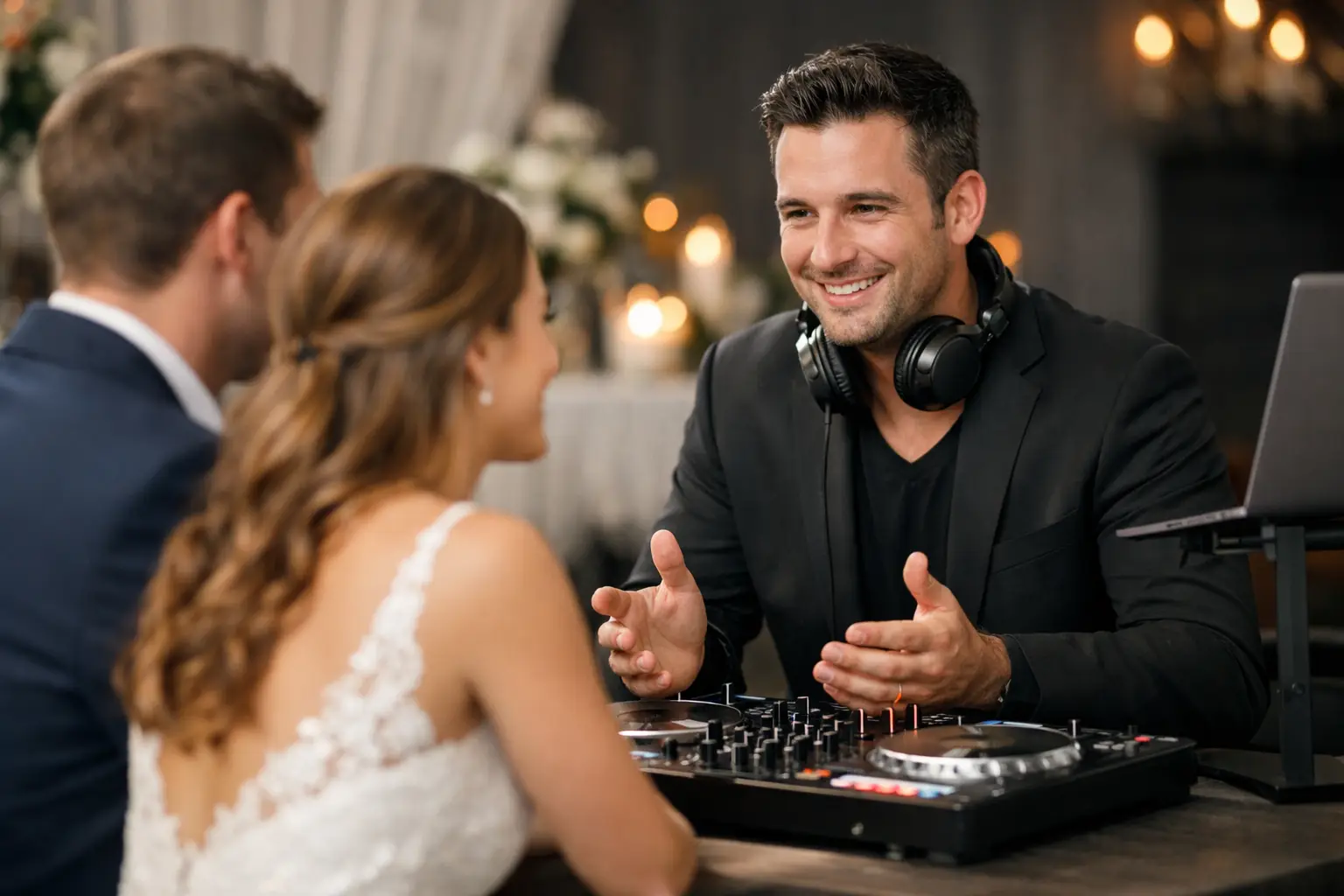
The quickest way to spot a reliable supplier is not by scrolling through photos. It is by knowing what questions ask wedding DJ companies before you book. A good DJ can keep your evening moving, read the room, work around your timings and make your venue feel properly alive. A poor one can turn up late, play the wrong music, clash with the venue and leave you managing problems on your wedding day.
That is why the questions matter. You are not only hiring someone to play songs. You are hiring somebody to manage atmosphere, coordinate with your schedule and handle the practical side of sound, lighting and setup without drama.
What questions to ask a wedding DJ first
Start with experience, because wedding work is different from pub nights or general parties. Ask how many weddings they do each year and whether weddings are a core part of their business. An experienced wedding DJ understands formalities, speeches running late, first dance timing changes and the fact that the room usually includes three generations with very different music tastes.
It is also sensible to ask whether they have worked at your venue before. This is not essential, but it can help. A DJ who already knows the access point, loading arrangements, sound restrictions and setup space may be easier to coordinate. If they have not worked there before, the better question is whether they are happy to liaise with the venue directly and check requirements in advance.
Ask who will actually perform on the night. Some companies take bookings centrally and then subcontract. That is not always a problem, but you should know whether the person you speak to is the person who will be there. Clear answers here usually tell you a lot about how organised a supplier is.
Ask about timings, setup and how they handle the schedule
A wedding DJ needs to fit around your day, not the other way round. Ask what time they normally arrive, how long setup takes and whether they can be fully ready before guests enter the evening reception. If your wedding breakfast runs straight into evening entertainment, setup timing becomes especially important.
You should also ask how flexible they are if the day runs late. Weddings often do. Speeches overrun, photographs take longer than expected and cake cutting gets moved back. A professional DJ should be used to adjusting in real time, but it is worth asking what happens if your first dance is delayed by 30 to 60 minutes.
Finish times matter too. Make sure you know exactly what is included in the quoted price, including performance hours and pack-down. If you think you may want the music to continue later, ask about overtime rates before booking rather than on the night.
Music questions that really matter
Most couples start here, and rightly so, but the useful questions are more specific than simply asking, “What music do you play?” A better approach is to ask how they build the evening around your preferences while still reading the room. You want a DJ who listens to you, but you also want somebody confident enough to adjust when the dance floor needs a different gear.
Ask whether they welcome playlists, must-play tracks and do-not-play requests. That gives you control over the music without forcing the whole night into a rigid list. Some couples want detailed involvement. Others want to give a rough direction and leave the rest to a professional. Neither approach is wrong, but it helps to know how the DJ works.
It is worth asking how they handle mixed-age crowds. A wedding in Birmingham, Coventry or elsewhere in the Midlands often brings together family, school friends, workmates and older relatives in one room. A capable wedding DJ should be able to move between styles and decades without making the night feel disjointed.
If you want a specific cultural mix, genre focus or family-friendly atmosphere, mention that early. The right DJ will tell you honestly whether it suits their style and experience.
What questions ask wedding DJ suppliers about equipment?
This is the part many couples skip, but it matters more than people think. Ask whether their equipment is PAT tested and whether they carry public liability insurance. Many venues require both. If your supplier cannot provide them, that can create last-minute problems with access or approval.
You should also ask what sound and lighting setup is included. Some quotes cover a basic disco setup, while others include more polished presentation with upgraded lighting, DJ booth fronts or room-enhancing effects. Neither is automatically better. It depends on your venue, guest count and the look you want for the evening.
Ask whether the setup can be adjusted to suit the room. A smaller function suite may need a neater, compact arrangement. A larger hotel ballroom may need stronger sound coverage and more lighting presence. This is where an experienced supplier tends to stand out. They should be able to recommend a setup that matches the space instead of using the same package for every booking.
If your venue has sound limiters or access restrictions, ask whether they are comfortable working within those conditions. Again, this is standard for professional operators, but it is better to confirm than assume.
Check reliability and backup plans
One of the best questions you can ask is also one of the simplest: what happens if something goes wrong? You are looking for clear, calm answers here. Ask whether they bring backup equipment, what happens if a speaker fails and what cover is in place if the booked DJ is taken ill.
No supplier can promise that nothing will ever go wrong, but a professional business should have contingency plans. Spare cables, backup laptops, duplicate music libraries and team support all reduce risk. These are the details that separate a genuine wedding specialist from someone doing occasional casual bookings.
Response times are another practical point. If a company takes a week to answer basic pre-booking questions, you should think carefully. Fast, clear communication before the event usually reflects how the booking will be handled overall.
Ask about announcements and hosting style
Not every couple wants a DJ who talks a lot. Some want a more hosted style with clear introductions for the first dance, cake cut and evening moments. Others prefer a lower-key approach where the music does most of the work. Neither is better, but you should know what you are getting.
Ask how they handle microphone announcements and whether they are happy to coordinate with your photographer, venue staff or toastmaster. The evening runs more smoothly when suppliers communicate well with each other.
If you are booking extras such as uplighting, LED dance floors, photo booths or illuminated letters, ask whether one company can manage the entertainment and room styling together. That can make planning much easier, especially if you would rather not chase several different suppliers for arrival times, setup spaces and payment schedules. For many couples, that joined-up approach is as valuable as the DJ performance itself.
Pricing questions to ask before you commit
A cheap quote is not always cheap once you look closely. Ask what is included in the price, whether travel, setup and breakdown are covered, and whether there are extra charges for early access, later finishes or specific lighting options.
You should also ask about the booking process. Is there a deposit? When is the balance due? Will you receive written confirmation? A professional supplier should make this straightforward. Clear paperwork protects both sides and reduces misunderstanding.
It is also fair to ask how far in advance final details are confirmed. Most couples do not have every music choice and timing locked down months ahead. Your DJ should have a sensible process for collecting key information nearer the date without leaving everything until the last minute.
Reviews are useful, but ask better follow-up questions
Reviews can help, but they should not replace a proper conversation. If a supplier has strong feedback, ask what couples usually praise them for. Their answer often reveals their real strengths. It may be crowd reading, reliability, tidy presentation, flexibility or the ability to coordinate entertainment with decor and venue timings.
You can also ask whether they have photos of real setups at weddings similar to yours. That gives you a more practical sense of what the finished result will look like than generic promotional wording.
For couples who want extra reassurance, visiting a showroom can be useful if that option is available. Seeing equipment, lighting and styling products in person often makes decisions easier, especially when you are trying to match the entertainment setup to the overall look of your wedding.
The aim is not to ask more questions – it is to ask the right ones
The best wedding DJ for your day is not always the cheapest, the loudest online or the one with the biggest playlist claims. It is the supplier who answers clearly, understands weddings, meets venue requirements and gives you confidence that the evening is in safe hands. If they can also help you coordinate extras such as lighting, dance floors or venue styling, that is one less part of the day for you to manage.
Ask practical questions, listen to how they respond and pay attention to whether they make things feel simpler. That is usually the clearest sign you are speaking to the right company.
