
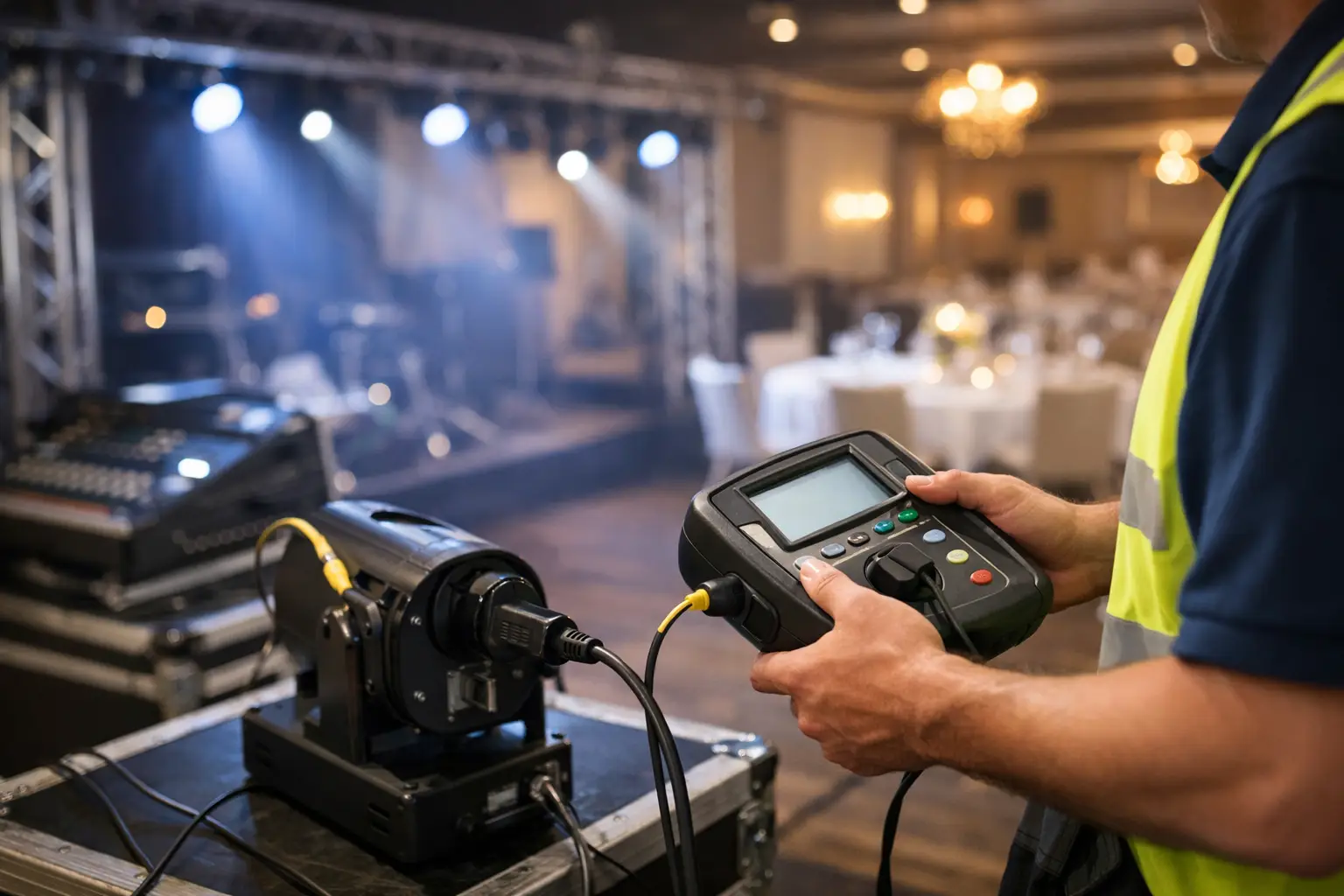
A venue manager is unlikely to be impressed by a great playlist, a beautiful LED dance floor or a last-minute bargain if the supplier cannot show that their electrical equipment is safe to use. So, do venues require PAT testing? Often, yes – but the practical answer depends on the venue’s own conditions of hire, the type of event and the equipment being brought in.
For weddings, parties and corporate functions, PAT testing is one of the quickest ways a DJ, photo booth, lighting or décor supplier can demonstrate that they are organised, professional and ready to work safely on site. It can also prevent an awkward issue on the day, when a venue refuses to allow untested equipment to be plugged in.
Do venues require PAT testing by law?
There is no single UK law stating that every portable electrical item must have a PAT test certificate. PAT stands for Portable Appliance Testing, and it is a recognised way of checking that electrical appliances and leads are safe for continued use.
The wider legal duty comes from electricity safety regulations. Businesses and those supplying equipment must ensure electrical systems are maintained so they do not create danger. A formal PAT test is not the only way to meet that duty, but it is a clear, familiar and widely accepted method of evidencing checks on portable equipment.
That distinction matters. A venue may not be able to say that PAT testing is legally mandatory in every circumstance, yet it can still make valid PAT records a condition of allowing suppliers to work there. Private venues, hotels, function suites, council buildings, schools, historic properties and corporate event spaces all set their own rules. If their terms require current test certificates, then suppliers need to provide them.
In practice, reputable venues commonly ask for PAT documentation because they have a responsibility to protect guests, staff, their building and their own insurance position. It is a sensible precaution, particularly where an event involves sound systems, lighting, extension leads, illuminated letters, catering equipment or photo booths.
Why venues ask DJs and event suppliers for certificates
A mobile event setup can involve more electrical items than clients realise. A professional DJ may bring speakers, amplifiers, controllers, lighting effects, wireless systems, power distribution and extension leads. Add a photo booth, LED dance floor, uplighting or illuminated letters and the number of powered items rises quickly.
Venue teams need confidence that this equipment has been checked and is suitable for public use. They may ask for a PAT certificate before confirming access, during the final event paperwork stage, or when suppliers arrive for setup. Some sites also inspect cables and plugs on the day. Damaged cables, overloaded adaptors and loose connections can still be rejected even where a certificate is available.
A current PAT record helps a supplier show that equipment has undergone visual inspection and electrical testing. It should normally identify the item or asset, the date tested, the result and the recommended retest date. Many items also carry a pass label, although the label alone is not the complete record.
For event organisers, the benefit is straightforward: you are less likely to face a delay, substitution or cancellation because a supplier cannot meet the venue’s requirements.
Who is responsible for PAT testing at an event?
Usually, the person or business that owns and brings the equipment is responsible for its safety and maintenance. If you book a DJ, they should be able to confirm that their sound and lighting equipment is PAT tested where appropriate. If you hire a photo booth, LED numbers or a dance floor, the hire company should have the relevant checks in place for the electrical items they supply.
The venue is responsible for its own fixed electrical installation and its own equipment. That may include wall sockets, permanent lighting, installed sound equipment and kitchen appliances. However, the venue can still require outside suppliers to provide evidence for the equipment they bring onto site.
If you are bringing your own equipment, the responsibility can fall back on you. This may apply to a homemade sweet cart with lighting, personal speakers, a projector, decorative light-up signs or chargers used as part of a business display. Ask the venue before the event rather than assuming a small item will be overlooked.
For organisers arranging several suppliers, it is worth making one person responsible for collecting compliance documents. This is particularly useful for corporate events, where venue coordinators may request public liability insurance and PAT paperwork together.
What paperwork might a venue request?
Requirements vary, but larger and more established venues often request more than one document. A supplier may be asked to provide proof of public liability insurance, PAT test certificates, a risk assessment, method statement, or details of electrical load and setup requirements.
For a straightforward birthday party in a local function room, the venue may only ask whether the DJ has PAT-tested equipment and insurance. For a wedding at a hotel or a corporate event at a managed venue, paperwork is more likely to be requested in advance.
Do not treat this as unnecessary administration. Venues use these checks to plan safe access, protect fire exits, manage cable routes and make sure the event can run without avoidable disruption. A professional supplier will be used to receiving these requests and should respond promptly.
PAT testing is not the only check that matters
A valid PAT certificate is valuable, but it is not a free pass for poor setup. Equipment can be damaged after it has been tested. Cables can become worn, plugs can be knocked, and drinks can be spilled near power supplies during a busy party.
That is why responsible suppliers carry out visual checks before each booking and set up with safety in mind. Cables should be routed away from guest walkways where possible, secured where they cross an access route, and kept clear of wet areas. Power should be taken from suitable sockets, not from a chain of overloaded multiway adaptors.
The venue may also impose practical rules. Some will not allow equipment to be plugged in until a designated member of staff is present. Others have limits on sound levels, restrictions on smoke or haze effects, or specific load-in times. PAT testing supports venue readiness, but good communication and careful setup complete the picture.
How to avoid a last-minute venue issue
When comparing DJs and event hire companies, ask early whether they are insured and whether their electrical equipment is PAT tested. You do not need technical knowledge to ask the right question. A dependable supplier should be able to explain what documents they hold and provide them when the venue requests them.
It is also sensible to send your supplier the venue’s event information as soon as you receive it. This gives them time to identify access restrictions, power availability, setup space and any required paperwork. Waiting until the week of the event can create pressure for everyone, especially if the venue has a strict approval process.
If you are booking multiple elements – DJ entertainment, a photo booth, illuminated letters, uplighting and an LED dance floor – choosing a supplier that can coordinate these services reduces the paperwork chase. Instead of dealing with several separate companies, you have one experienced team managing the equipment, delivery and venue communication.
Mobile Disco Hire Birmingham supplies PAT-tested event equipment and holds £5 million public liability insurance, helping couples, party hosts and corporate organisers meet common venue requirements across Birmingham and the Midlands. With more than 20 years of event experience, the focus is on arriving prepared, setting up professionally and helping the venue feel confident about the booking.
Before you pay a deposit, ask your venue what it requires from outside suppliers and pass that information on straight away. It is a small conversation that can protect the smooth, polished event you have spent so much time planning.
