
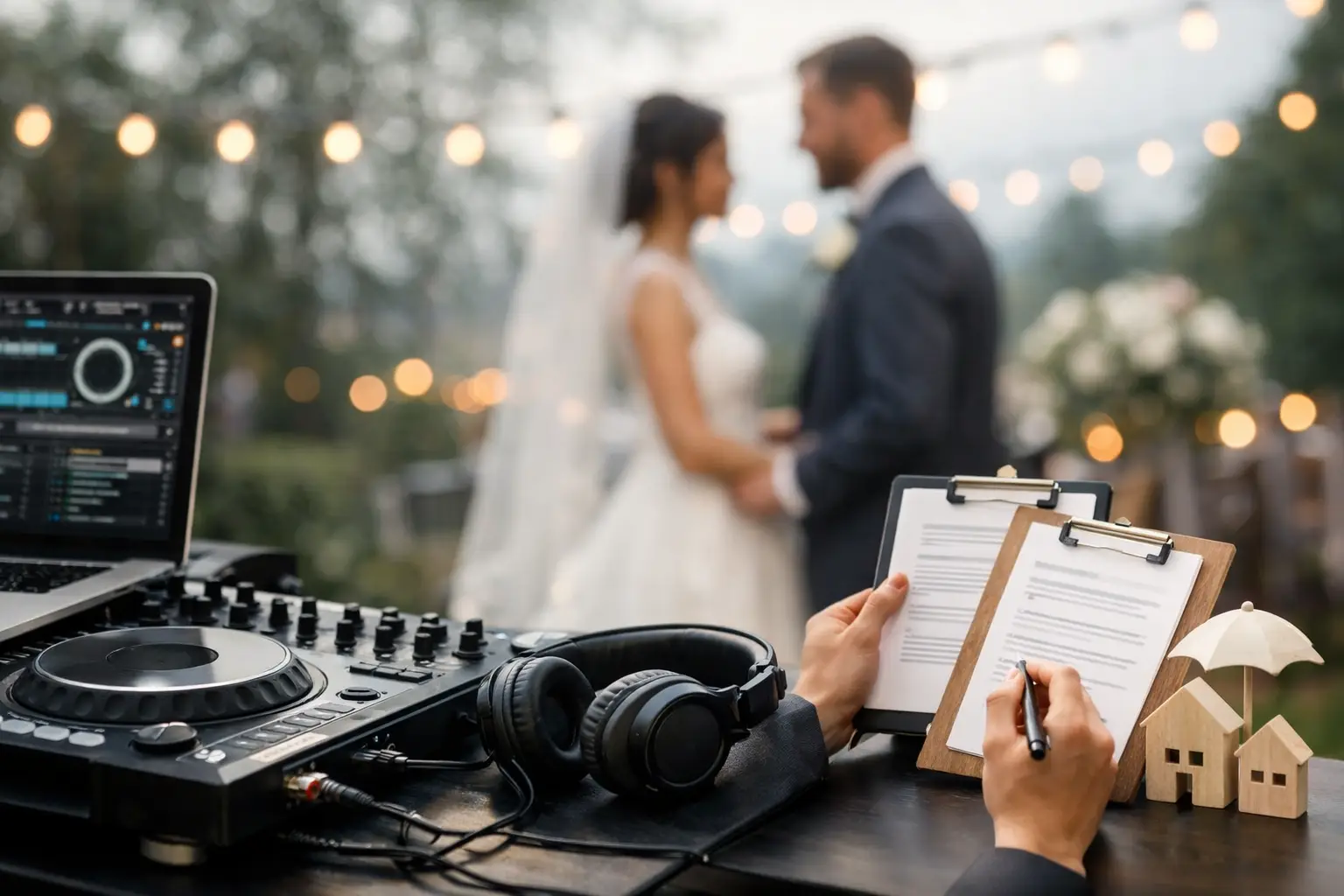
A venue coordinator calls two weeks before your reception and asks for your DJ’s insurance certificate. Or perhaps a guest catches a foot on a cable near the dance floor. These are the moments when couples ask, “are wedding DJs insured?” The answer is that professional DJs should be, but you should never assume that every DJ has the same cover, level of protection or paperwork ready to provide.
For a wedding supplier, insurance is not a glamorous detail. It is a practical sign that they understand the responsibility of working around guests, venues, electrical equipment and busy dance floors. It can also be the difference between a straightforward venue approval and a last-minute scramble to find an alternative entertainer.
Are wedding DJs insured in the UK?
Many established wedding DJs in the UK hold public liability insurance, but it is not automatically guaranteed simply because someone advertises DJ services. A DJ may be experienced, talented and well reviewed, yet still have inadequate cover or no current documentation. That is why it is sensible to ask before you pay a deposit.
Public liability insurance is the main policy couples and venues will want to see. It is designed to protect the DJ if their work causes accidental injury to a third party or accidental damage to property. For example, it may respond if a speaker stand falls and damages venue flooring, or if an attendee is injured as a result of equipment being set up unsafely.
The policy does not mean problems are expected. It means the DJ has taken sensible steps to operate professionally if something unexpected happens. Weddings involve children, older relatives, drinks, dancing and a room full of people moving around in lower lighting. Good suppliers plan for that reality.
At Mobile Disco Hire Birmingham, our DJ and event hire services are supported by £5 million public liability insurance. This gives couples and venues added reassurance when booking entertainment, lighting and event products from one established supplier.
Why venues often ask for proof of cover
Hotels, wedding barns, function rooms and country venues have their own duty to manage risks on site. They may ask outside suppliers for a valid public liability insurance certificate before allowing them to load in and set up. Some will specify a minimum level of cover, commonly £5 million, although requirements vary.
This request is normal, particularly where a DJ is bringing speakers, lighting rigs, LED dance floors, photo booths or other electrical hire equipment. A professional supplier should be able to send their certificate promptly rather than treating it as an unusual request.
It is worth checking the venue’s supplier rules as soon as you book. Ask whether they need insurance documents, PAT testing records, risk assessments, method statements, or confirmation of the DJ’s arrival and collection times. Passing these details on early avoids unnecessary pressure in the final week before the wedding.
Insurance also helps protect the relationship between your venue and your suppliers. If a venue sees that a DJ has appropriate documentation, professionally maintained equipment and a clear setup plan, they are more likely to be comfortable with the booking.
Public liability is not the same as equipment cover
It is easy to hear that a DJ is “fully insured” and assume every possible issue is covered. In practice, different insurance policies do different jobs.
Public liability is about claims from third parties for injury or property damage connected to the DJ’s work. Equipment insurance, by contrast, may cover the DJ’s own speakers, decks, lights or cables if they are stolen or damaged. This is valuable for the supplier, but it is not a substitute for public liability cover.
A DJ may also hold cover for business interruption, professional indemnity or vehicle use, depending on how they operate. Those policies can be useful, but they are not normally the main concern for a couple or a venue. When booking wedding entertainment, ask specifically about current public liability insurance and the amount of cover in place.
There is another distinction worth understanding. DJ insurance will not usually compensate you simply because the music was not to your taste, a guest disliked a song choice, or a timetable changed. Those are service and contract matters. Your booking terms should set out what happens if timings move, access is restricted, the event is cancelled or the DJ is unable to perform due to an emergency.
PAT testing matters too, but it is separate
A current insurance certificate is reassuring, yet it is only one part of venue readiness. Electrical equipment also needs to be safe to use. PAT testing, short for Portable Appliance Testing, provides evidence that portable electrical items have been inspected and tested where appropriate.
Venues frequently request PAT records for DJ equipment, uplighters, LED letters, dance floors and photo booths. Insurance does not replace PAT testing, and PAT testing does not replace insurance. They address different risks.
Ask your DJ whether the equipment they will use is PAT tested and whether documents can be supplied if the venue asks. Professional sound and lighting equipment should also be set up with sensible cable management, secure stands and clear routes around the dance floor. The best safety measures are often the ones guests never notice because everything simply works as it should.
What to ask a wedding DJ before booking
You do not need an insurance background to make a sensible check. A brief conversation or email will usually give you the information you need. Ask whether they hold public liability insurance, how much cover they have and whether they can provide a valid certificate for your venue.
Then confirm whether their equipment is PAT tested and whether they have experience working at your chosen venue or similar spaces. A DJ who regularly works at weddings will understand practical details such as loading access, setup time, sound limiters, stairs, parking, early venue curfews and the need to keep equipment tidy around formal décor.
It is also reasonable to ask what backup arrangements they have. Insurance is not a backup DJ. If a vehicle breaks down, a key item of equipment fails or illness prevents the booked DJ from attending, a well-run business should have a realistic contingency plan. This might include spare equipment, a network of experienced DJs or a clear procedure for keeping you informed.
When several services are involved, ask who is responsible for each element. If you are hiring a DJ, dance floor, uplighting, photo booth and illuminated letters from separate companies, each supplier may have different documents, delivery windows and setup needs. Booking complementary services through one coordinated provider can make the planning simpler and reduce the chance of suppliers working around each other at the last minute.
Do you need to see the certificate yourself?
Usually, yes. You do not need to study insurance wording line by line, but seeing a current certificate is a sensible part of supplier checks. Confirm that the business name matches the company or individual you are booking, that the policy has not expired and that the public liability amount meets your venue’s requirement.
Your venue may prefer the DJ to send documents directly to its events team. That can be convenient, but keep a copy of relevant confirmations with your wedding paperwork. If you are arranging your own marquee wedding or using a private venue, your need to check may be even greater because there may be no dedicated venue coordinator managing supplier compliance.
Be cautious if a supplier avoids the question, sends an out-of-date certificate or claims insurance is unnecessary because they have never had an incident. A good track record is welcome, but it is not a replacement for proper protection. Equally, the cheapest quote can become poor value if it creates a compliance problem or leaves you chasing paperwork when you should be enjoying the final build-up to your day.
Insurance is one sign of a professional wedding DJ
Insurance alone does not tell you whether a DJ can read a dance floor, make clear announcements or build the right atmosphere for your evening reception. It should sit alongside the things that matter to your celebration: experience, reliable communication, quality sound and lighting, sensible setup procedures and a clear written booking agreement.
The right DJ will be happy to discuss your music preferences, first dance timing, guest requests and venue requirements without making the process complicated. Ask the insurance question early, keep the answer on file, and you can focus your attention on the much more enjoyable decisions – such as the songs that will fill your dance floor.
