
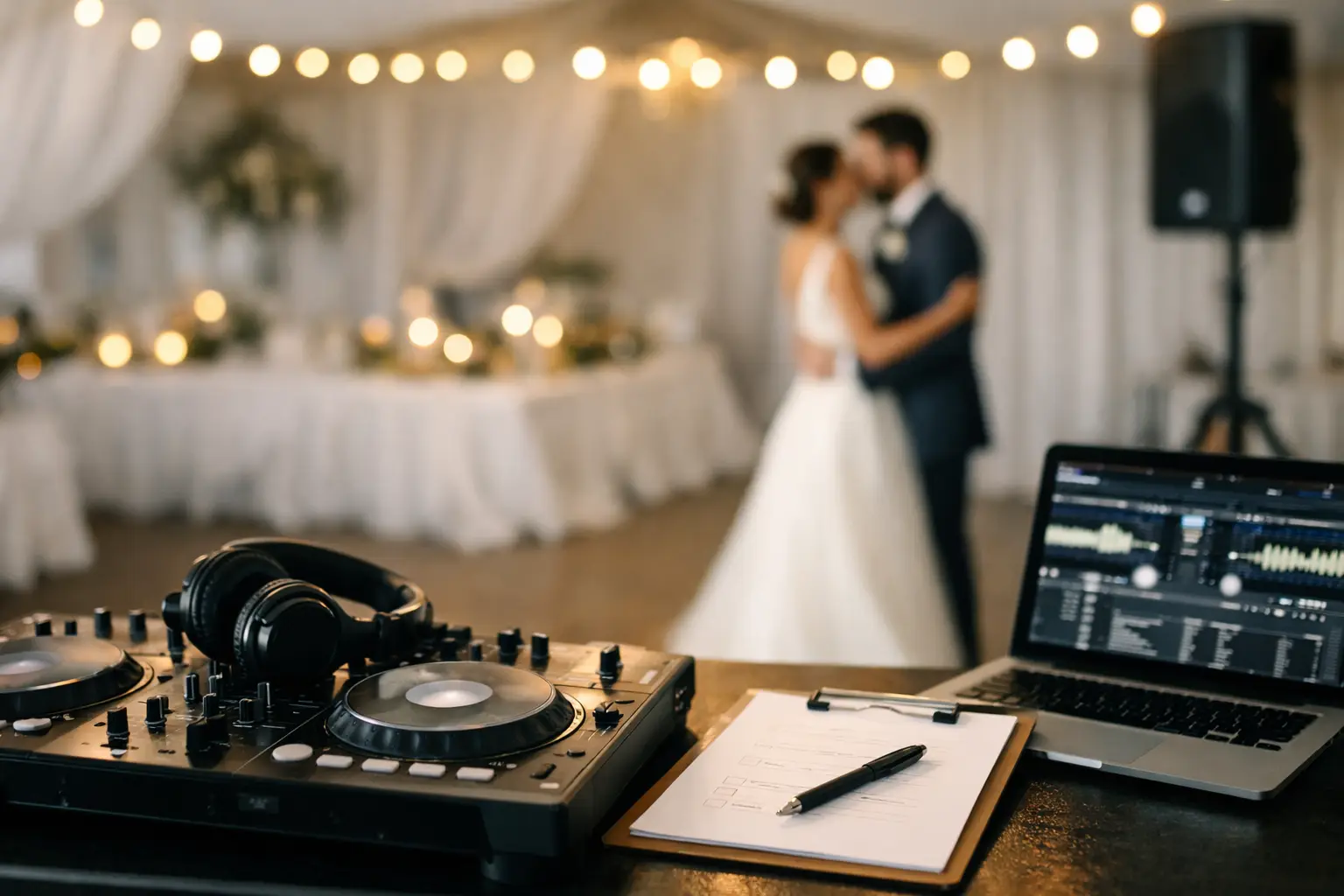
A wedding DJ can be booked, confirmed and fully paid, but if the venue side has not been checked properly, problems tend to appear on the day. Power can be in the wrong place, sound limiters can cut the music, access can be awkward, and setup times can shrink fast. A proper wedding DJ checklist for venues helps avoid all of that and gives you a clearer picture of what your DJ actually needs to perform well.
For couples, this is less about technical jargon and more about protecting the atmosphere of the day. Your evening reception only really gets one chance to land properly. If the room layout fights the setup, if the venue has tighter sound restrictions than expected, or if suppliers are all working to different timings, the result can feel disjointed. A few checks in advance make a real difference.
Why a wedding DJ checklist for venues matters
Most venue issues are not dramatic. They are small operational details that become stressful because they are discovered too late. A DJ arrives and finds there is no nearby power socket. The load-in route involves several flights of stairs with no lift. The venue allows music, but only below a certain decibel level because of a built-in sound limiter. None of these problems are impossible, but they are far easier to manage when discussed early.
This is especially relevant if you are booking more than just a DJ. If your evening setup also includes an LED dance floor, uplighting, illuminated letters, photo booth hire or backdrop décor, the room needs to work for all of it together. One supplier handling entertainment and styling can simplify that process, because the setup plan is coordinated rather than split across several companies.
Access and load-in should be checked first
Before you think about playlists or lighting effects, confirm how your DJ will get equipment into the venue. This sounds basic, but it is one of the biggest causes of delay. Ask whether there is level access, whether a loading bay is available, and whether there are restrictions on arrival times.
Some venues are straightforward function spaces with easy parking close to the entrance. Others are country houses, city-centre hotels or older buildings where access is tighter and setup takes longer. If the DJ has to carry sound and lighting equipment through narrow corridors, across courtyards or up stairs, that needs to be built into the schedule.
If your reception room is being turned around after the wedding breakfast, timing matters even more. The DJ may not be able to set up fully until the venue staff have cleared tables or reset the room. That is manageable, but only if everyone knows the plan.
Ask the venue about setup windows
Venues often have fixed supplier access times, and they do not always line up neatly with what performers would ideally want. A short access window can still work, but it may affect the size of setup possible. For example, a compact professional disco setup can be installed more quickly than a larger system with enhanced lighting and extra effects.
That does not mean you should reduce your plans automatically. It just means your venue and supplier need realistic timings from the outset.
Power supply is not a minor detail
A wedding DJ setup needs safe, reliable power in the right area of the room. Extension leads can help, but they are not a substitute for sensible room planning. The ideal position is usually where power is accessible without trailing cables through guest walkways.
Ask the venue how many usable sockets are available near the DJ position and whether any other suppliers will be sharing that same power source. If your evening package also includes dance floors, mood lighting or other décor features, the electrical load and cable routes should be considered together.
Professional suppliers should bring PAT-tested equipment and know how to set up safely, but the venue still needs to provide practical access to power. It is one of those details that is easy to overlook because people assume every room is ready for entertainment by default. That is not always the case.
Confirm the DJ position in the room
Not every corner of a room is equally suitable for a DJ. The best position is usually one that gives clear sightlines to the dance floor, enough width for the setup, and sensible speaker coverage across the room. Put the DJ in a cramped alcove or behind a pillar and the result will be weaker, even with good equipment.
This is also where venue layout affects the overall feel of the evening. If the cake table, gift area, photo booth and bar queues all compete with the dance floor, guests become spread out. A strong room plan keeps the entertainment visible and gives the dancing area room to work.
Think about the wider evening setup
If you are hiring extras, treat the room as one combined setup rather than separate bookings. An LED dance floor needs space around it. Love letters or Mr & Mrs letters need a visible placement that does not block access routes. Uplighting works best when it complements the venue walls rather than being squeezed into awkward corners.
This is why many couples prefer a supplier who can manage both the disco and the styling elements. It reduces conflicting layouts and helps the room look intentional rather than pieced together.
Sound limiters and venue noise rules
Some venues have strict sound policies, particularly those attached to hotels, residential areas or listed properties. A sound limiter can automatically cut power if the volume goes above a set level. If that happens mid-song, it is disruptive for everyone.
Ask the venue directly whether a sound limiter is installed, where the sensor is located, what level is allowed, and whether a live band and DJ are treated differently. This matters because some rooms that work fine for background music are less suitable for higher-energy evening entertainment.
There is a trade-off here. A beautiful venue may have tighter sound control than a modern banqueting suite. That does not make it a poor choice, but it does mean expectations need to be realistic. A good DJ can still create a strong atmosphere within venue rules, though the setup and music approach may need adjusting.
Check curfews and finish times carefully
Do not assume your venue licence and your DJ booking say the same thing. Some venues require music to end earlier than the bar closes. Others allow entertainment until a fixed cut-off with no flexibility for overruns.
Confirm when music can start, when the evening reception formally begins, and what time the DJ must finish playing. Also ask whether breakdown has to happen immediately or whether collection can take place later. These details matter for both planning and cost.
If your first dance is delayed by speeches, catering or room turnaround, the evening can feel rushed. Building in a little timing margin helps protect the part of the day guests often remember most.
Venue rules on suppliers and compliance
A well-run venue will usually ask for supplier documents. That can include public liability insurance and PAT testing certification. This is standard and should not be seen as a hassle. It is part of making sure everyone on site is working professionally.
When booking a DJ, ask early whether the venue requires paperwork in advance and when it needs to be submitted. Leaving this until the week of the wedding is unnecessary pressure. An experienced supplier should be used to venue compliance and able to provide the relevant documents promptly.
For many couples, this is where operational credibility matters just as much as music choice. Fast replies, clear paperwork and professional equipment standards are often what separate a smooth booking from a stressful one.
Coordinate with the venue team, not just the DJ
One of the most common planning mistakes is assuming the DJ and venue will somehow sort everything out between themselves without a proper brief. Sometimes they do, but it is better not to leave it to chance.
Make sure both sides know the schedule for the wedding breakfast, speeches, room turnaround, first dance and evening guest arrival. If there is a wedding coordinator or duty manager on site, your DJ should know who that person is. A quick line of communication on the day can solve a lot.
If you are booking with a company such as Mobile Disco Hire Birmingham that also supplies décor and event extras, coordination becomes much simpler because more of the moving parts are managed together. That is particularly useful for larger receptions where setup time and room layout are tighter.
The final venue check before the wedding
A week or two before the date, run through the checklist one last time. Confirm access times, DJ position, power availability, sound restrictions, finish times and any changes to the room plan. This is also the right point to mention anything that has shifted since booking, such as added décor items, different table layouts or a revised evening schedule.
You do not need to overcomplicate it. The aim is simply to remove avoidable surprises. Weddings already have enough moving parts without discovering on arrival that the disco setup area has been moved or that the venue now wants a different load-in route.
The best wedding evenings usually feel effortless to guests because the practical work was done early. If your venue and DJ setup have been checked properly, the room runs better, the entertainment starts on time, and you can spend less of the day chasing details and more of it enjoying the celebration.
