
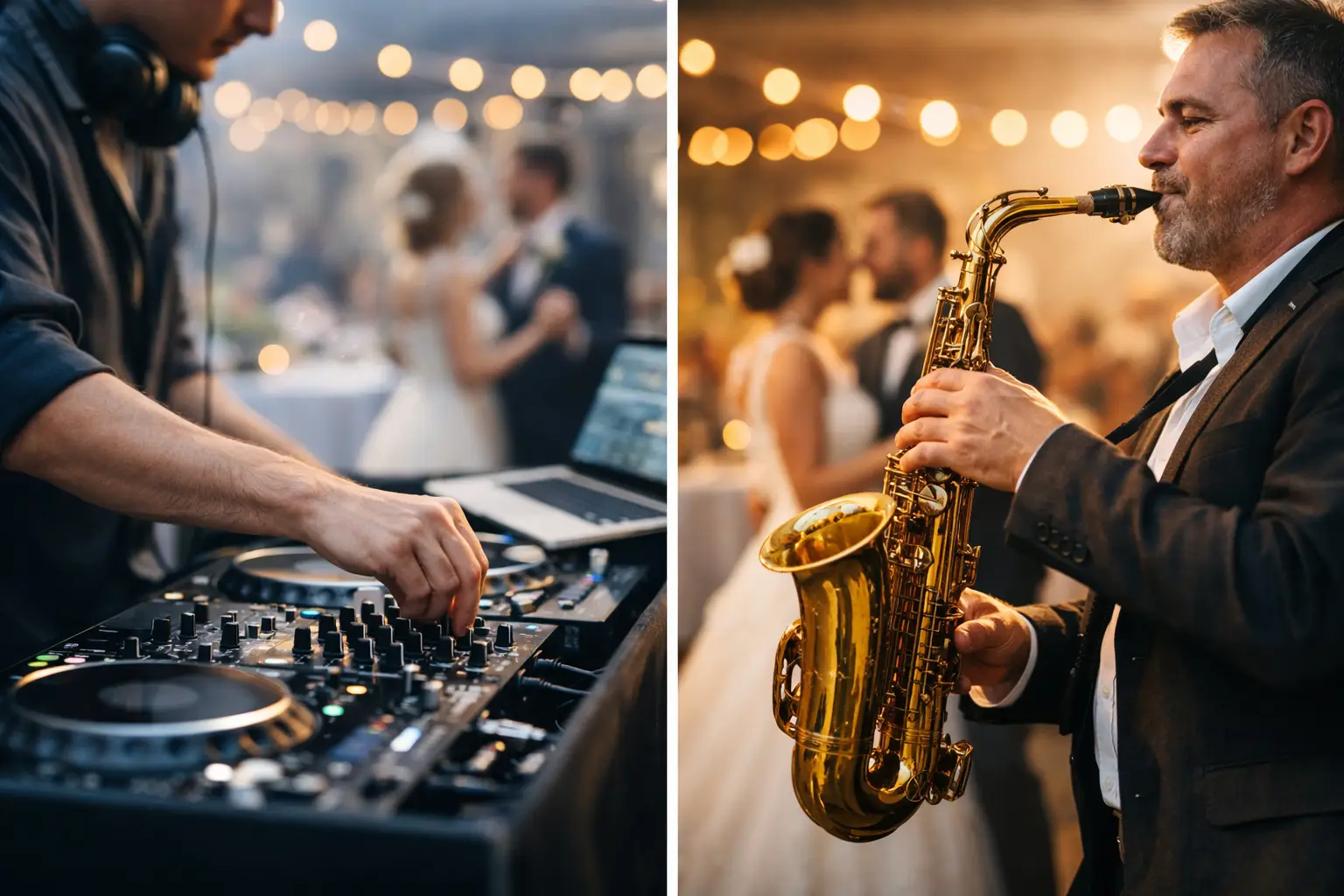
The key decision behind a DJ or saxophone wedding is not simply which sounds better. It is about the atmosphere you want at each point of the day, the size and mix of your guest list, and whether you need entertainment that can keep the dancefloor busy for hours. A saxophonist can create a standout moment. A professional wedding DJ can manage the full evening. For many couples, the best answer is a combination of both.
DJ or saxophone wedding: start with the atmosphere
A saxophone performance brings energy, personality and a live feel to familiar tracks. It works particularly well during a drinks reception, wedding breakfast, venue entrance or the first part of the evening party. Guests notice it immediately because it feels interactive and visually impressive as well as musical.
A DJ creates a different kind of value. They can read the room, adjust the music as guests arrive on the dancefloor and move between decades, genres and requests without breaking the momentum. At a wedding, that flexibility matters. One table may be ready for 80s singalongs while another wants current chart music, Motown, R&B or dance classics. An experienced DJ can build a set around the people actually in the room rather than follow a fixed performance plan.
If your priority is a stylish, live feature for a defined part of the day, saxophone is a strong choice. If your priority is a packed dancefloor from the first dance until the venue closes, a DJ is usually the more practical booking.
What a wedding DJ does that a saxophonist cannot
A professional DJ is not there just to press play. They manage the flow of the evening, make suitable announcements where required, work around venue timings and select music that keeps different generations involved. They also bring the professional sound system and lighting needed to make the room feel like an evening celebration rather than a function room with background music.
This is especially useful where the guest list is broad. A typical Midlands wedding might include grandparents, work colleagues, university friends, children and family members who have travelled a long way. Their musical tastes will not be identical. A DJ has the catalogue and experience to bridge those gaps, starting with accessible floor-fillers and moving into the couple’s preferred music as the night develops.
A saxophonist may play brilliant sets, but there are natural limits to duration, repertoire and pacing. Most will perform in planned blocks with breaks in between. That is completely right for a live feature, but it is not normally a substitute for continuous evening entertainment unless music is supplied around the sets.
Where saxophone works best at a wedding
Saxophone is often at its best when used to lift a key moment rather than carry the entire reception. During the drinks reception, it gives guests something enjoyable to listen to while photographs are being taken and conversations begin. It can make an outdoor terrace, hotel bar or styled wedding breakfast feel more special without making it difficult for guests to talk.
Later in the day, a saxophonist can make an entrance alongside a DJ set. This works well for couples who want Ibiza-style house, disco, dance anthems or modern remixes, with live sax played over selected tracks. It creates a big visual and musical moment, particularly when the dancefloor is already active.
Consider your venue layout before choosing this option. A roaming saxophonist needs room to move safely among guests, while a performance in one position needs appropriate space near the sound system. The venue may also have sound limiters, access restrictions or specific finishing times. Checking these details early avoids last-minute compromises.
The DJ and saxophone combination
For couples who do not want to choose one over the other, a DJ and saxophone package is often the strongest format. The DJ provides the structure: music for arrivals, background playlists if needed, the first dance, party sets, requests and a reliable finish at the agreed time. The saxophonist adds live impact during one or two carefully planned sets.
The combination is most effective when the timing is clear. For example, the DJ can build the evening party after the first dance, the saxophonist can join for a high-energy 45-minute set once the floor has filled, and the DJ can then continue into singalongs and requests. Guests get the excitement of live music without losing the variety and continuity that makes a wedding party work.
It is worth agreeing the music direction in advance. If you love dance and house music, sax works naturally with those styles. If your dream party is indie, rock, country or classic soul, a DJ may be the better main focus, with sax reserved for daytime or a specific reception moment. There is no wrong answer, but the entertainment should suit your taste rather than follow a social media trend.
Budget, equipment and practical planning
Cost is a genuine factor in the DJ or saxophone wedding decision. A DJ package generally covers a full evening and includes sound equipment, lighting, setup and performance time. A saxophonist is commonly booked for a shorter set or a number of sets. Booking both will naturally cost more, although it can be better value than arranging separate suppliers with separate equipment, delivery charges and venue coordination.
Ask exactly what is included. You should know the performance times, setup requirements, whether a sound system is provided, how music is handled between live sets, and whether requests can be played. For a DJ, confirm the type of lighting supplied, the music planning process, arrival time and backup arrangements. For saxophone, clarify whether the performer plays with tracks, connects to the DJ’s system or brings their own amplification.
Venue readiness matters as much as musical style. Established suppliers should use PAT-tested equipment and hold public liability insurance, as many wedding venues will ask for these details before allowing entertainment to set up. Access is another practical point. A city-centre venue, country barn or upstairs suite may have loading restrictions, limited parking or a long walk from the entrance. Good suppliers plan for this rather than treating it as an afterthought.
At Mobile Disco Hire Birmingham, couples can coordinate professional DJ entertainment with venue styling such as LED dancefloors, uplighting, illuminated letters and photo booth hire through one experienced team. That can make a real difference when you are already managing catering, table plans, suppliers and venue deadlines. A showroom appointment is also useful if you want to see styling options before committing to a look.
Match the entertainment to your wedding schedule
Your day does not need the same level of music from start to finish. During the ceremony and meal, most couples want a relaxed atmosphere. At the evening reception, they want people dancing. Planning entertainment around those changing needs is often more effective than booking one act for an entire day.
A DJ is particularly useful when evening guests are arriving at different times. They can keep the energy building while people find their tables, greet the newlyweds and head towards the bar. Once the first dance has happened, there is no need for a pause while the next element is prepared.
Saxophone can be the memorable surprise. If you want a big entrance, a glamorous drinks reception or a burst of live energy after dinner, it gives you that feature. The best results come when it supports the schedule instead of interrupting it. Avoid placing a live set at a point when guests are still eating, speeches are delayed or the room is being turned around.
Questions worth asking before you book
Before deciding, think about who you most want to see on the dancefloor. If the answer is everyone, from parents to friends, a DJ should be the foundation. If you picture a smaller, style-led celebration with live music as part of the experience, saxophone may deserve a larger role.
Also consider whether your venue has a sound limiter, whether you have an outdoor space, how late the party can run and whether you want guest requests. A DJ offers more control over all of these moving parts. A saxophonist brings a distinctive live element, but works best with a clear brief and suitable timings.
The right choice should make your evening feel easier, not add another supplier problem to solve. Choose the entertainment that reflects your guests, your music and the moments you want people to remember when they talk about your wedding long after the last song.
