
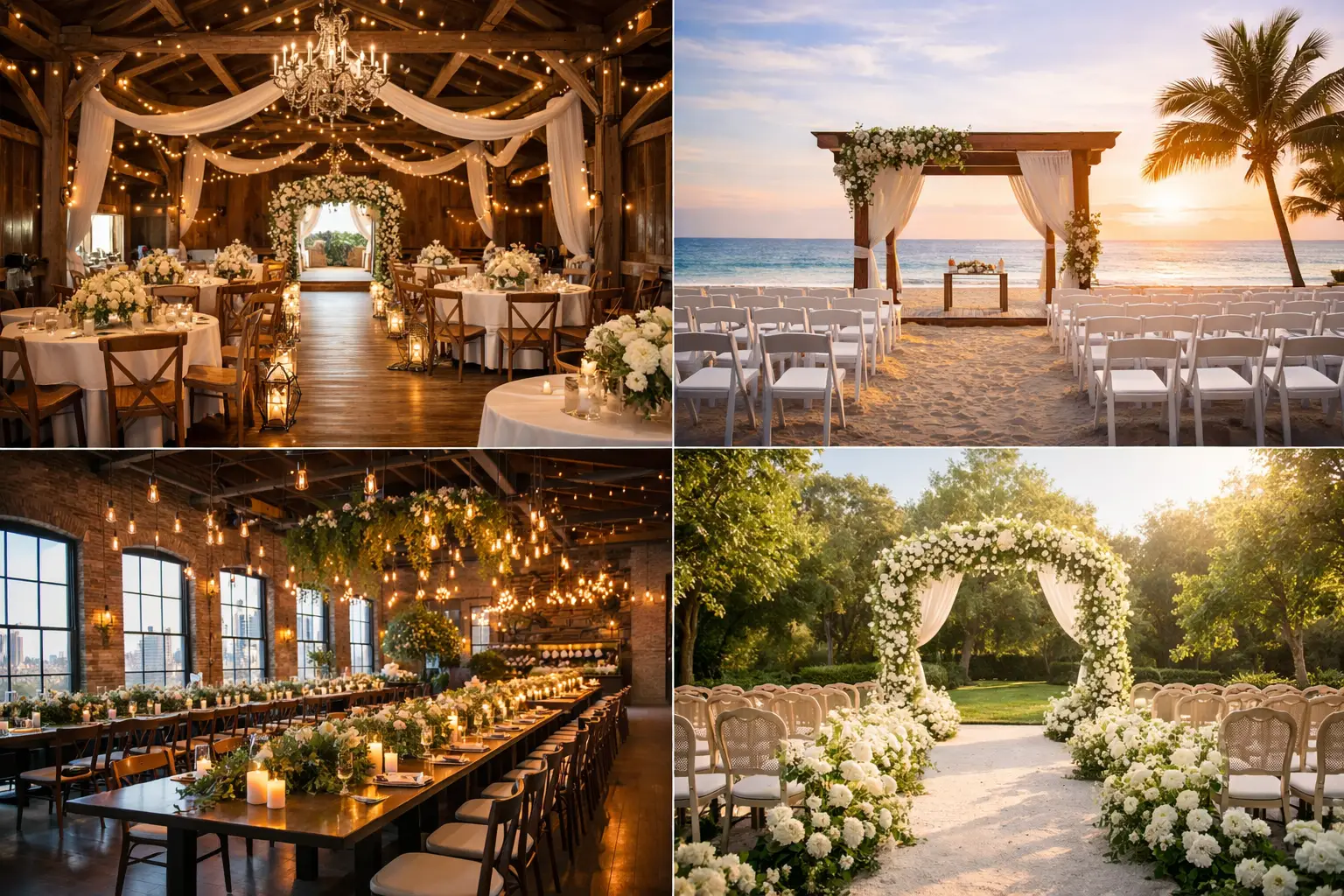
A plain function room at 11am can look nothing like the same space by the time guests arrive for the wedding breakfast. That is why wedding venue transformation examples are so useful when you are planning your own day. They help you see what actually changes a room, what is worth the spend, and how to avoid booking separate suppliers for every small detail.
Most couples do not need a completely different venue. They need a better plan for the one they have booked. In many cases, the biggest difference comes from a coordinated mix of lighting, dance floor hire, table styling, backdrop features and room layout. The best transformations are not always the most expensive. They are the ones where every part of the room works together.
Wedding venue transformation examples that make the biggest impact
When people look at before-and-after photos, they often focus on the obvious centrepiece feature. In practice, the strongest transformations usually come from several layered changes rather than one large hire item. A set of love letters looks good on its own, but it looks far better when matched with uplighting, a clean DJ setup and a well-positioned dance floor.
1. From standard hotel suite to elegant all-white reception
A hotel suite often starts with neutral carpets, plain walls and practical banqueting chairs. It can feel safe, but not especially memorable. The transformation here usually comes from softening the room and giving it structure.
Chair covers and coloured sashes instantly tidy up a mixed or dated chair set. A white LED dance floor brightens the centre of the room and gives the space a focal point before anyone even starts dancing. Add an LED backdrop behind the top table and the room begins to feel designed rather than simply hired.
This style works well if you want a clean, classic look. The trade-off is that all-white styling can show up poor room lighting, so it benefits from uplighting to warm the space and stop it looking flat in photographs.
2. From village hall to polished wedding party venue
Village halls are practical and affordable, but they rarely feel wedding-ready without help. The good news is that they are often blank canvases, which means the change can be dramatic.
A mobile disco setup with professional sound and intelligent lighting immediately gives the room energy for the evening reception. During the day, chair dressing, table décor, a sweet cart and illuminated letters can lift the venue without trying to hide what it is. If the hall has a stage, that can be turned into a feature area for a DJ, backdrop or cake display.
This is one of the most effective wedding venue transformation examples because the starting point is so simple. It also shows why coordination matters. If you bring in one supplier for entertainment and styling, the room tends to feel more consistent and setup is usually smoother.
3. From dark function room to warm, modern space with uplighting
Some venues have plenty of space but suffer from heavy curtains, dark walls or dated décor. Replacing those features is not realistic, but changing how the room is lit often is.
Uplighting can completely alter the feel of a venue. Warm white creates a softer, more formal look. Colour-matched lighting can tie the room into your bridesmaid dresses, floral scheme or table details. Once the walls are washed with light, the room looks more intentional and photographs better.
This kind of transformation is particularly effective for evening receptions, where lighting does much of the visual work. The main thing to watch is colour choice. Strong blues and purples can look striking in person, but they may affect skin tones in photos if overused.
4. From empty dance area to full evening reception setup
Couples sometimes spend heavily on the wedding breakfast room and leave the evening setup as an afterthought. Guests notice. An empty corner with a small speaker and no visual framing rarely creates the right atmosphere.
A proper evening transformation usually centres on three things: a professional DJ booth, a defined dance floor and lighting that suits both the room and the crowd. Add LED love letters or Mr & Mrs letters nearby and the setup feels complete rather than pieced together.
This is where practical experience counts. A good supplier will know how to place each item so the room flows properly, avoids blocked walkways and keeps key features visible once guests fill the space. In busy venues across Birmingham and the Midlands, that sort of planning can make a real difference.
5. From plain civil ceremony room to soft romantic setting
Ceremony rooms are often used for multiple events, so they can feel generic when viewed empty. A few carefully chosen additions can change that without overcrowding a smaller space.
Floral styling, chair dressing and an aisle arrangement help frame the ceremony area. If permitted by the venue, a backdrop or floral feature behind the registrar table or ceremony space gives photos a much stronger finish. Soft lighting also matters here, especially in rooms with harsh ceiling lights.
The key is restraint. Ceremony rooms do not need every available styling product. They need enough detail to feel special while leaving space for the couple, the guests and the photographer to move comfortably.
6. From daytime layout to evening room turnaround
Not every transformation starts with an unattractive venue. Sometimes the challenge is changing the same room from formal wedding breakfast to lively evening reception. This is common in hotel venues and event suites where the whole day takes place in one space.
A good turnaround might involve clearing selected tables, installing the dance floor, repositioning decorative features and bringing the DJ setup into full view for the evening. Lighting levels change, focal points shift and the room starts to feel different without needing a second venue.
This is one of the most practical wedding venue transformation examples because it is really about timing and logistics. Couples often underestimate how valuable it is to have a supplier who can handle multiple hired items together. It reduces delays, avoids clashes between contractors and makes the venue staff’s job easier as well.
7. From ordinary top table to standout focal point
In some rooms, the overall layout is fine but there is no real feature point. Guests walk in and their eye does not land anywhere. That usually means the top table needs more attention.
An LED backdrop, floral arrangement, throne chairs or illuminated letters can turn the top table into the visual anchor of the room. Once that area is dressed properly, the rest of the styling feels more connected. This is especially helpful in larger suites where décor can otherwise seem lost.
The trade-off is balance. If the top table is heavily styled but the guest tables are left very plain, the room can feel uneven. It is usually better to combine one strong focal feature with simpler styling carried through the rest of the venue.
8. From simple reception room to all-in-one styled package
The most efficient transformations often come from booking a combined package rather than adding items one by one from different companies. For example, a couple may need a wedding DJ, LED dance floor, uplighting, chair covers, photo booth and love letters. Sourcing each service separately can work, but it creates more admin, more delivery windows and more room for miscommunication.
An all-in-one approach tends to produce a cleaner result because the products are chosen to work together and the setup is planned as one job. It is also easier to deal with venue paperwork when equipment is PAT-tested and the supplier carries proper public liability insurance.
For couples who want convenience without cutting corners, this type of transformation is often the smartest route. Mobile Disco Hire Birmingham has built much of its service around that idea, giving clients one established supplier for entertainment and venue styling rather than a list of separate bookings to manage.
What these wedding venue transformation examples really show
The common thread in all these examples is not extravagance. It is coordination. A venue changes when layout, lighting and styling are treated as one plan rather than separate decisions made weeks apart.
That also means every wedding has its own version of the right transformation. A hotel suite may need warmth and atmosphere. A village hall may need polish and structure. A modern blank-canvas venue may need softer details so it does not feel too stark. There is no single formula, and that is why looking at real examples matters more than chasing trends.
If you are planning your wedding, start by asking a simple question: what does the room lack right now? Sometimes the answer is elegance. Sometimes it is energy. Sometimes it is just a focal point. Once you know that, the right mix of décor and entertainment becomes much easier to choose, and the venue you already booked can start to feel exactly right.
