
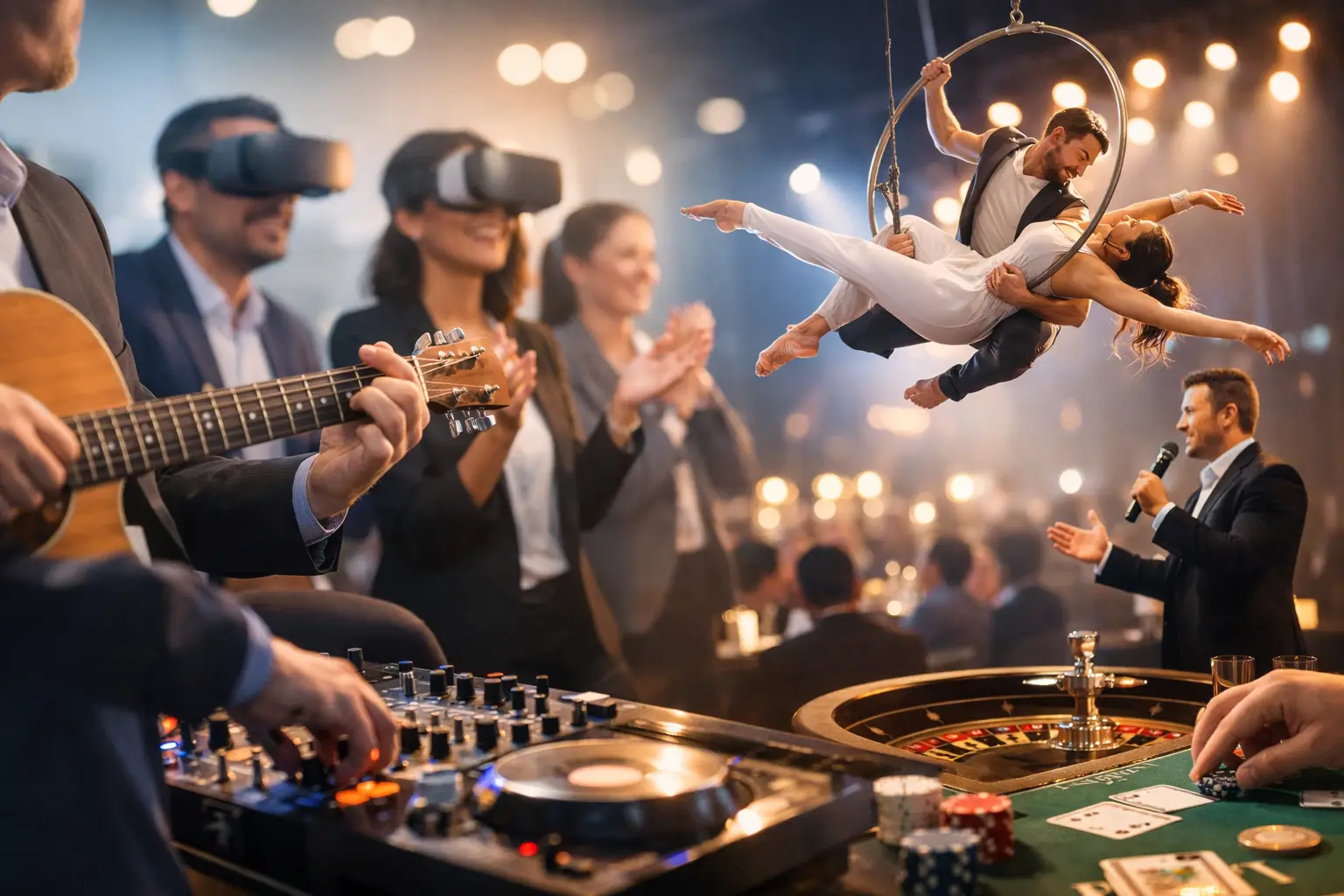
A corporate event can look polished on paper and still fall flat the moment guests walk into the room. The reason is usually simple. Entertainment sets the pace, shapes the atmosphere and often decides whether people stay engaged or start checking the time. That is why corporate event entertainment trends matter so much right now, especially for businesses that want events to feel current, well-run and worth attending.
For organisers, the pressure has changed. It is no longer enough to book a DJ or add a dance floor as an afterthought. Teams want something more engaging, venues expect professional suppliers, and guests notice when the entertainment and styling feel disconnected. The strongest events now bring those elements together so the whole room works as one.
Corporate event entertainment trends are moving towards joined-up experiences
One of the clearest shifts is away from single-service booking. Companies are increasingly looking for entertainment that fits the wider event design rather than sitting separately from it. That could mean matching DJ lighting to brand colours, combining a photo booth with a branded backdrop, or using LED dance floors and uplighting to transform a plain function suite into something far more impressive.
This matters for practical reasons as much as visual ones. When one experienced supplier can cover multiple areas, planning becomes easier, timings are tighter and there is less risk of suppliers working against each other. For a business organiser, that can save a lot of back-and-forth and reduce stress in the lead-up to the event.
There is a trade-off, of course. If your event needs something highly niche, a specialist provider may still be the better route. But for many awards nights, staff parties, product launches and end-of-year functions, a coordinated package gives better results than booking entertainment and styling in isolation.
1. DJs are being chosen for atmosphere, not just music
The role of the corporate DJ has changed. Clients are not just asking for someone to play songs. They want a DJ who can read the room, manage energy properly and handle different parts of the event without making the evening feel disjointed.
At a corporate function, that often means softer background music during arrival drinks, a clean transition into awards or speeches, then a more upbeat set later in the evening. It sounds straightforward, but it takes experience to get that balance right. A DJ who is excellent at weddings or birthday parties may not always suit a business audience unless they understand the tone the organiser is trying to create.
This is where professionalism carries real weight. PAT-tested sound and lighting, venue-ready equipment and full insurance are not just nice to have. Many venues now expect them, and corporate clients tend to be more conscious of compliance than private party bookers.
2. Interactive entertainment is replacing passive entertainment
People do not want to sit and watch for five hours. They want something to do, even at formal events. That is why interactive options continue to grow.
Photo booth hire remains one of the strongest examples because it gives guests an easy activity without forcing participation. It also works across different age groups and company cultures. Some teams will use it all night, while others dip in between food, speeches and dancing. Either way, it helps keep the room active.
The wider point is that entertainment now needs to create moments, not just fill silence. This does not mean every event has to be loud or packed with gimmicks. In fact, too much can work against you. A good corporate event usually benefits from one or two strong interactive elements rather than a long list of add-ons competing for attention.
3. Visual impact matters more than ever
Corporate guests may not say it directly, but they judge an event within seconds of arriving. If the room looks flat, the whole evening can feel less valuable before anything has even started.
That is why visual styling has become a bigger part of entertainment planning. LED dance floors, uplighting, LED backdrops and illuminated letters are no longer seen only at weddings. They are increasingly used at company parties, gala dinners and presentation evenings because they help a venue feel purposeful and event-ready.
For brands, this creates a useful opportunity. Colour-matched uplighting and clean, professional staging can make an event feel more aligned with the company itself. Even if the venue is a standard hotel suite or local function room, the right lighting and decor can completely change the impression it gives.
There is an important distinction here though. Bigger visual setups are not always better. In some venues, subtle lighting and a smart DJ setup will do more than an overcrowded room full of props. The best choice depends on ceiling height, floor space, guest numbers and how formal the event needs to feel.
4. Flexible entertainment is beating rigid set packages
Another of the major corporate event entertainment trends is flexibility. Businesses are less interested in one-size-fits-all packages and more interested in building the right setup for their event.
A summer staff celebration might need background music, a photo booth and some clean lighting. A Christmas party may call for a full DJ setup, LED dance floor, uplighting and a stronger party finish. An awards evening could need careful sound support for speeches first, then entertainment later on. The base services may be similar, but the timing and emphasis are different.
That is why experienced suppliers stand out. They can look at the event format, venue layout and audience profile and recommend what fits, rather than pushing the same package every time. For organisers, that usually leads to better value as well. You are spending on what the event actually needs, not paying for extras that add very little.
5. Corporate clients want fewer suppliers to manage
This trend is less glamorous, but it is one of the most important. Event organisers are busy, and many are planning around full-time roles. The more separate suppliers they have to brief, chase and coordinate, the more chance there is for delays and mistakes.
That is why convenience has become a real selling point. Booking entertainment, lighting and venue styling from one established company can make the whole process simpler. It also gives the organiser one point of contact if changes need to be made.
For events across Birmingham and the wider Midlands, this is especially useful when venue access times are tight or the event has a fixed running order. A joined-up supplier can arrive with a clear plan, set up efficiently and work around the schedule without unnecessary complications.
6. Guests expect events to feel shareable without trying too hard
The demand for social media moments has not gone away, but it has matured. Corporate events no longer need forced gimmicks just to get a few photos. Instead, organisers are looking for setups that naturally encourage people to take pictures and talk about the night afterwards.
This is where details make the difference. A well-lit dance floor, a smart photo booth area, attractive backdrop styling and a neat overall room design all help. Guests are far more likely to share images from an event that looks professional and considered.
That said, there is a line. If every feature feels built only for photos, the event can lose warmth. The best approach is to create a room that genuinely looks good and functions well. The content people capture should be a by-product of that, not the whole point.
7. Reliability is becoming part of the entertainment decision
For corporate organisers, the entertainment itself is only half the decision. Reliability is the other half, and it is becoming more visible in buying choices.
Fast replies, clear quotations, insured services and professional-grade equipment all help clients feel they are dealing with a serious supplier. After more than 20 years in the industry, Mobile Disco Hire Birmingham has seen that this matters just as much as the playlist or lighting effect. Businesses want confidence that the supplier will turn up on time, work professionally with the venue and deliver what was agreed.
This is especially true for first-time organisers. They may not know which technical questions to ask, but they do know they want an event to run smoothly. A dependable supplier helps bridge that gap by making recommendations in plain English and keeping the booking process straightforward.
What these trends mean for your next event
The biggest shift is not towards one specific product. It is towards better coordination. Entertainment now works best when it supports the event format, suits the audience and ties in with the look of the room.
For some companies, that will mean a strong DJ and subtle lighting. For others, it will mean a fuller setup with photo booth hire, LED features and branded colour styling. The right answer depends on your venue, your guests and what you want the event to achieve.
If you are planning a corporate function, it is worth thinking beyond the old question of what music to book. Ask how the room should feel when guests arrive, how the event should flow from one stage to the next, and which elements will make the night feel well organised rather than pieced together at the last minute.
That is usually where the best events start – not with more suppliers, but with better choices.
