
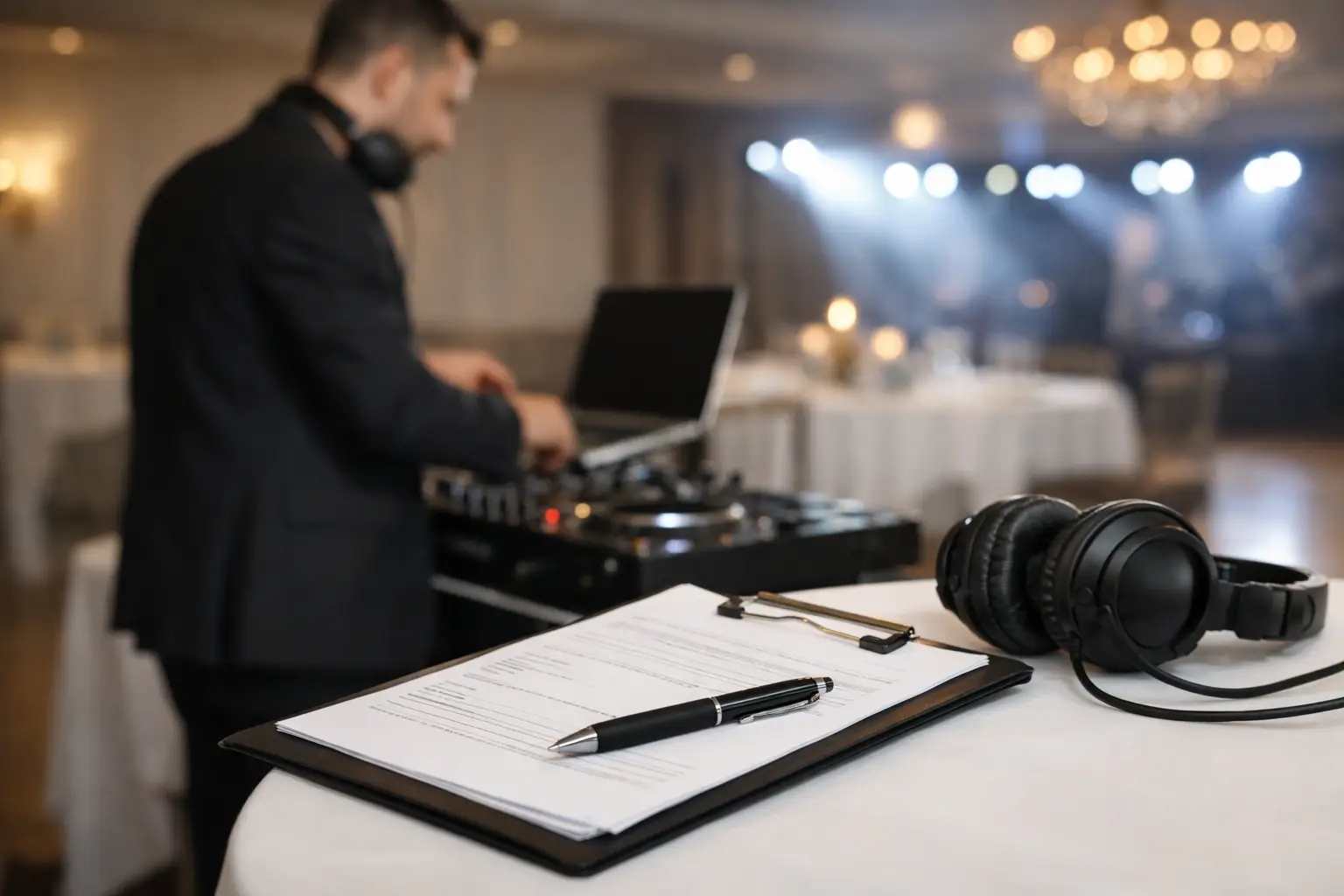
You have found the right DJ, the playlist is taking shape, and the venue suddenly asks for insurance documents before they will confirm access. That is usually the moment people ask, do venues require dj insurance? The short answer is often yes, but not always in exactly the same way. Some venues make it a firm condition of entry, while others leave it to the organiser or ask only for certain documents such as public liability insurance and PAT testing.
Do venues require DJ insurance at every event?
Not every venue has the same policy, but many do expect a DJ or mobile disco supplier to carry public liability insurance. This is especially common at hotels, wedding venues, civic buildings, corporate event spaces and larger function rooms. If a DJ is bringing sound equipment, lighting stands, cables and booths into a venue, the venue wants reassurance that there is cover in place if something goes wrong.
In practice, most venues are not asking for insurance to make life difficult. They are managing risk. A guest could trip over a cable, a lighting stand could be knocked, or equipment could cause accidental damage during set-up. Even when the chance of a serious issue is low, venues still want professional suppliers who are prepared.
That means the real answer to do venues require dj insurance is this: many reputable venues do, and even where it is not mandatory, it is widely expected. If you are booking entertainment for a wedding, birthday party or corporate function, it is worth checking this point early rather than waiting until the week of the event.
Why venues ask for DJ insurance
From the venue’s point of view, insurance is part of basic supplier standards. They may already have their own insurance, but that does not automatically cover every external contractor working on site. A DJ is normally treated as an independent supplier, so the venue may require separate cover before allowing equipment into the room.
Public liability insurance is the policy most commonly requested. This covers claims made by third parties for injury or property damage connected to the DJ’s work. Many venues also ask for PAT testing records for electrical equipment, because insurance alone is not the whole picture. They want to see that the setup is both insured and safety checked.
There is also a simple commercial reason. Venues work hard to protect their reputation. They prefer suppliers who arrive on time, bring reliable equipment, understand access procedures and already have the right paperwork ready to send over. Insurance is one of the clearest signs that a DJ operates professionally.
What type of insurance are venues usually talking about?
When people ask do venues require dj insurance, they usually mean public liability insurance. That is the key document most venues want to see. Cover levels vary, but £5 million is a very common requirement and often meets the expectations of hotels, wedding venues and corporate sites.
Some DJs may also carry equipment cover or employer’s liability insurance if they have staff, but those are not always requested by venues. For the client, the main concern is usually whether the DJ can provide a current public liability certificate and whether the gear has been PAT tested.
If your event includes more than just the DJ, the same principle may apply to other hired services too. Photo booths, dance floors, illuminated letters, uplighting and decorative equipment can all come with venue compliance questions. This is one reason many clients prefer using a supplier that can handle entertainment and styling together, because it cuts down on chasing different companies for separate paperwork.
When a venue might not ask for it
There are venues that do not ask for DJ insurance at all, particularly smaller private halls, social clubs or informal party spaces. Sometimes the venue has a more relaxed supplier policy. Sometimes they assume the organiser has checked credentials. Sometimes they simply do not enforce paperwork unless there has been a previous issue.
That said, a venue not asking for insurance does not mean it is unimportant. It just means responsibility has shifted. If anything goes wrong, you do not want to discover that the DJ is uninsured after the fact. Even for a house party or a small birthday celebration, professional cover still matters.
There is also a difference between a venue that does not ask and a venue that would care if something happened. Most would still expect suppliers to be insured, even if they have not requested documents in advance.
What clients should ask before booking
If you are hiring a DJ, it is sensible to ask two straightforward questions early on. First, do they hold current public liability insurance? Second, is their equipment PAT tested? Those two checks solve most venue approval issues before they become last-minute problems.
It is also worth asking whether the company regularly works at hotels, wedding venues and corporate spaces. Experience matters because venue-ready suppliers usually know what is coming. They are used to access times, sound limiters, loading routes, risk-aware setup and sending over paperwork promptly when requested.
For event organisers, this is less about technical detail and more about avoiding hassle. You want a supplier who can deal with the venue professionally while you focus on the event itself.
Do venues require DJ insurance more often for weddings and corporate events?
Yes, usually. Weddings and corporate events tend to involve venues with stricter operating standards. Hotels, country houses, conference venues and managed event spaces often have formal supplier rules. They may ask for insurance certificates in advance, request PAT testing evidence, and sometimes require all third-party suppliers to report to an event manager on arrival.
Corporate events can be particularly strict because of internal health and safety procedures. Wedding venues can be similar, especially those hosting multiple events each week. They have established checklists and do not want uncertainty on the day.
Private parties in community halls or social clubs can be more flexible, but even then it depends on the venue management. The main point is that the more professional the venue setting, the more likely insurance will be part of the booking requirements.
Why insured, venue-ready suppliers make planning easier
Insurance is not just a box to tick. It is part of a wider standard of professionalism. A DJ who carries proper cover is more likely to take the rest of the job seriously too – equipment condition, safety, setup timing, communication and venue coordination.
For clients, that matters because entertainment rarely sits in isolation. The DJ may be working around a photo booth, dance floor, room styling, speeches, catering staff and evening turnaround times. When one supplier can manage several of those moving parts and already has the right compliance in place, the whole booking becomes easier to organise.
This is where established event companies tend to stand out. For example, Mobile Disco Hire Birmingham provides entertainment and event hire with £5 million public liability insurance and PAT-tested equipment, which gives venues and clients confidence from the start. It is the kind of practical detail that helps avoid delays, extra emails and unnecessary stress.
What happens if a DJ does not have insurance?
Sometimes the venue will simply refuse access. That can mean finding replacement entertainment at short notice, which is the last thing any couple, party host or event organiser wants. In other cases, the venue may allow the DJ to perform only after the organiser signs additional disclaimers, although this is far less common at professional venues.
Even if the event goes ahead, uninsured suppliers create risk. If there is accidental damage or an injury claim, the position becomes far more complicated for everyone involved. What looked like a cheaper booking can become expensive very quickly.
That is why price should never be the only comparison point. A professional DJ service is not just about music. It is about reliability, safe equipment, proper documentation and being ready to work within venue rules.
The practical answer for event organisers
If you are still asking do venues require dj insurance, the safest approach is to assume that many of them do and to book accordingly. Check the venue’s supplier requirements early. Ask your DJ for proof of public liability insurance and PAT testing. Make sure the company is used to working in professional venues, not just private spaces.
That simple bit of due diligence can save a lot of back and forth later on. It also tells you a great deal about the supplier you are hiring. Professional companies answer quickly, provide documents without fuss and understand exactly what venues want to see.
When you are planning a wedding, party or business event, the best suppliers make things easier before the music even starts. That peace of mind is often worth as much as the performance itself.
