Party Event Services BirminghamParty Event Services Birmingham
How to Hang LED Backdrops Safely at Events

By

How to Hang LED Backdrops Safely at Events

A LED backdrop can turn an ordinary function room wall into a wedding focal point, photo area or stage setting within minutes. But knowing how to hang LED backdrops properly matters just as much as choosing the right size or light pattern. A poorly fitted backdrop can sag, block an exit, pull on a venue fixture or leave untidy cables in full view of guests.

For weddings, birthday parties and corporate events, the best result is a backdrop that looks effortless while being securely installed, electrically safe and approved by the venue. The right method depends on the backdrop type, the wall or structure available, ceiling height and whether the venue permits fixings.

Start with the venue, not the backdrop

Before unpacking anything, check where the LED backdrop will sit. Measure the available width and height, then allow space for the frame, weighted base and power cable. A backdrop that is technically the correct width can still look cramped if it is pushed into a narrow alcove or placed behind tables, speakers or a DJ setup.

Ask the venue whether you can use wall fixings, ceiling points or freestanding equipment. Many hotels, barns and halls will not allow screws, nails, pins, adhesive hooks or tape on painted walls and décor. Some venues also have strict rules around fire exits, sprinkler heads, access routes and loading limits for ceiling rigging.

For most event setups, a freestanding pipe-and-drape frame or purpose-built backdrop stand is the sensible option. It avoids damage to the venue and can be positioned where it gives the best visual effect. Ceiling hanging may look neat, but it should only be done using rated rigging points and by people who understand the venue’s restrictions and safe working procedures.

How to hang LED backdrops with a freestanding frame

A freestanding frame is the usual choice for LED starlight curtains and fabric backdrops. It is adaptable, tidy and suitable for most wedding venues and party rooms. Start by assembling the base plates on a level surface, then fit the upright poles and horizontal crossbar according to the frame manufacturer’s instructions.

Set the width before raising the frame. This is easier than trying to adjust it when the curtain is already hanging. If the backdrop is heavy, wide or being installed in a busy room, have two people complete the job. One person can steady the upright while the other attaches the curtain and checks that the fabric is not pulling unevenly.

Most LED curtains have a rod pocket, loops, tabs or hook-and-loop fastening along the top edge. Slide the crossbar through the pocket, attach the tabs evenly, or secure the supplied ties around the bar. Work from the centre outward so the material hangs square. Once it is in place, adjust the upright height gradually until the bottom of the curtain is just above the floor or sits neatly behind the base.

Do not stretch the curtain tightly. LED fabric needs to hang naturally, particularly where the cable runs into the top section. Pulling it taut can strain the wiring, distort the drape and make the lights appear uneven. A slight gather often gives a fuller, more luxurious finish for a wedding backdrop.

Keep the frame stable

Even a lightweight LED curtain can act like a sail if doors are opened nearby or guests brush past it. Add suitable weights to the base plates, especially for taller frames, wider displays and venues with active foot traffic. Purpose-made base weights are preferable because they sit flat and do not create a trip risk.

Never use chairs, tables, speaker stands or improvised objects as supports for a backdrop. They are not designed for the load, and they make the installation look temporary. Keep the display clear of dance floor edges, children’s activity areas and busy service routes.

Hanging an LED backdrop from a wall

Wall mounting can work well for a small photo booth area, a home party or a lightweight curtain behind a top table. However, it is only appropriate where the wall can safely take the fixing and the venue has given permission.

If the curtain is lightweight, removable adhesive hooks may be suitable on smooth surfaces, but they are not a guaranteed solution. Heat, textured paint, dust and the curtain’s weight can all cause hooks to fail. Test any method well before guests arrive and never rely on ordinary tape to hold an LED curtain overhead.

For permanent or semi-permanent installations, use appropriate brackets, fixings and a solid mounting bar secured into a suitable surface. Plasterboard, decorative panelling and aged brickwork each need a different approach. If there is any doubt about the structure, use a freestanding frame instead. The small saving from a quick wall installation is not worth the risk of damage or a backdrop falling during the event.

Ceiling rigging requires professional planning

A ceiling-hung backdrop can create an impressive effect behind a stage or across a large room, but it is not a simple case of tying fabric to whatever is overhead. Suspended ceilings, lighting rails, pipework and decorative beams are not automatically load-bearing or approved rigging points.

Only use points confirmed by the venue as suitable for hanging equipment. The equipment should be load-rated, correctly secured and installed by competent professionals. Depending on the setting, this can involve approved clamps, safety bonds, lifting equipment and a documented method of work.

This is particularly relevant for corporate events, larger wedding venues and public functions where venue management may request risk assessments, public liability details and evidence that electrical equipment has been tested. A professional event supplier should be ready to discuss these requirements before setup day.

Plan the power and cable route

The lights are what make the backdrop special, but the cable route is what keeps it safe and presentable. Locate the power source before committing to the backdrop position. Ideally, the lead should run behind the curtain and along the perimeter of the room, rather than crossing open floor space.

Use a suitable extension lead only where necessary and avoid overloading sockets. Keep connectors off damp floors and away from drinks stations, flower displays and areas where catering staff will be working. Where a cable must cross a walkway, protect it with a proper cable ramp or cover designed for event use.

Check the LEDs before the room is dressed. Look for damaged wires, loose connections, flickering sections or a controller that does not respond properly. For hired equipment, ask whether it is PAT tested and whether a spare controller or power supply is available for larger setups. These checks are especially worthwhile when the backdrop is behind the top table, cake table or stage, where a fault will be highly visible in photographs.

Position it for photographs and atmosphere

A backdrop should be lit enough to sparkle without overpowering the people standing in front of it. Place it behind the top table, sweetheart table, cake display, photo booth or DJ area according to the purpose of the event. Avoid putting it directly opposite strong daylight or an open doorway, as the LEDs may disappear in bright conditions.

For a photo area, leave enough room for guests to stand several feet in front of the fabric. This prevents harsh shadows and gives photographers space to frame groups. Pairing the backdrop with illuminated letters, a flower wall, balloons or a LED dance floor can create a coordinated look, but avoid placing too many bright features in one small area. The backdrop should support the room design, not compete with every other feature.

Warm white LEDs tend to suit classic weddings and elegant evening events. Cool white can feel cleaner and more contemporary, while colour-changing effects are often better for parties and DJ-led celebrations. It depends on the atmosphere you want and on how the venue lighting will be used after dark.

When professional installation is the better option

DIY fitting is practical for a small, lightweight backdrop in a straightforward room. Professional installation is usually the better choice when the setup involves a large frame, difficult access, venue paperwork, ceiling rigging or a combined package of DJ equipment, dance floor and décor.

Mobile Disco Hire Birmingham supplies LED backdrops as part of coordinated event hire for clients who want one experienced team handling the visual setup alongside entertainment. With more than 20 years of event experience, PAT-tested equipment and £5 million public liability insurance, the focus is on a polished display that is ready before guests arrive. A showroom appointment can also help when comparing backdrop styles with other wedding and party décor.

The best LED backdrop is not simply the brightest one. It is the one that fits the room, photographs well, stays secure throughout the celebration and disappears into the background of your planning. Get the venue details early, choose the right support method and give the installation the same care as the rest of the event styling.
When to Book a Wedding DJ for Your Big Day

By

When to Book a Wedding DJ for Your Big Day

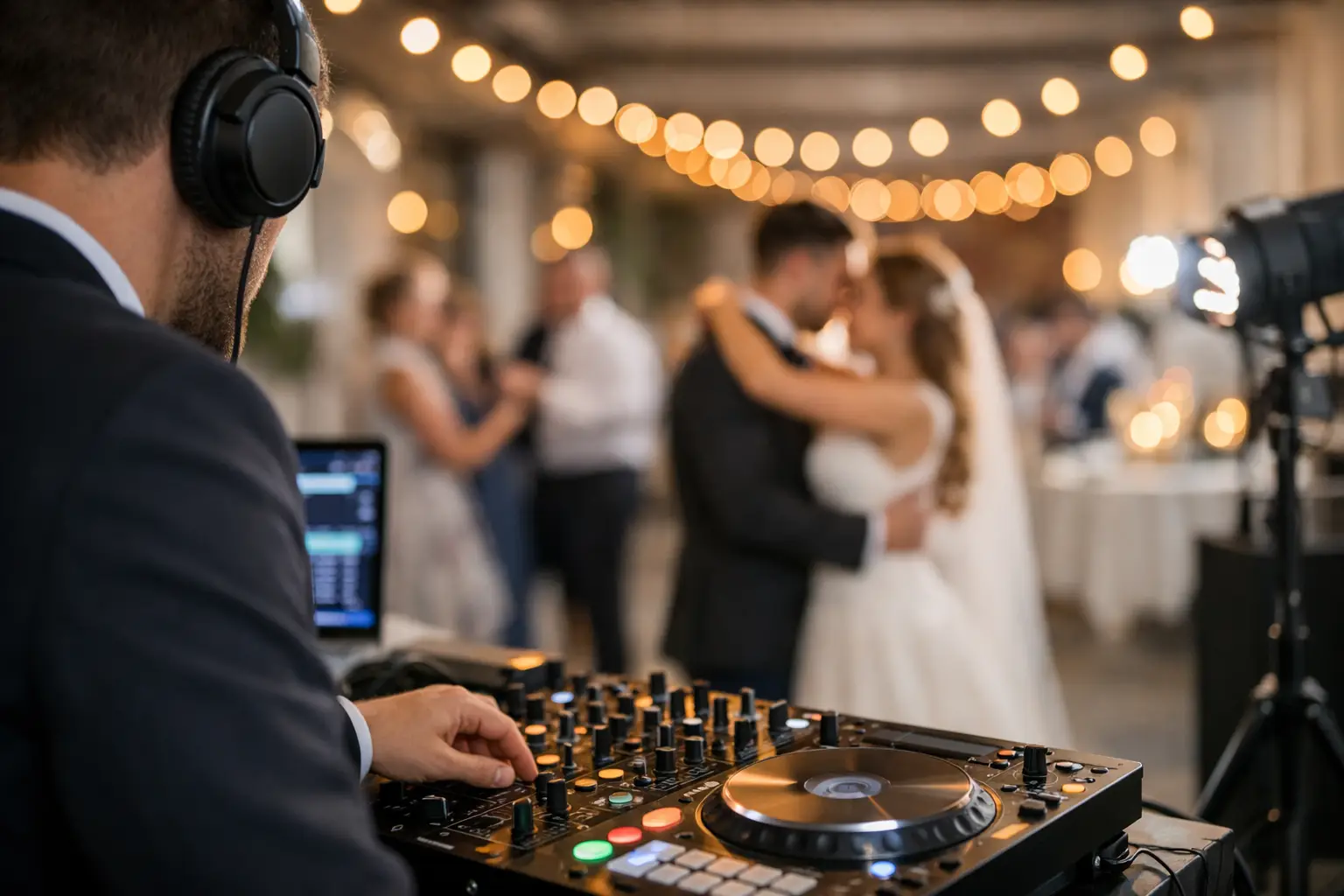
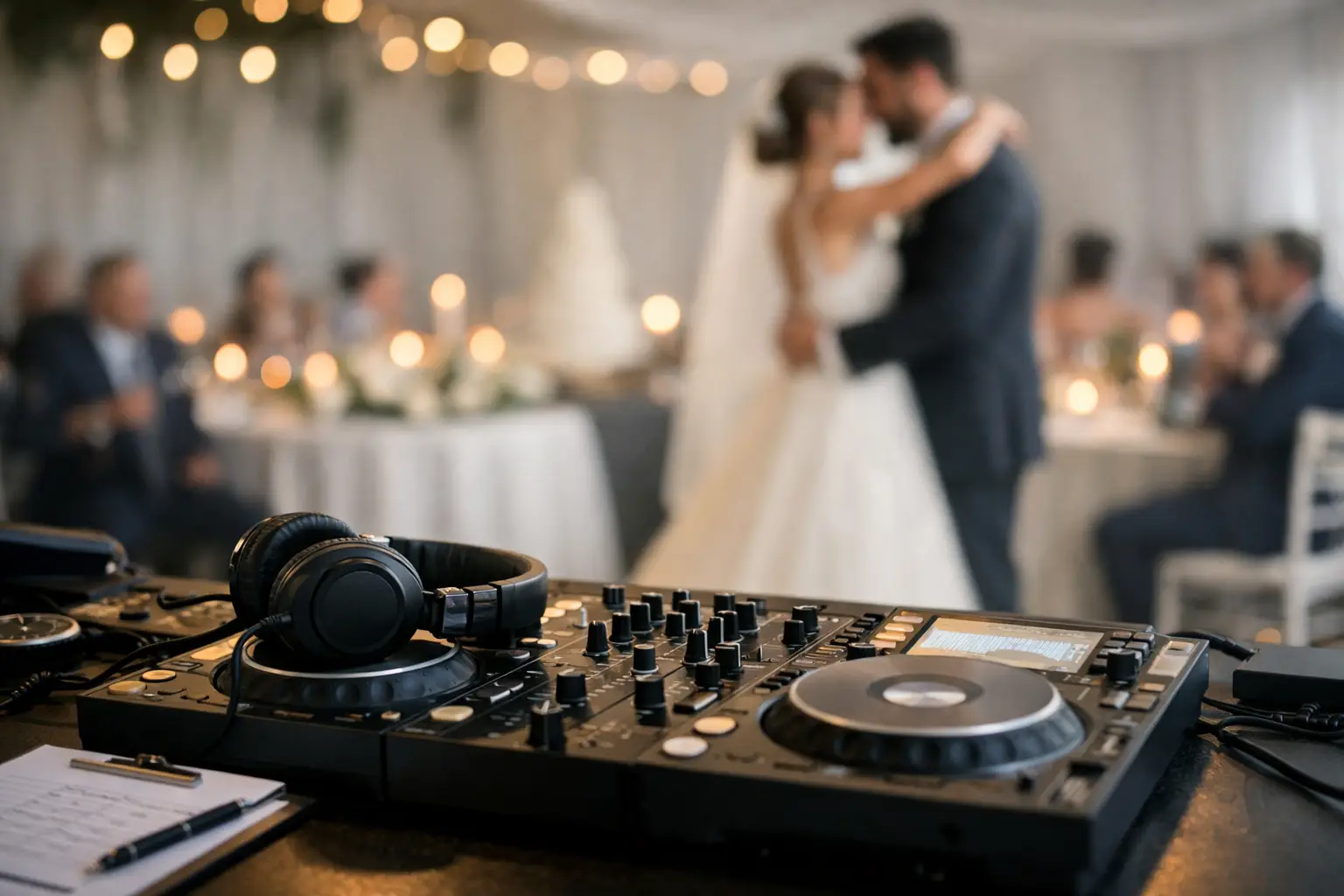
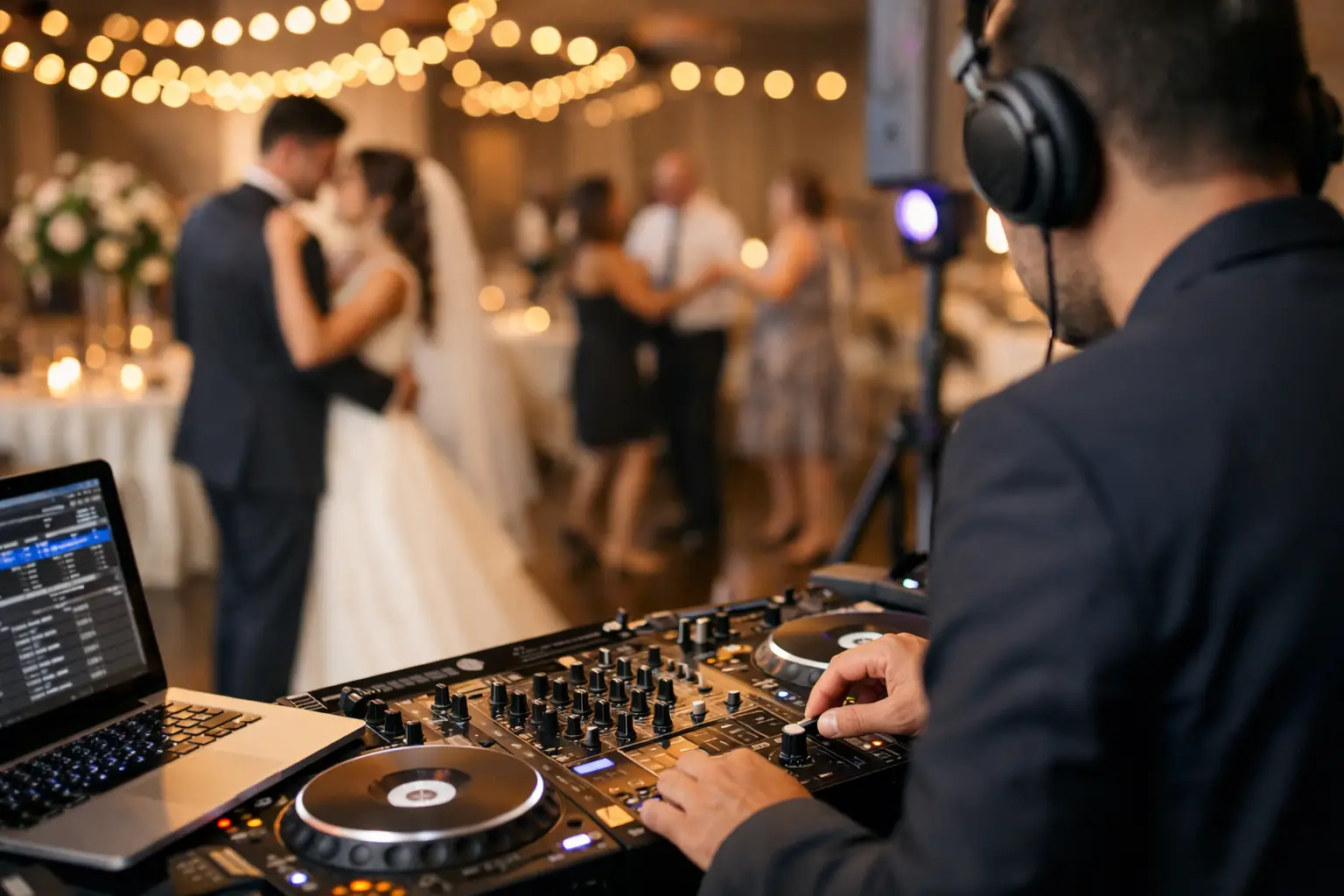
Your venue has finally confirmed the date, your guest list is taking shape, and the excitement is becoming real. That is the point when many couples start asking when to book a wedding DJ. The short answer is: earlier than you may think, particularly if your wedding falls on a Saturday between late spring and early autumn.

A good DJ does far more than turn up with a playlist. They help set the pace for your evening reception, read the room, make announcements when required and keep guests of every age involved. If you are also arranging LED dance floors, uplighting, love letters, a photo booth or wedding styling, booking early gives you more choice and a far easier planning process.

When to Book a Wedding DJ After Setting Your Date

For most weddings, aim to secure your DJ 12 to 18 months before the date. This is especially sensible for Saturday weddings, bank holiday weekends and popular dates from May to September. December is another busy period, as DJs are often committed to Christmas parties as well as weddings.

If you are getting married on a Friday, Sunday or during the quieter months, you may have more flexibility. Six to 12 months can still be enough, but availability is never guaranteed. The DJ you really want may already be booked, and the same applies to popular extras such as a white LED dance floor, illuminated Mr & Mrs letters or a photo booth.

A short-notice booking is possible, and it is always worth asking. However, leaving entertainment until a few weeks before the wedding can mean compromising on your preferred supplier, package or timings. It can also make it harder to coordinate access with the venue and other evening suppliers.

Book the venue first, then your key evening suppliers

You do not need every detail of the wedding finalised before booking a DJ. Your date, venue and a rough idea of the reception schedule are usually enough to reserve the service. Once those essentials are in place, entertainment should sit near the top of your priority list alongside photography, catering and any major styling requirements.

This approach protects the parts of the day that cannot easily be replaced. Flowers can often be refined later. Table plans will change. But a sought-after DJ who is already performing at another wedding cannot be moved into your date.

Why Early DJ Booking Makes Wedding Planning Easier

Booking early is not only about securing availability. It gives you time to discuss the type of night you want. Some couples want a relaxed start during the wedding breakfast followed by a full party after the first dance. Others want a DJ-led celebration from the moment evening guests arrive, with music that works for grandparents, friends and children alike.

An experienced wedding DJ will ask practical questions: What time can they access the room? Is there a sound limiter? Does the venue require PAT-tested equipment and public liability insurance? When is the first dance planned? Is there a strict finish time? These details matter because they affect setup, sound levels and how smoothly the evening runs.

At Mobile Disco Hire Birmingham, wedding entertainment can be arranged alongside venue décor and event hire, helping couples avoid chasing separate suppliers for each part of the reception. With more than 20 years of experience, £5 million public liability insurance and PAT-tested equipment, the focus is on a professional setup that venues can welcome without unnecessary complications.

Early planning also gives you breathing space to visit an event and entertainment showroom by appointment. Seeing items such as LED backdrops, chair covers, balloon displays, sweet carts and throne chairs in person can make choices much clearer than browsing photographs alone.

Match Your Booking Timing to Your Wedding Plans

The right time to book can depend on how involved your entertainment setup will be. A straightforward DJ-only evening reception may require fewer decisions than a full room transformation, but both benefit from early contact.

If you are booking a DJ only

Once your date and venue are confirmed, make the enquiry. You can normally confirm your key timings later, including guest arrival, cake cutting, first dance and finish time. Start thinking about musical direction too: favourite artists, songs you definitely want to hear and a short do-not-play list. A useful do-not-play list helps your DJ avoid genuine dislikes, but it should not be so restrictive that it removes every option for reading the dance floor.

If you want entertainment and styling together

Book even earlier where possible. A combined package may include your DJ, dance floor, uplighting, illuminated letters, backdrop and photo booth. Having one supplier coordinate delivery, setup and collection reduces the risk of different teams arriving at conflicting times or leaving cables and equipment in awkward places.

It is also easier to create a consistent look. Warm uplighting can complement a gold-and-white scheme, while a flower wall or LED backdrop can provide a strong focal point behind the top table or photo area. Your DJ setup should look like part of the reception, not an afterthought placed in a spare corner.

If your venue has restrictions

Some hotels, barns, country houses and function rooms have clear rules around loading access, sound levels, equipment testing and setup times. Ask these questions before committing to a package, ideally when you first speak with the venue. A professional DJ company is used to working with venue teams and can confirm what is required.

This is particularly relevant where a venue only allows suppliers to set up during a narrow afternoon window, where parking is limited or where a sound limiter could cut the music if levels rise too high. None of these issues should stop a great party, but they need sensible preparation.

What to Confirm Before You Pay a Deposit

A booking should give you clarity, not more questions. Before you reserve your wedding DJ, confirm the performance times, expected setup time, package contents and whether travel or late finishing charges apply. Ask who will be your point of contact before the event and what happens if timings change.

You should also check the professional basics. Your venue may ask for public liability insurance and evidence that electrical equipment has been PAT tested. A reputable supplier should be able to provide the required documents promptly. It is a simple detail, but it can save an uncomfortable last-minute call from your wedding coordinator.

Music planning is worth discussing in the weeks before the day rather than trying to create a huge list months in advance. Your tastes may change, and the guest list certainly might. A better approach is to provide your first-dance track, any meaningful must-play songs and a few genres or artists that suit your crowd. Then leave room for the DJ to respond to what is actually filling the dance floor.

A Sensible Wedding DJ Booking Timeline

If your wedding is 12 to 18 months away, contact your preferred DJ now and reserve the date before it becomes unavailable. Around six to nine months before the wedding, confirm any added items such as a photo booth, dance floor, love letters or venue lighting. By two to three months before the day, share your latest schedule, first-dance choice and musical preferences.

In the final fortnight, your DJ should have the confirmed venue access time, planner or venue contact details, evening guest arrival time and any announcements you would like made. This is also the ideal time to flag surprises, cultural music requests or a planned change of outfit before the first dance.

There is no prize for delaying an entertainment booking until every napkin and centrepiece has been chosen. Reserve the DJ when the date is secure, give yourself options for the visual details, and you can look forward to an evening that feels organised, personal and properly ready for a full dance floor.

Birmingham Wedding DJ Guide for Better Parties

By

Birmingham Wedding DJ Guide for Better Parties

The evening reception is the point where your wedding stops being a timetable and becomes a party. Guests who have spent the day talking, eating and posing for photographs need a reason to stay, celebrate and fill the dance floor. This Birmingham wedding DJ guide explains what to look for, what to ask and how to make sure the music suits your guests rather than just a playlist.

A good wedding DJ does far more than arrive with speakers and press play. They read the room, manage the pace of the night, make clear announcements when needed and adjust the music to the people actually in front of them. Choosing well gives you a confident, properly run reception and takes one major job off your planning list.

Start with the atmosphere you want

Before comparing DJs, decide what you want the evening to feel like. Some couples want a full-on party from the first dance onwards, with floor-fillers across several decades. Others prefer a smart, relaxed reception that builds steadily after the meal. Neither approach is wrong, but your DJ needs to understand the brief.

Think about the mix of guests, not only your own musical taste. A wedding may bring together grandparents, colleagues, university friends and young children. The strongest sets move between recognisable classics, current favourites and music that means something to the couple. A DJ can play your preferred genres without making the room feel narrow or excluding half the guest list.

It also helps to consider the venue and the time available. A four-hour evening reception allows more room for requests and musical variety than a shorter function. If your first dance is late, or the bar closes early, tell your DJ from the outset so they can structure the night properly.

What a professional wedding DJ should provide

Price matters, but it should not be the only comparison. A low quote can sometimes mean limited equipment, little preparation or a supplier who is not ready for venue requirements. Ask exactly what is included and check that the service feels appropriate for a wedding rather than a basic party booking.

A professional setup should include quality sound equipment suitable for your guest numbers and room size, along with lighting that creates atmosphere without overwhelming the venue. Equipment should be PAT-tested, and the supplier should hold public liability insurance. Many Birmingham venues ask for these documents before allowing entertainment equipment on site, so confirming this early can prevent an awkward last-minute problem.

Experience is equally useful. Wedding timings can move, speeches can run over and the room can be slow to fill after the buffet. An experienced DJ remains calm, adapts the schedule and keeps the entertainment moving without making the couple feel rushed. They should also understand microphone use, first-dance timing and how to make announcements clearly when requested.

Ask the questions that prevent surprises

Your initial conversation should be straightforward. Explain your date, venue, guest numbers and approximate entertainment times, then ask how the DJ would approach your reception. Their answers should be clear and specific, not vague promises that they can play anything.

Confirm whether they take requests, how they handle a do-not-play list and whether you can submit key songs in advance. Most couples do not need to programme every track, but giving guidance is sensible. Mention genres you love, artists you would rather avoid and any tracks with personal importance. If there are cultural traditions, specialist music or a family dance you want included, raise this before booking rather than hoping it can be sourced on the night.

Also ask about setup and access. Your venue may have a loading route, stairs, a lift, a restricted setup window or a sound limiter. A DJ who knows these details beforehand can arrive prepared. Check whether early setup is available, especially if the room is being turned around between the wedding breakfast and evening reception.

Plan music without over-controlling the night

A carefully chosen first dance sets the tone, but it does not need to dictate the whole evening. Pick a song you both genuinely like and feel comfortable dancing to. It can be slow, upbeat, traditional or unexpected. The important part is that it feels right for you.

After that, give your DJ direction rather than a rigid song-by-song running order. A short list of must-plays, a few preferred styles and a clear do-not-play list usually works best. It allows the DJ to respond to the dance floor while protecting the songs and artists you do not want at your wedding.

Be realistic about requests from guests. They can add energy and help different generations feel included, but not every request belongs in the set. Your DJ should use judgement, taking suitable requests while keeping the musical flow intact. A sudden change from a packed dance floor to a niche track can empty the room quickly.

Build momentum around the first dance

Tell your DJ whether you want guests invited onto the floor during the first dance or whether you would prefer a short moment together first. This small decision changes the start of the party. Inviting guests in after the first minute can create an immediate crowd; keeping the moment private creates a more intimate photograph and a natural pause before the pace increases.

If you are having a father-and-daughter dance, a cultural dance or a surprise routine, make sure it is included in the evening plan. Your DJ can have the track ready, make the right announcement and avoid playing it too early.

Match the production to your venue

The right DJ setup should look as good as it sounds. In a modern hotel suite, clean booth styling, coordinated uplighting and an LED dance floor can make the room feel more finished. In a rustic barn, softer lighting may suit the setting better. A large lighting rig is not automatically better if it clashes with your styling or takes up valuable floor space.

This is where booking entertainment and venue dressing from one supplier can save real time. Your DJ, dance floor, uplighting, illuminated love letters, photo booth and backdrop can be planned as one coordinated package rather than several separate deliveries. It reduces the number of people you need to brief, helps the room look consistent and makes setup simpler for the venue team.

There are trade-offs. A photo booth gives guests something to do away from the dance floor and creates keepsakes, but it needs a suitable position and enough space for a queue. An LED dance floor adds instant visual impact, but it is worth checking the venue layout so it does not restrict access or squeeze the DJ into a corner. Good planning is about choosing the features that will genuinely be used.

Do not leave venue compliance until the last week

Venues often have rules around sound levels, smoke effects, access, electrical testing and finish times. Some use sound limiters, particularly in city-centre locations or venues close to residential areas. A professional DJ will work within these conditions, but they need to know about them before the event.

Ask your venue for its entertainment policy when you book. Then pass the information on to your DJ, including contact details for the events manager if appropriate. Confirm load-in times, parking arrangements and whether the DJ can set up before guests enter the room. This is especially valuable at busy Birmingham wedding venues where suppliers may be working around several functions on the same day.

At Mobile Disco Hire Birmingham, clients can combine experienced wedding DJs with professional lighting, dance floors, photo booths and wedding décor through one established supplier. With more than 20 years of experience, PAT-tested equipment and £5 million public liability insurance, the focus is on giving couples a polished, venue-ready service. If you would like to see styling and entertainment options before deciding, appointments can also be arranged at the event and entertainment showroom.

Set a clear running order for the evening

Your DJ does not need a minute-by-minute script, but they do need the key moments. Share the time of the first dance, buffet, cake cut, evening guest arrival and planned finish. Let them know who is authorised to make changes on the night, as couples should not be pulled away from enjoying their own reception to answer operational questions.

A useful approach is to nominate one trusted person, such as a best man, maid of honour or venue coordinator, as the point of contact. They can help gather family for a planned dance, confirm when food is ready or flag a genuine schedule change. Your DJ can then keep the celebration running while you stay present with your guests.

The best wedding DJ is not necessarily the one with the longest song list or the biggest light show. It is the supplier who listens to your plans, arrives prepared, meets your venue’s requirements and knows how to turn a mixed group of guests into a proper party. Book early, share your brief clearly and leave enough room for professional judgement on the night.

Wedding Supplier Checklist Guide for Midlands Couples

By

Wedding Supplier Checklist Guide for Midlands Couples

The right wedding supplier checklist guide does more than give you names to tick off. It helps you book the suppliers that shape the whole day in the right order, avoid duplicated costs, and make sure your venue is ready for every part of the celebration – from the ceremony through to the last dance.

For couples planning a Birmingham or Midlands wedding, the biggest challenge is often coordination. A venue may have separate rules for DJs, décor, access times, power supplies and insurance. Meanwhile, your florist, photographer, entertainment team and stylist may all need the room at different points. Start with the practical foundations, then build the visual details around them.

Start your wedding supplier checklist with the essentials

Your wedding date, venue and guest numbers influence almost every booking that follows. Until these are confirmed, it is difficult to compare quotes properly or know what equipment, furniture and styling will work in the space.

Book your venue first, then secure the suppliers who are limited to one wedding per date. This usually means your photographer or videographer, wedding DJ or band, and caterer if catering is not included with the venue. If you are marrying at a popular venue on a Saturday between late spring and early autumn, do not leave these decisions until the final few months.

At this stage, confirm the ceremony and reception timings. Ask your venue when suppliers can load in, whether they have parking or access restrictions, and what time music must finish. These details may sound minor, but they affect the type of entertainment and room styling you can have.

A practical early checklist includes:

  • Ceremony and reception venue
  • Registrar, celebrant or place of worship arrangements
  • Catering and drinks, where not supplied by the venue
  • Photographer and, if wanted, videographer
  • Wedding DJ, band or other evening entertainment
  • Wedding transport, if required
  • Wedding insurance, particularly for larger budgets or overseas suppliers

Check venue requirements before booking entertainment and décor

A fantastic-looking wedding can be held back by one overlooked venue rule. Some venues set sound limiters, restrict smoke effects or confetti, require specific fire-retardant certificates, or only allow suppliers with public liability insurance. Others have limited set-up windows, which is particularly relevant when you want a DJ, LED dance floor, photo booth, lighting and room décor installed before guests arrive.

Ask for the venue’s supplier guidance in writing. You need to know whether your chosen DJ can connect to their sound system if needed, where speakers can be positioned, whether there are enough sockets, and whether cables must be covered. For styling, ask about ceiling height, wall fixings, candle rules and which areas can be decorated.

Professional credentials are not just paperwork. PAT-tested electrical equipment and suitable public liability insurance give both you and the venue confidence that suppliers are prepared to work safely. If a supplier cannot provide clear answers before booking, it is sensible to look elsewhere.

Choose suppliers that work together

There is nothing wrong with booking separate specialists. A florist with a particular style, a photographer whose work you love and a caterer known by your venue can all be the right choices. The trade-off is that you become the person joining everything together.

Where your plans include several reception elements, using one established supplier for related services can reduce the number of deliveries, payments and set-up conversations. For example, a wedding DJ, photo booth, LED dance floor, uplighting, illuminated LOVE letters, chair covers and backdrop can be planned as one coordinated package rather than six unrelated bookings.

This approach is especially useful when you want a quick room turnaround between the wedding breakfast and evening reception. The same team can plan where the dance floor sits, how lighting complements the top table, and how guests move around the photo booth without blocking access to the bar or exits.

Mobile Disco Hire Birmingham provides entertainment and wedding styling hire under one roof, with more than 20 years’ experience, professional sound and lighting equipment, PAT testing and £5 million public liability insurance. For couples who want to see options before deciding, an appointment at the event and entertainment showroom can make choices about backdrops, letters, flooring and lighting far easier than working from photos alone.

Your wedding supplier checklist guide for the visual plan

Once the core bookings are in place, decide what guests should notice when they enter the room. This is where many wedding budgets become stretched, because individual decorative items can look affordable until delivery, installation and removal are added.

Start with the high-impact areas: the entrance, ceremony backdrop, top table, guest tables and dance floor. You do not need to decorate every surface. A well-positioned LED backdrop, uplighting in your wedding colours or illuminated Mr & Mrs letters can make a plain function room feel considered without filling it with unnecessary extras.

Flowers deserve their own plan because they have to work hard across the day. Consider bouquets, buttonholes, ceremony arrangements, table centrepieces and any top-table display together. Ask what can be moved from the ceremony to the reception, but be realistic about timing. A large floral installation may need professional handling and cannot always be relocated while guests are waiting.

When comparing décor quotes, confirm whether each price includes delivery, set-up, collection, VAT and any damage deposit. Also check whether the supplier will liaise directly with the venue. Clear responsibility prevents the common problem of a hired item arriving when nobody can let the team in.

Plan the atmosphere, not only the playlist

Entertainment is often remembered long after chair covers and centrepieces, but a successful evening is about more than choosing songs. Tell your DJ who is in the room. A wedding with a mixed-age family crowd needs a different approach to a smaller party of friends who want current dance music all night.

Discuss your first dance, key family requests, songs you absolutely do not want and whether you would like announcements for cake cutting, buffet opening or a surprise performance. An experienced wedding DJ will read the room, but useful information before the event helps them build the right atmosphere from the first guests arriving until the final song.

Think about lighting at the same time. Uplighting can make a room warmer during dinner, while dance-floor lighting helps signal the change into the evening party. If you choose an LED dance floor, make sure its size suits your guest count and leaves enough room for tables, a DJ set-up and safe walkways. Bigger is not always better in a compact venue.

Confirm every supplier detail four to six weeks before the wedding

By this point, you should stop making broad plans and start confirming exact details. Send each supplier a final schedule with addresses, access information, key contact numbers and the name of your venue coordinator. Do not assume every supplier has received the latest version from someone else.

Confirm arrival times separately from guest arrival times. A photo booth, DJ and décor team may all need access well before the reception begins. If your venue only offers a narrow window, tell suppliers early so they can bring enough staff and plan their load-in order.

Use this final check to review payments, dietary requirements, music requests, table plans, collection times and outstanding balances. Keep contracts, invoices and supplier contact details in one shared folder or printed wedding file. Give a trusted member of the wedding party a copy so you are not taking calls about deliveries while having hair and make-up done.

Questions worth asking every wedding supplier

Before paying a deposit, ask what is included, what happens if timings change, and who will be your contact on the day. You should also ask about cancellation terms, damage charges, access requirements and any extra costs for late finishes or difficult loading conditions.

For entertainment and hired equipment, ask whether there is a back-up plan if equipment fails or a team member becomes unwell. For photographers, florists and caterers, ask how they manage delays and where they need to be at key moments. Good suppliers answer these questions clearly without making you feel awkward for asking.

The most useful checklist is the one that gives you confidence on the day. Choose suppliers with proven experience, clear communication and services that suit the way you want your wedding to run. Then let a trusted person hold the schedule, put your phone away where possible, and enjoy the room, music and people you spent so much time bringing together.

How to Plan Wedding Music Without Last-Minute Stress

By

How to Plan Wedding Music Without Last-Minute Stress

The first dance may be the song everyone remembers, but how to plan wedding music is about far more than choosing one meaningful track. From guests arriving at the ceremony to the final song of the evening, music controls the pace, energy and atmosphere of the whole day. Get it right and every transition feels natural. Leave it until the final week and you may find yourself making rushed choices between seating plans, supplier calls and venue deadlines.

The most effective approach is to plan music around the moments that matter, then give your DJ enough direction to create a packed dancefloor without turning your wedding into a rigid playlist.

How to plan wedding music around your wedding day

Start by mapping out the points where music will be heard, rather than beginning with a list of favourite songs. A wedding day usually has different moods, different age groups and different practical requirements. The song that works beautifully while guests are taking their seats will not necessarily work when you want everybody up dancing at 10pm.

For the ceremony, consider music for guest arrival, the entrance, signing the register and walking back down the aisle. These tracks do not all need to be dramatic or traditional. Instrumental versions of modern favourites, acoustic songs and classic love songs can all work well, provided they suit your venue and the tone of your day.

The wedding breakfast and drinks reception need a lighter touch. Background music should fill quiet gaps without making conversation difficult. This is the place for soul, Motown, easy-going acoustic music, jazz, classic pop or songs with personal meaning that are not suited to a late-night dancefloor.

Then comes the evening reception, where a professional wedding DJ can build the energy gradually. Your first dance starts the party, but it is only one part of it. Think about the songs that will bring your friends together, get parents and grandparents involved, and keep guests dancing once the floor has filled.

Decide what matters most to you as a couple

Before asking for recommendations, agree on your priorities. Some couples want a full dancefloor from the first dance onwards. Others care most about a relaxed ceremony, a particular cultural tradition, or hearing a handful of songs that tell their story. There is no single correct wedding playlist, but there should be a clear brief.

Choose your non-negotiable songs first. These might include the aisle entrance, exit song, first dance, parent dance and cake-cutting track if you are having one. Keep this essential list short. A DJ needs room to read the crowd, adjust to what is working and move between genres at the right time.

It also helps to make a separate list of songs or styles you do not want played. This can prevent awkward surprises, particularly if there is a song linked to an ex, a genre you both dislike or lyrics that do not suit a family celebration. Be specific, but sensible. A long list of banned songs can make it harder to keep the dancefloor moving.

Build a playlist for guests, not just yourselves

Your wedding should feel personal, but the best evening music usually has something for every generation. A room full of guests has varied tastes, and that is exactly why an experienced DJ is valuable. They know when to play a familiar singalong, when to bring in current party tracks, and when to switch direction before energy drops.

A useful way to plan is to give your DJ a mix of favourite artists, genres and eras. For example, you may love 90s R&B, indie anthems and disco, while your family will respond to Motown, soul and classic party music. That gives the DJ a genuine picture of the sound you want without requiring every song to be played in a fixed order.

Guest requests can work brilliantly, especially when they are collected in advance or managed by the DJ on the night. However, not every request should go straight on. A professional DJ will judge whether it fits the mood, whether it clears the floor, and whether it is better saved for later. This is one reason a pre-made streaming playlist is not always the best choice for a wedding reception.

Plan the key music moments carefully

Certain moments deserve extra attention because timings can change and everyone will be watching. Confirm the exact version of each song, whether it needs to start at a particular point, and who will give the signal to play it.

Your ceremony entrance and exit

Check how long the walk into the ceremony space is likely to take. A song may need to start at the beginning, at a recognisable chorus, or from a quieter instrumental section. If you have bridesmaids, page boys or more than one entrance, discuss whether one song will cover everyone or whether you want separate tracks.

For the exit, choose something upbeat enough to create a real sense of celebration. This is often one of the happiest photographs and video moments of the day, so a track with a strong opening works well.

The first dance

Do not feel pressured to choose a slow song if that is not your style. A romantic acoustic track, an upbeat classic, a choreographed routine or a short edited version can all work. If you are nervous about dancing alone, arrange for your wedding party or all guests to join you after the first minute or chorus.

Tell your DJ whether you want the full track played. Many couples find that three to four minutes feels much longer when everybody is watching. A clean fade after two minutes can be a practical option, as long as it is agreed in advance.

Cake cutting, bouquet and special dances

Not every wedding needs music for each tradition. If you are cutting the cake before the first dance, a short, cheerful song can help gather guests and make the moment feel deliberate rather than rushed. If you are having a father and daughter, mother and son, or other family dance, make sure the DJ knows the exact order and has the correct versions ready.

Give your DJ the information they need

A good DJ can only work well when they understand the running order. Send your schedule in advance and include expected timings for the wedding breakfast, speeches, room turnaround, cake cutting and first dance. Weddings rarely run to the minute, so allow flexibility, but clear communication avoids music starting while key guests are outside or photographs are still happening.

You should also confirm practical venue details. Ask whether the venue has a sound limiter, access restrictions, an early finish time or rules about where speakers and lighting can be positioned. Some venues require suppliers to provide PAT-tested equipment and public liability insurance before they can set up. Sorting this out early protects you from last-minute issues.

If you are booking a DJ alongside venue styling, lighting, an LED dance floor, love letters or a photo booth, coordination becomes even more important. One supplier managing the setup can reduce the number of arrival times, cables and handovers you need to oversee. Mobile Disco Hire Birmingham has more than 20 years of event experience and can coordinate entertainment and styling equipment as a single, venue-ready booking.

Allow time for setup and sound checks

Professional sound and lighting do not appear five minutes before the first dance. Your DJ will need access for unloading, setting up safely and checking sound levels. This is particularly relevant at venues with tight access, stairs, limited parking or a room that is being turned around between the day and evening celebrations.

Ask your venue when suppliers can arrive, where they should unload and whether there is a dedicated power supply. If your ceremony is outside, have a weather plan. Battery-powered equipment may be suitable for some locations, but it depends on the setup, guest numbers and how long music is required.

Lighting deserves the same consideration as music. Uplighting can add warmth to a wedding breakfast and transform the room for the evening, while a well-lit dancefloor encourages guests to join in. The goal is atmosphere, not a lighting rig that overwhelms the room or competes with your décor.

Avoid the common music planning mistakes

The biggest mistake is leaving decisions too late. Your DJ does not need every song months in advance, but key tracks, special announcements and venue information should be confirmed well before the day. Another common issue is trying to please every guest with an enormous request list. A stronger plan is to identify your must-plays, your do-not-plays and the overall feel you want.

Be realistic about the crowd as well. A late evening reception with mostly friends in their twenties may work differently from a family wedding with children and several generations present. The best music plan responds to the guests actually in the room, not a generic list copied from social media.

Finally, trust the professional you have booked. Give clear direction, but let them manage transitions, timing and song selection as the evening develops. A confident DJ watches the floor, takes sensible requests and keeps the celebration moving without making every decision feel scripted.

Your music plan does not need to be complicated. Choose the moments that are personal, share the atmosphere you want, check the venue requirements and leave enough space for the party to develop naturally. That gives you more time to enjoy the people around you when the songs finally start.

Wedding Floral Examples for Every Reception Style

By

Wedding Floral Examples for Every Reception Style

The right flowers do more than fill a vase. They set the tone as guests enter the ceremony, frame the photographs, dress the wedding breakfast and make the room feel connected from day into evening. These wedding floral examples are designed to help couples choose arrangements that look considered in their venue, suit their budget and work alongside the rest of their wedding styling.

Wedding floral examples for different styles

Start with the feeling you want guests to have when they arrive. A flower choice can look completely different in a grand hotel ballroom, a converted barn or a modern function suite, so it is better to match the arrangements to the room rather than copy a photograph without considering scale.

Classic white and green weddings

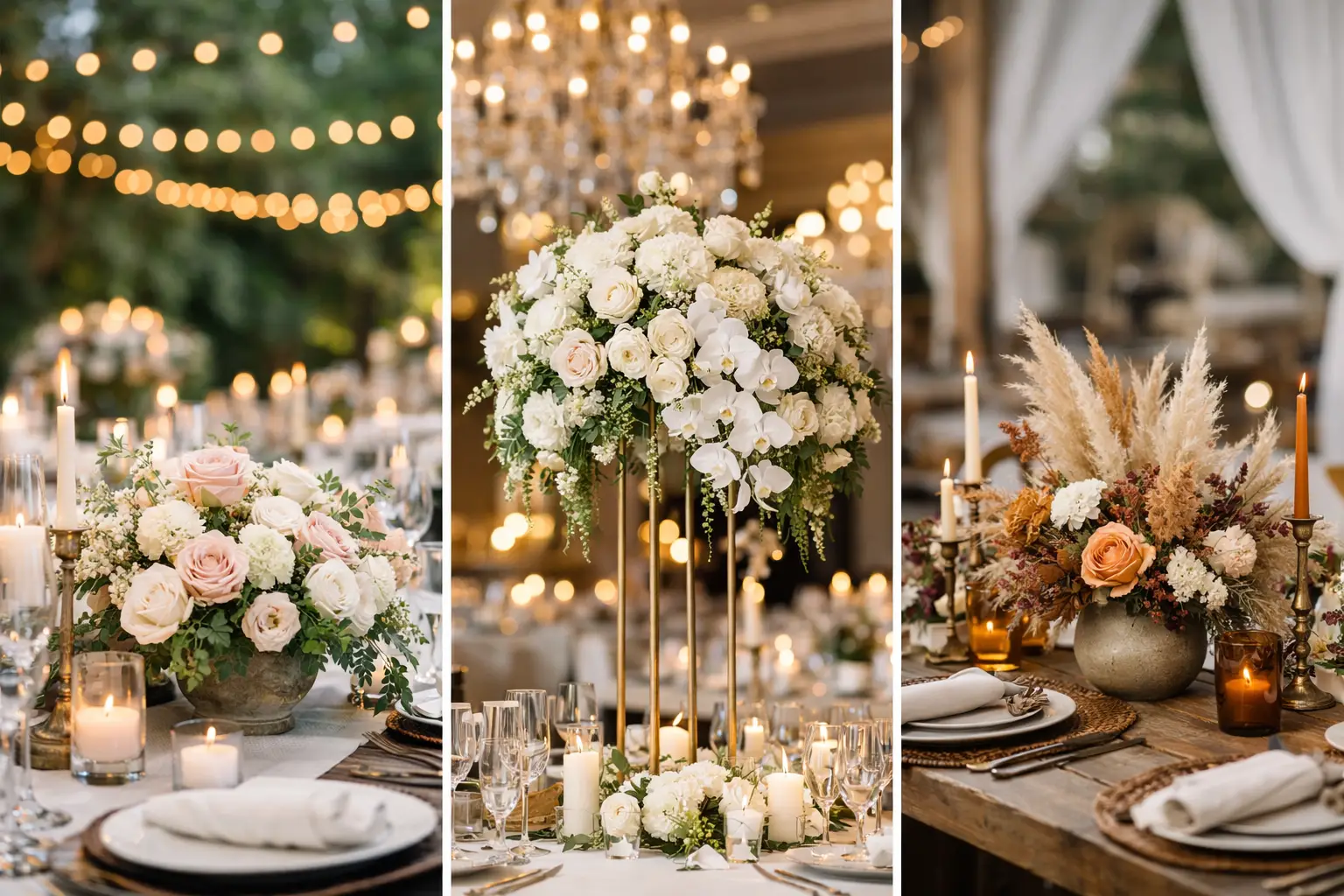
For a timeless wedding, white roses, hydrangeas, lisianthus and gypsophila with eucalyptus or ruscus remain a strong choice. A compact white bouquet, low vase arrangements on tables and a simple foliage-lined ceremony display give a clean, formal finish without competing with the venue.

This style works particularly well with chair covers, white linen and illuminated love letters. If your reception includes an LED dance floor, keep the floral tablescape elegant rather than overly busy so the room still has a clear focal point once the evening entertainment begins.

Romantic blush and champagne florals

Blush roses, pale pink peonies when in season, cream blooms and soft champagne tones create a warmer, more romantic look. These flowers suit country houses, marquees and venues with neutral décor, especially when paired with gold or clear glass details.

A useful approach is to keep the bridal flowers fuller and softer, then use smaller matching centrepieces for guest tables. This gives the wedding party the statement florals for photographs while keeping the overall spend under control. Peonies are beautiful but seasonal and often more expensive, so garden roses or ranunculus can provide a similar soft texture at other times of year.

Rustic and boho arrangements

For a relaxed barn, tipi or woodland-inspired reception, choose mixed greenery, spray roses, dried grasses, daisies and seasonal wildflower-style stems. Bud vases, wooden crates and loose table runners can make the setting feel informal without looking unfinished.

The trade-off is that a deliberately loose arrangement still needs professional structure. Flowers should not block place settings, shed heavily onto food or leave empty-looking areas around the room. Repeating the same colours in the ceremony, table flowers and backdrop keeps rustic styling intentional rather than mismatched.

Modern florals with a clean finish

Modern wedding flowers rely on shape, negative space and a smaller colour palette. Think single-variety roses, orchids, anthuriums or sculptural foliage arranged in sleek vessels. White, green, black, gold and one accent colour can look striking in contemporary venues.

This is a good route for couples who want impact without every surface being covered in flowers. Tall arrangements can draw the eye upwards in a large room, while low clusters of bud vases work better where guests are seated close together. Always check that centrepieces leave clear sightlines across the table.

Flowers for the ceremony space

The ceremony is where floral styling earns its place in the photographs. Guests may only sit there for a short time, but the backdrop appears in the entrance, vows, signing photographs and family portraits.

An asymmetric floral arch gives a strong focal point and suits both modern and rustic themes. A full arch is more dramatic, but it needs a suitable frame, secure installation and enough room around it for the registrar, photographer and wedding party. For smaller ceremony rooms, two pedestal arrangements or floral plinths can have more impact than an arch that makes the space feel crowded.

Meadow-style flowers along the aisle are another popular option. These can soften a plain room and create lovely walking-in photographs, but they should be positioned well away from the aisle edge to avoid trip hazards. Where possible, ceremony flowers can be moved to the top table, cake display or entrance after the vows. Reusing arrangements is one of the simplest ways to get more value from the floral budget.

Reception table flower ideas that work

Guest tables need practical consideration as well as visual appeal. The centrepiece should look good from every seat, leave space for food and drinks, and allow guests to talk without a wall of flowers between them.

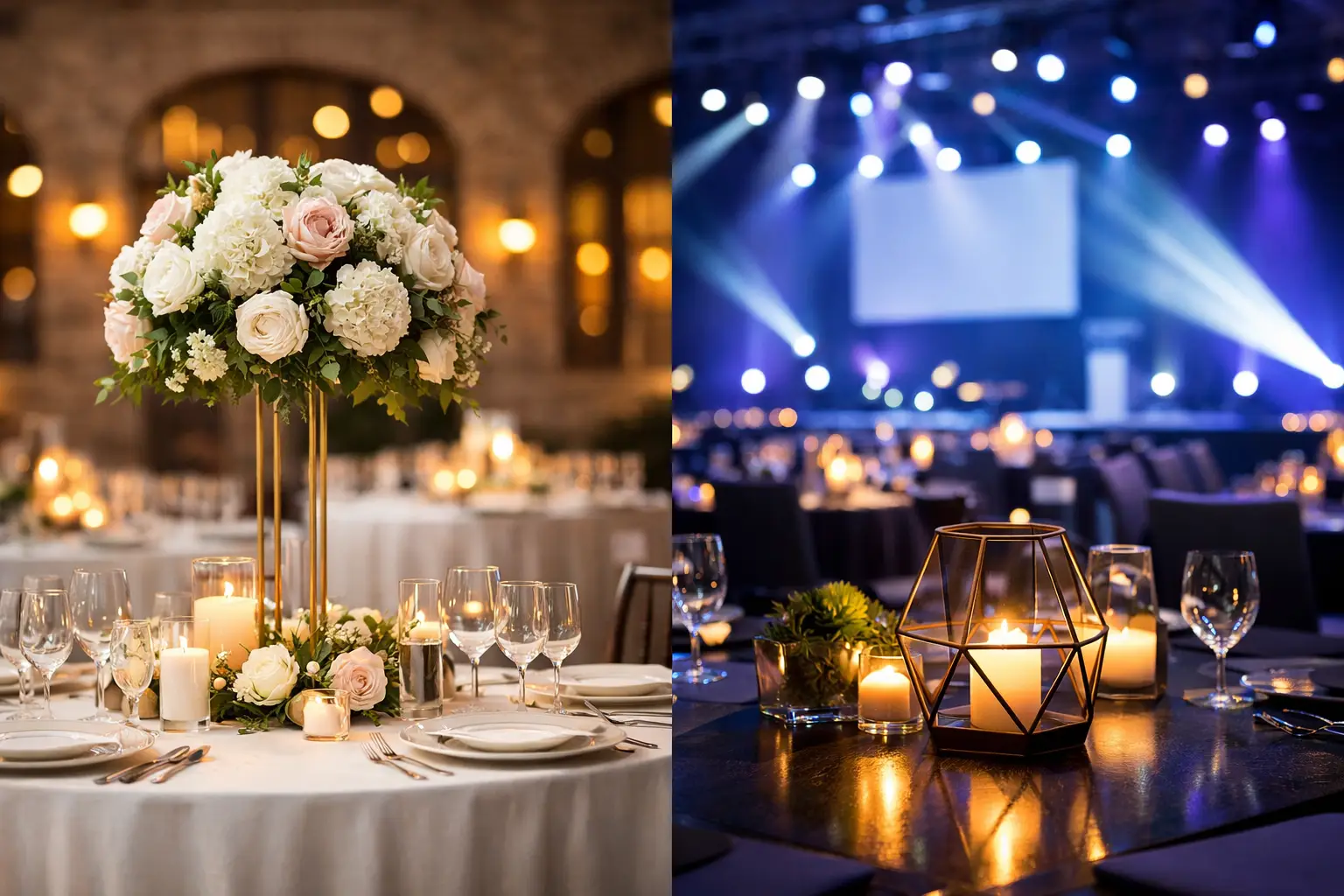
Low arrangements are dependable for wedding breakfasts. They suit round tables, allow clear conversation and can be built around candles or small decorative details. A cluster of three different-height vases often looks more generous than one small arrangement, particularly if you are styling a larger function room.

Tall centrepieces work well in high-ceilinged venues and help fill open space. Choose clear stands or narrow bases so guests can see through them. They need to be stable, safely positioned and compatible with the venue’s table size. A tall display on a small table can quickly feel top-heavy.

For long banquet tables, foliage runners, bud vases and grouped candles create a more continuous look. This approach is flexible because you can adjust the density to suit the table length and budget. Fresh greenery gives a softer finish, while silk or artificial flowers can be a sensible option for displays that need to stay perfect all day, particularly near warm lighting.

Match florals to your wider wedding styling

Flowers should not be treated as a separate decision. They need to work with your chair covers, table linen, balloons, backdrop, signage and lighting. A pale flower scheme may disappear against a bright white backdrop unless greenery or a stronger accent tone gives it definition. Deep burgundy and red flowers can look dramatic under warm uplighting, while pastel arrangements are often best with softer, neutral lighting.

The top table deserves particular attention because it is visible throughout speeches and often sits behind the first dance photographs. A floral runner, paired pedestal arrangements or a display in front of Mr & Mrs letters can give it a finished appearance. Keep the design low enough that it does not hide the couple or interfere with microphones during speeches.

When your venue changes from wedding breakfast to party, lighting changes the room again. Flowers placed near the dance floor should be secure and outside guest routes. A coordinated supplier can plan the placement of décor, disco equipment, photo booth and floral features together, preventing last-minute moves once the room is set.

Choosing flowers by season and budget

A florist can source flowers throughout the year, but seasonal choices usually offer better value and a more natural result. Spring is ideal for tulips, narcissi, ranunculus and blossom. Summer brings garden roses, delphiniums and abundant greenery. Autumn works beautifully with dahlias, berries and richer foliage, while winter weddings can use roses, amaryllis, evergreen foliage and textured dried elements.

If a particular flower matters to you, discuss alternatives early. Imported varieties, out-of-season peonies and large quantities of premium blooms can change the price quickly. You do not need to give up the look you like. Often, using the premium flower in the bridal bouquet and top-table display, then choosing complementary blooms for guest tables, achieves the same overall effect.

Be honest about what you want flowers to do. If photography is the priority, put more of the budget into the ceremony feature, bridal flowers and top table. If you are hosting a large evening reception, entrance arrangements, backdrops and room-wide styling may make more sense. There is no single right split – it depends on the venue, guest numbers and which moments matter most to you.

Planning floral hire without added stress

Before confirming your florals, measure key areas or ask the venue for room photographs and table plans. Confirm setup access, whether real candles are permitted, and when suppliers must remove items at the end of the night. These details affect the design more than most couples expect.

At Mobile Disco Hire Birmingham, couples can combine wedding flowers with venue décor, LED dance floors, backdrops, love letters and experienced DJ entertainment through one established event supplier. This makes it easier to keep colours, timings and room layout coordinated, while reducing the number of separate suppliers to manage.

The best floral choice is the one that still looks right once your guests, table settings, lighting and music are all in place. Bring a few venue images, your colour ideas and a realistic budget to an appointment, then choose arrangements that support the whole celebration rather than simply following the latest trend.

How to Style Birmingham Venues for Any Event

By

How to Style Birmingham Venues for Any Event

A Birmingham venue can look completely different once the room is dressed properly. The same function suite can feel formal and elegant for a wedding, vibrant for a milestone birthday or smart and branded for a corporate evening. Knowing how to style Birmingham venues starts with the room you have booked, not a collection of decorations you have seen online.

High ceilings, dark carpets, patterned walls, low lighting, fixed furniture and awkward corners all affect what will work. The most successful styling creates atmosphere without fighting the venue itself. It also needs to leave enough clear space for guests, catering, speeches and, of course, the dance floor.

Start with the venue’s best features

Before choosing a colour scheme or ordering any décor, look at the venue in its event setup. A bright room with large windows needs a different approach to a dim hotel suite. A converted industrial space can take bold lighting and modern furniture, while a traditional banqueting hall may suit softer draping, flowers and warm tones.

Ask the venue for photographs from real events rather than only their brochure images. Better still, arrange a visit around the time your event will take place. Daylight, existing wall lights and the position of the bar can change the feel of the room dramatically.

Take note of the practical details too. Find out where power sockets are located, whether candles are permitted, what time suppliers can access the room and whether there are restrictions on fixing items to walls or ceilings. These small checks prevent last-minute compromises and make the installation safer and quicker.

Build the room around one focal point

Every well-styled event room needs a clear visual centre. At a wedding, this may be the top table, ceremony area or dance floor. For a birthday party, it could be a balloon display, throne chair, photo booth backdrop or cake table. At a corporate event, the stage, presentation area or branded display often takes priority.

Trying to make every corner the main feature can make a room feel crowded. Put the strongest visual elements where guests will spend time and where photographs will be taken. For example, illuminated LOVE letters beside an LED dance floor create a strong evening focal point, while a flower wall or LED backdrop gives guests a natural place to take photographs.

Your focal point should also match the purpose of the event. A wedding may need a romantic, polished backdrop for photographs throughout the day. A party usually benefits from a feature that encourages guests to gather, take pictures and then move towards the dance floor. For corporate events, clean lines and considered lighting often look more professional than lots of separate decorative items.

Keep the colour palette controlled

Two main colours plus a neutral usually work better than trying to include every favourite shade. White, ivory, gold, silver, black and clear acrylic details are useful foundations because they can be paired with stronger colours without making the room look busy.

Uplighting is one of the easiest ways to carry a colour across a large venue. It can add warmth to plain walls, highlight pillars and make a large room feel more connected. Soft amber, warm white, blush and champagne tones suit many wedding settings. Blues, purples, pinks and richer colours can create a more energetic party atmosphere.

It depends on the venue’s existing décor. If the room already has strong red carpets, gold curtains or patterned walls, a simpler palette is usually the better choice. Styling should improve what is there, not compete with it.

Use lighting to change the atmosphere

Lighting is often the difference between a room that feels hired and a room that feels personal. It is particularly valuable in Birmingham hotel suites, community halls and larger event spaces where the basic décor is neutral.

Uplighters around the perimeter give depth to the walls and help define the space after dark. They can be set to complement the wedding colours during dinner, then changed for the evening party. A professional DJ setup can add movement and energy later on, but it should be positioned so guests can still see pathways, tables and the bar safely.

An LED dance floor makes an immediate impact and clearly signals where the evening entertainment happens. It is especially effective in rooms with dark carpeting or limited natural features. However, it needs sufficient space around it. Do not squeeze a large dance floor between tightly packed tables just for the photograph. A slightly smaller floor with room for guests to move, watch and join in will work better.

For a softer finish, LED backdrops can frame a top table, cake display or head table without relying on ceiling decorations. They are a sensible option where a venue does not allow fixtures to be attached to walls.

Style the guest experience, not just the photographs

A good-looking venue still has to work for real people. Guests need clear routes from the entrance to the bar, toilets, seating and dance area. Older relatives may need easy access to chairs, while children need space that is away from speakers, cables and busy service areas.

Chair covers and sashes can pull together mismatched venue chairs, particularly where the furniture is functional rather than decorative. They are not essential for every event, but they can make a major difference at a formal wedding or anniversary dinner. For a modern party, selected statement pieces such as throne chairs, light-up numbers or a balloon feature may provide more impact for the budget.

Think about the moments guests will remember. The arrival should feel welcoming. The meal area should feel comfortable rather than over-decorated. The evening should invite people onto the dance floor. A photo booth, sweet cart or illuminated letters can give guests something to do between those key moments, especially while the room turns over from daytime celebrations to the evening party.

Plan the layout with entertainment in mind

The DJ, dance floor and décor should be planned together. Leaving entertainment until the end can result in speakers in the wrong place, an undersized dance area or a photo booth blocking a key route through the room.

Place the DJ where they can see the dance floor and communicate easily with the organiser, but avoid putting the setup directly beside tables occupied by guests who may prefer a quieter area. The dance floor should be visible from the main seating area, as people are more likely to join in when they can see others enjoying themselves.

Professional equipment matters here. Sound and lighting need to be suitable for the room, set up securely and supplied with the right safety checks. When booking a supplier, confirm that equipment is PAT-tested and that public liability insurance meets the venue’s requirements. These are not glamorous details, but venues often require them before allowing access.

Choose packages where coordination matters

Booking several separate suppliers can work, but it means managing multiple delivery times, deposits, colour references and setup requirements. If a balloon installer, florist, dance floor supplier and DJ all arrive independently, someone needs to coordinate where each item goes and when it is removed.

A combined entertainment and styling package reduces that pressure. The same team can plan the DJ position around the LED dance floor, match uplighting to the backdrop and make sure illuminated letters do not block access or sightlines. It also gives you one point of contact if the venue changes the layout or access time.

Mobile Disco Hire Birmingham has more than 20 years of event experience and can supply DJs alongside dance floors, uplighting, photo booths, chair covers, balloons, flowers, sweet carts and illuminated décor. For clients who prefer to see options before booking, appointments can be arranged at the event and entertainment showroom.

Set a budget by visual priority

You do not need every styling item to make a venue look finished. Put the budget into the elements guests will notice most: lighting, a strong focal point, quality table styling and a usable dance floor. Then add extras where they genuinely improve the experience.

For a smaller room, uplighting, a backdrop and carefully chosen table details may be enough. In a larger suite, an LED dance floor, illuminated letters and statement décor can stop the room from feeling empty. If your budget is limited, avoid spreading it across lots of small items. One well-executed feature usually has more impact than several pieces that get lost in the room.

The best venue styling feels intentional from the moment guests arrive to the final song. Choose features that suit the room, make the event easier to enjoy and give your guests a reason to remember how the space felt, not just how it looked.

Wedding Backdrops That Transform Your Reception

By

Wedding Backdrops That Transform Your Reception

The right wedding backdrops do far more than fill an empty wall. They frame the moments your guests will photograph most – your entrance, speeches, cake cutting and first dance – while making the whole room feel considered from the moment people arrive. A backdrop is one of the most effective ways to give a hotel suite, function room or marquee a finished wedding look without having to dress every corner of the venue.

For couples planning a wedding in Birmingham or across the Midlands, the best choice usually comes down to three things: where it will sit, what it needs to do in photographs, and how it will work alongside the rest of the room styling. It should complement your day, not compete with it.

Choosing Wedding Backdrops for Your Venue

Start with the venue rather than a picture saved on social media. A white flower wall may look striking in a darker room, while an LED starlit backdrop can add warmth and depth to a plain hotel function suite. In a light-filled barn or marquee, a blossom tree display, draping or soft florals can create a more natural focal point.

The backdrop also needs to suit its location. Behind the top table, it should look elegant in guest photographs throughout the wedding breakfast. Behind the cake table, it should leave enough space for your cake, stand and any flower arrangements without looking crowded. For a photo area, it needs room in front for groups of guests to stand comfortably.

Ceiling height matters more than many couples expect. A grand backdrop can be lost against a high wall if it is too narrow, while a full-height design can overwhelm a smaller room. Measuring the intended space before booking avoids last-minute compromises. If you are unsure, photographs and venue dimensions can help an experienced styling supplier recommend a suitable size.

Match the backdrop to the key moment

A single backdrop can work beautifully all day, particularly behind a top table or sweetheart table. However, a wedding with several key areas may benefit from a more considered arrangement. For example, an LED backdrop behind the head table can set the tone for the reception, while illuminated love letters and a flower wall create a separate evening photo point.

This depends on your budget and venue layout. A smaller wedding in one room may only need one standout feature. A large reception with a separate drinks area, dining room and dance floor has more scope for different focal points.

Popular Backdrop Styles and Where They Work Best

There is no single best option, because your backdrop should reflect the atmosphere you want to create. Classic weddings often suit white draping, soft floral walls or ivory blossom. Modern celebrations can look excellent with a clean shimmer wall, neon-style sign or contemporary balloon styling. Evening receptions benefit from lighting that remains effective after daylight has gone.

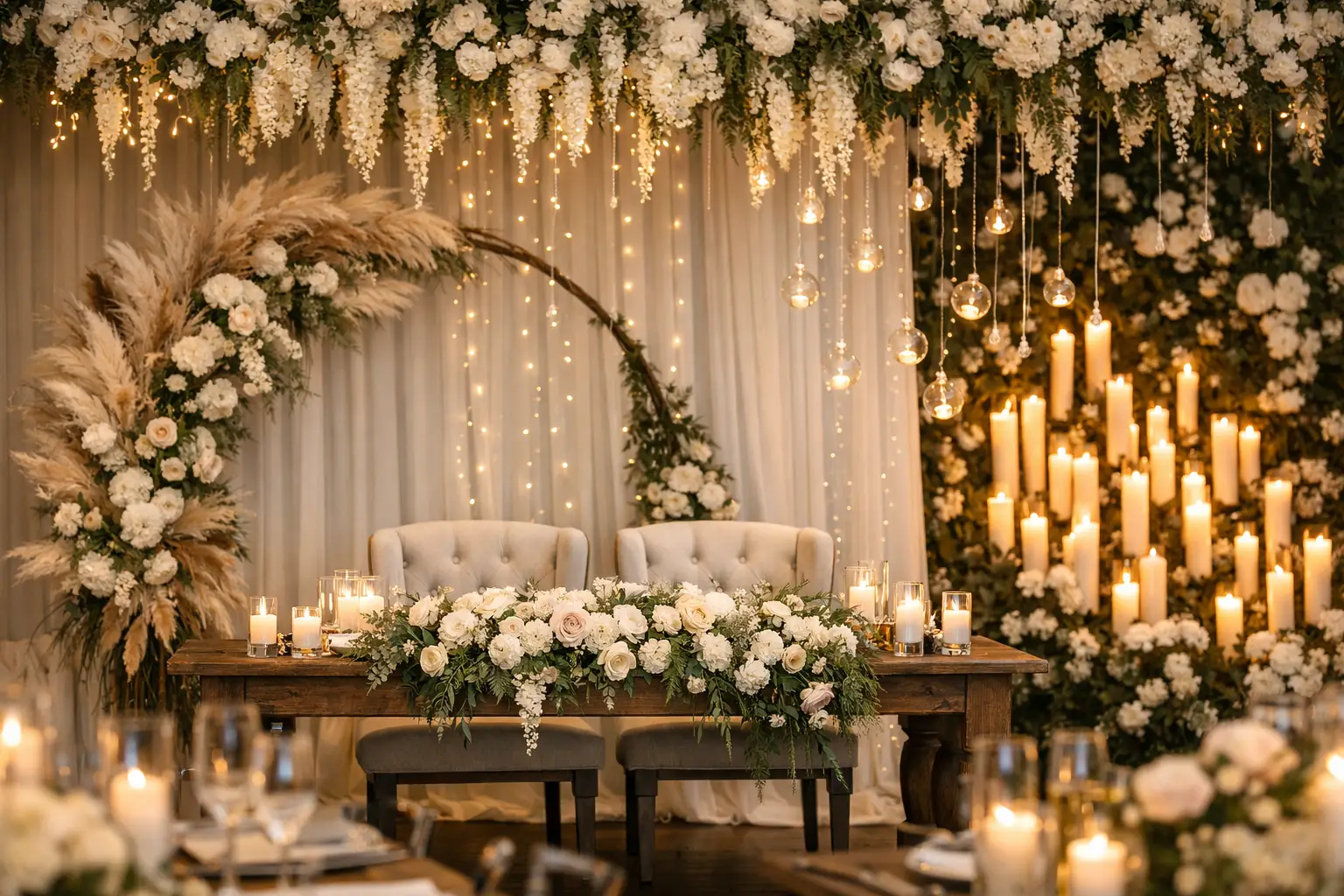
LED starlit backdrops are a dependable choice for wedding breakfast rooms and evening receptions. The subtle twinkling lights add depth to photographs and work especially well alongside white LED dance floors, uplighting and illuminated Mr & Mrs letters. They are also a practical solution when a venue wall is plain, dark or visually distracting.

Flower walls offer a softer, more romantic finish. White, ivory and blush designs are popular because they coordinate with many colour schemes, while mixed floral walls can make a stronger statement. They are often used behind top tables, at ceremony signing tables or as a photo backdrop. Bear in mind that a densely detailed flower wall is already visually busy, so keep nearby signage and decorations simple.

Shimmer and sequin backdrops bring a more lively, party-ready finish. They catch light well and can look particularly effective near a photo booth or sweet cart. They may not suit every traditional venue, but they are an excellent choice for couples who want the evening reception to feel glamorous and fun.

Draping and fabric backdrops create a timeless look and can soften the hard lines of a hotel suite, village hall or marquee. Add warm uplighting for a more dramatic effect. This style works well when you want a polished finish without the stronger visual texture of flowers or sequins.

Think About Lighting Before You Book

Lighting can make an ordinary backdrop look expensive, and a poorly lit one disappear completely in photographs. This is particularly relevant for winter weddings and venues where the room lights are dimmed for the evening reception.

Uplighting placed around the room can pick up your chosen colour palette and make the backdrop feel connected to the rest of the décor. Warm white or soft amber is flattering for most wedding photographs, while blush, violet or blue can create a more dramatic evening feel. The colour choice should be subtle enough that it does not alter the look of wedding flowers, dresses or skin tones in every photograph.

If you are using an LED backdrop, check how the lights will appear on camera. Professional equipment should offer an elegant twinkle rather than an overpowering flash. It is also worth considering the DJ set-up and dance floor lighting. A coordinated package prevents a room from looking like several unrelated suppliers have dressed separate areas.

Make the Backdrop Work With Your Wedding Styling

A backdrop has the greatest impact when it is part of a wider plan. The colours and materials do not all need to match exactly, but they should feel intentional. White chair covers with a coloured sash, table florals, balloons, love letters and uplighting can all tie into the same palette.

Avoid trying to feature every decorative idea in one place. A flower wall, large neon sign, balloon garland, throne chairs, cake hoop and oversized letters may all look impressive individually, but combined in one small area they can feel cluttered. Give each statement item room to do its job.

For many couples, the most practical approach is to choose one principal backdrop and two or three supporting features. A starlit backdrop behind the top table, LED love letters near the dance floor and matching uplighters around the room is a strong, balanced combination. Alternatively, a flower wall with a photo booth nearby creates a natural guest-photo area without taking over the dining space.

Consider guest flow and access

Decor must not block fire exits, service doors, access routes or the space needed for venue staff to move around tables. This is one reason it pays to use a supplier familiar with event set-ups rather than attempting to install large items yourself.

Ask who will deliver, set up and collect the backdrop, and when this will happen. Wedding mornings are busy enough without assembling décor while suppliers, florists and venue staff are all working in the same room. A professional hire team will plan access, installation time and collection around the venue schedule.

Hiring a Backdrop as Part of a Complete Package

Booking entertainment and styling from separate companies can work, but it creates more timings, deliveries and contacts to manage. Combining services with one established supplier makes the process easier, especially where the backdrop needs to sit alongside a DJ, LED dance floor, photo booth, chair covers or illuminated letters.

Mobile Disco Hire Birmingham can coordinate wedding DJs, professional sound and lighting, LED backdrops and venue styling as part of one package. With more than 20 years of event experience, PAT-tested equipment and £5 million public liability insurance, the focus is on providing a venue-ready service that looks polished and runs properly on the day.

A showroom visit can be especially useful if you are deciding between backdrop styles or trying to match colours. Seeing lighting, letters and decorative pieces in person gives a much clearer idea of scale than viewing a small image on a phone. Appointments allow time to discuss the venue, your guest numbers and the parts of the room that matter most.

Questions to Ask Before Confirming Your Backdrop

Before making a booking, confirm the backdrop dimensions, the amount of space required in front of it and whether power is needed. Ask whether delivery, set-up and collection are included, and whether the supplier has experience working at your venue or with similar layouts.

It is also sensible to ask what happens if access is limited. Some venues have stairs, narrow entrances or strict set-up windows. A good supplier will identify this early and offer a practical alternative if required. Finally, make sure the backdrop complements your photography plans. The best designs create a flattering frame without casting harsh light, adding unwanted glare or making group shots difficult.

Choose the backdrop that makes your most important space feel special, then let the rest of your styling support it. When the room is ready before guests arrive, you can stop worrying about the details and enjoy the photographs, the music and the celebration itself.

Wedding DJ Service Review for Confident Booking

By

Wedding DJ Service Review for Confident Booking

The difference between a packed dance floor and an empty one is rarely a single song. It is usually the planning behind it: whether the DJ understood the room, worked to the timings, used reliable equipment and knew when to change direction. A useful wedding DJ service review looks beyond a five-star score and checks the details that will affect your reception on the night.

For couples planning a Birmingham or Midlands wedding, the right DJ should make the evening feel easy. They should be professional with your venue, clear about what is included and confident enough to read a mixed crowd without taking over your celebration.

What a Wedding DJ Service Review Should Tell You

A short review saying “brilliant DJ” is encouraging, but it is not enough to make a booking decision. Look for reviews that describe what the supplier actually did. Comments about quick communication, punctual arrival, smooth announcements, a full dance floor and respectful conduct at the venue tell you far more than a general compliment.

The most helpful reviews often mention the awkward moments that did not become problems. Perhaps the wedding breakfast ran late, a last-minute request came in, or the venue had a strict sound limiter. A capable wedding DJ adjusts calmly, keeps the couple informed and protects the flow of the evening.

It is also worth considering the source and pattern of feedback. One outstanding review is welcome, but consistent comments over time are stronger proof. If different couples mention reliable replies, smart presentation and good music choices, you are seeing a service standard rather than one lucky night.

Look for reviews from similar weddings

A DJ who was excellent at a 30th birthday party may still be a good choice, but weddings bring different responsibilities. There are formal timings, first dances, family expectations, venue rules and often a wider age range. Prioritise wedding feedback where possible, especially if the review refers to a venue or guest number similar to yours.

A large hotel function room, a converted barn and a small city-centre venue need different sound and lighting approaches. Reviews can show whether a supplier has experience adapting their set-up to suit the space rather than arriving with a one-size-fits-all package.

Check What Is Included Before Comparing Prices

Wedding DJ prices can look similar until you compare the service behind them. One quote may cover a basic disco for a fixed number of hours; another may include consultation time, professional sound, intelligent lighting, early venue access, a suitable booth and coordination with the venue team. Neither option is automatically right, but they are not directly comparable.

Ask for a clear written outline of what is included. You should know the performance times, set-up and pack-down arrangements, equipment provided, whether requests are welcomed, and the cost of any extension if the party is running well. This avoids the common problem of assuming a feature is included because it appeared in a photograph.

Professional equipment matters because it affects both the atmosphere and the practical side of the job. Quality sound should be clear at sensible levels, not harsh or overbearing. Lighting should create energy on the dance floor without distracting from photographs or making it difficult for guests to talk around the room.

Venues increasingly expect suppliers to arrive prepared. Ask whether equipment is PAT tested and whether the DJ holds public liability insurance. These are practical checks, not glamorous ones, but they can prevent access problems on the day. A supplier carrying £5 million public liability insurance and maintaining tested equipment gives both you and the venue greater reassurance.

Music Planning Matters More Than a Huge Playlist

A wedding DJ needs a broad music library, but good entertainment is not simply about playing every requested track. Your guests may range from grandparents to university friends, and not everybody will want the same thing at the same time. The skill lies in building momentum while keeping your preferences at the centre.

Before booking, ask how the DJ handles your first dance, must-play songs and do-not-play choices. Some couples want every track planned; others would rather provide a few favourites and trust an experienced DJ to judge the room. Both approaches work when expectations are agreed in advance.

Be realistic about song requests from guests. A flexible DJ can accept requests that suit the night, but should not abandon your agreed style because one guest asks for something wildly different. If you have a strong preference for Motown, R&B, indie, chart, soul, house or a particular decade, say so early. A good DJ will explain how they would blend it with music that keeps the dance floor moving.

Ask about announcements and formal moments

The DJ may also be responsible for introducing the first dance, announcing the cake cut or directing guests towards the evening buffet. Decide whether you want these announcements and how formal you would like them to sound. The best wedding DJs are confident on the microphone when needed, then let the music do the talking.

This is particularly useful when your venue does not have a dedicated master of ceremonies. A short, well-timed announcement can keep the schedule moving without making the reception feel overly structured.

Meet the DJ or See the Set-Up Where You Can

A phone call can reveal a great deal. You should come away knowing who is managing your booking, how quickly they respond and whether they have listened to what matters to you. If answers are vague before you book, that can be a warning sign when you are trying to finalise details closer to the wedding.

Seeing a supplier’s equipment in person is even better when available. A showroom appointment lets you compare LED dance floors, uplighting, illuminated letters, backdrops and photo booths alongside the disco set-up. It is easier to picture the finished room when you can see the products rather than choosing from cropped online images.

Mobile Disco Hire Birmingham offers this option by appointment, which can be particularly helpful for couples booking entertainment and venue styling together. It also means fewer separate suppliers to coordinate for delivery times, access instructions and collection after the reception.

Consider the Benefit of One Coordinated Supplier

The DJ is one part of the evening atmosphere. Uplighting can add colour to plain walls, a LED dance floor can define the party area, and illuminated LOVE or Mr & Mrs letters can create a focal point for photographs. A photo booth gives guests something to do between key moments and leaves you with informal memories from the night.

Booking these items from separate businesses is completely possible, and it can suit couples with very specific styling plans. The trade-off is more emails, more deliveries and more people needing access to the venue. A full-service event hire company can coordinate entertainment and décor within one booking, reducing the chances of crossed wires.

Do not add features simply because they are available. Start with the feeling you want in the room and the parts of the venue that need attention. In a naturally impressive ballroom, subtle uplighting and a well-presented DJ set-up may be enough. In a blank-function suite, a dance floor, backdrop and illuminated letters can make a bigger visual difference.

Questions Worth Asking Before You Book

A strong wedding DJ service review should prompt the questions you need answered, rather than replacing a direct conversation. Confirm who will perform at your wedding, not just who takes the enquiry. Ask how they manage illness or an emergency, what time they arrive, and whether they have worked with your venue or similar venues before.

You should also ask about deposits, payment dates and cancellation terms. A professional booking process protects both sides and makes it clear what happens if plans change. Keep copies of the agreed timings, package details and music notes so that nothing is left to memory.

Finally, pay attention to how the supplier makes you feel during the enquiry stage. Wedding planning involves enough chasing already. Clear answers, fast replies and practical advice are signs that a company understands the pressure on couples and is prepared to do its part properly.

The right DJ will not make your reception memorable by talking about themselves. They will arrive prepared, support the key moments, play to the people in front of them and leave you free to enjoy the party you spent so long planning.

Best Dance Floor Finishes for Wedding Venues

By

Best Dance Floor Finishes for Wedding Venues

The best dance floor finishes do more than fill an empty space in a venue. They set the tone for the room, affect how photographs look, influence whether guests actually get up to dance and need to work safely with the venue flooring, tables, DJ set-up and lighting. A floor that looks superb in a showroom can feel too bright, too dark or simply too small once it is surrounded by guests.

For weddings, parties and corporate events, the right choice depends on the atmosphere you want to create and the practical realities of the room. A white LED dance floor can become the visual centrepiece of a wedding breakfast room. A black and white chequered floor may suit a lively birthday or themed event. The key is choosing a professional temporary floor that complements the event rather than competing with everything else in it.

Best Dance Floor Finishes: Start With the Event Style

There is no single finish that suits every celebration. Before choosing a dance floor, look at the venue décor, the time of day, your guest numbers and what will be happening around it. The floor should look considered in photographs from the ceremony or meal through to the evening party.

For a classic wedding, white tends to be the safest and most flexible option. It works with nearly every colour scheme, reflects decorative lighting beautifully and gives the room a clean, high-end finish. For an evening party where a more dramatic look is wanted, black or black and white flooring can bring contrast and energy, particularly alongside intelligent DJ lighting.

Corporate organisers may prefer an understated finish that leaves room for branded backdrops, stage areas or product displays. In this setting, a floor needs to look polished without pulling attention away from the purpose of the event. The best option is often one that supports the lighting plan and maintains a smart, professional appearance throughout the evening.

White LED Dance Floors for Weddings

White LED dance floors remain one of the most popular choices for Midlands weddings, and for good reason. Their bright, glossy surface creates an immediate focal point, while the built-in LEDs add a subtle sparkle that changes as the evening progresses. They are especially effective in barns, hotel suites and marquees where the room needs a little extra light and definition.

A white LED floor is highly photogenic. It sits well alongside white chair covers, blossom trees, floral styling, illuminated love letters and a matching LED backdrop. If you are using a wedding DJ, the floor also catches moving lights without becoming overwhelming. Guests can see where the dance area begins, which sounds simple but makes a real difference when the room is busy.

The trade-off is that white shows marks more readily than darker finishes. A professional hire team should install a clean, well-maintained floor shortly before the event and check it during set-up. It is also worth considering the room’s existing lighting. In a very bright suite during daylight hours, the LED effect may be less noticeable until the evening. Once the main lights are lowered, however, the floor comes into its own.

When white LED flooring works best

Choose a white LED finish when you want a romantic, contemporary look with plenty of visual impact. It is a strong choice for wedding receptions, engagement parties, anniversaries and awards evenings. It can also make a smaller room feel more open because the light surface reflects rather than absorbs available light.

For a coordinated result, keep nearby styling in the same visual family. White florals, neutral linens, gold or silver details and warm uplighting all work particularly well. Strong coloured uplighting can also look excellent, but test the balance carefully: a deep red or blue wash can alter how the white surface appears in photos.

Black and White Chequered Floors

A black and white chequered dance floor has a bolder, more traditional party feel. It creates instant contrast and suits birthday celebrations, school proms, charity balls, retro-themed evenings and wedding receptions where the couple want something less formal than an all-white look.

This finish works particularly well in venues with character. Think exposed brick, period function rooms, darker wall colours or spaces with a strong black-and-gold theme. It holds its own under colourful disco lighting and looks lively even before the first guests arrive. For hosts who want the dance area to feel unmistakably like the party zone, the chequered pattern does that job very well.

There are practical benefits too. The darker panels are more forgiving of minor scuffs during a long event, although every hired floor should still be clean and professionally maintained. The main consideration is visual busyness. If you already have patterned chair sashes, elaborate table linen, a heavily decorated backdrop and several competing colours, a chequered floor can make the room feel crowded. In those cases, a simpler finish may be the better choice.

Glossy Black Floors and Dramatic Evening Events

A glossy black dance floor delivers a sleek, evening-focused finish. It suits black-tie parties, corporate dinners, winter weddings and events using gold, silver, deep red or rich purple styling. Under pin spots and professional lighting, a black surface can look extremely smart and gives the room a more intimate feel.

Black flooring is not always the right fit for a compact or low-lit venue. Because it absorbs light, it can make a room feel smaller if there is not enough surrounding illumination. This is where thoughtful uplighting, an LED backdrop or illuminated letters can help define the space. Your DJ’s lighting should also be positioned to light the dance area safely, rather than leaving guests stepping from a bright seating area onto a dark floor.

A black finish can be excellent for photographs with formalwear and metallic décor, but it is less forgiving of dust and footprints than some clients expect. Quality installation and a venue-ready clean are essential. Ask your supplier about the condition of the panels, the edging used and how the floor will be checked before guests enter the room.

Safety, Size and Venue Compatibility Matter More Than Trend

The most attractive finish will not deliver if the floor is the wrong size or unsuitable for the venue. A dance floor should give guests enough confidence to join in without taking over the entire room. Too small, and it becomes crowded after the first few popular songs. Too large, and it can make attendance on the floor look sparse, particularly early in the evening.

Guest count is a useful starting point, but not every guest will dance at the same time. The style of event matters as well. A wedding with a large family group and a party-focused DJ set may need more space than a corporate dinner where dancing is only one part of the programme. The layout should account for tables, the DJ booth, photo booth access, fire exits and clear walkways for venue staff.

Temporary dance floors also need a suitable, level base. Most function rooms, hotel suites and marquees can accommodate them, but the supplier should understand the venue before installation. Uneven surfaces, restricted access, tight loading times and protected flooring all need planning in advance. This is not a detail to leave until the week of the event.

Use a supplier that can discuss the floor alongside the wider set-up. If your dance floor, DJ, lighting, room décor and illuminated letters are supplied separately, small issues can quickly become your problem. A coordinated package means the layout can be planned as one event design, with equipment placed sensibly and installation managed around the venue timetable.

Match the Finish to Your Lighting and Décor

Lighting changes every dance floor finish. White LED floors reflect colour and movement; black surfaces create depth and drama; chequered patterns hold their shape under stronger effects. This is why it helps to decide on flooring at the same time as your DJ and room lighting, rather than treating it as a last-minute add-on.

For example, a white LED floor paired with warm white uplighting and illuminated Mr & Mrs letters creates a soft, wedding-led look. The same floor with energetic colour-changing lighting can work brilliantly for a birthday party. A glossy black floor beside gold décor and controlled warm lighting feels more formal, while black and white chequered flooring works naturally with brighter party effects.

Be realistic about the venue’s own carpet, wall colours and ceiling height. A floor does not exist in isolation. If possible, view examples of the finish in a similar room or visit an event hire showroom to compare options in person. Photographs are helpful, but seeing the panel colour, gloss level and LED brightness makes the decision much easier.

Choose a Professional, Venue-Ready Installation

A dance floor is a guest-facing feature, so the quality of installation is part of the finish. Panels should sit securely, edges should be properly fitted and cables from DJs or lighting should never create a trip hazard near the dance area. Professional suppliers also need to work within venue access rules and provide the reassurance many venues require, including PAT-tested equipment and suitable public liability insurance.

Mobile Disco Hire Birmingham can coordinate LED dance floors with DJs, photo booths, uplighting and wedding styling, reducing the number of suppliers you need to manage. With more than 20 years of event experience, the team can help plan a floor size and finish that makes sense for the room, the schedule and the type of celebration.

The best choice is the one that looks right at the first dance, still feels inviting two hours later and fits the venue without creating extra work for you. Choose the finish early, plan it alongside your entertainment and styling, and give your guests a dance area they will be pleased to fill.

1 2 3 4 5 … 21
How to Hang LED Backdrops Safely at Events
When to Book a Wedding DJ for Your Big Day
Birmingham Wedding DJ Guide for Better Parties
Wedding Supplier Checklist Guide for Midlands Couples
How to Plan Wedding Music Without Last-Minute Stress
Wedding Floral Examples for Every Reception Style
How to Style Birmingham Venues for Any Event
Wedding Backdrops That Transform Your Reception
Wedding DJ Service Review for Confident Booking
Best Dance Floor Finishes for Wedding Venues